
Browse by category
100 problems · 10 sections · Find a drill to try
Find the Problem. Choose Your Drill
Some days the ball goes sideways. Other days it barely leaves the ground. Find the problem that sounds familiar, check one useful detail and choose a drill that gives your next practice session a purpose.
All the drills in this post are from the Golf Drills Made Fun App.
This guide brings together 100 common golf problems with practical checks and links to our full drill posts. You will find help with setup, contact, direction, swing movement, putting, chipping, wedges, bunkers and practice habits. Some drills appear more than once because the same exercise can help you explore different problems.
Use the tables as a starting point. A slice, a thin shot or a missed putt can have several causes. Read the check before choosing the drill, follow its full instructions and compare a group of attempts. Directions such as left and right describe a right-handed golfer unless stated otherwise; mirror them if you play left-handed.
Start with your setup, contact or shot direction. Explore the takeaway and backswing, downswing and rhythm and balance, or head straight to putting, chipping, wedges and bunkers or focus and practice.
Problems 1–10
Grip, Setup and Alignment
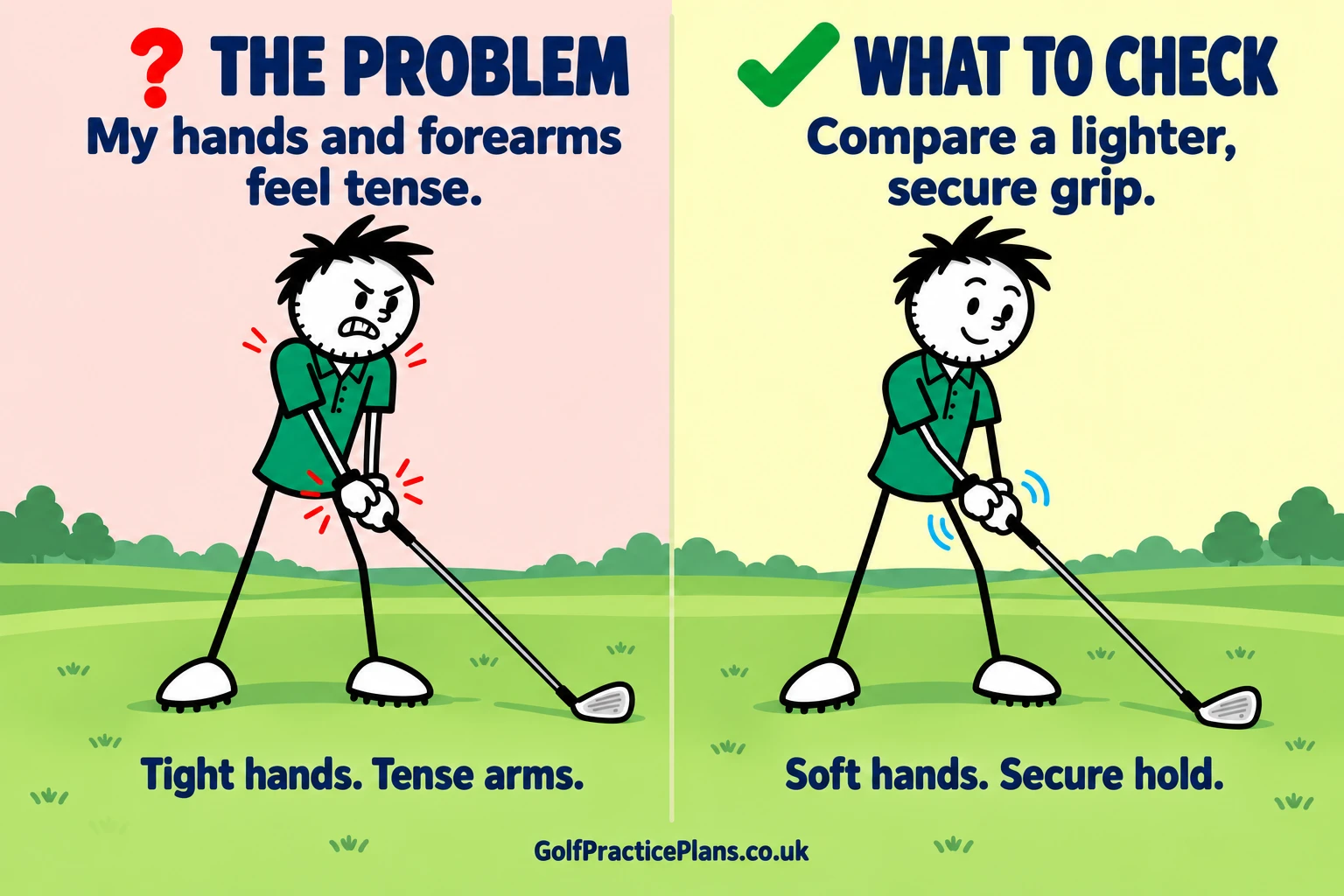
Start with what you can check before the club moves. A repeatable setup gives you a clearer baseline for judging the shots that follow.
| No. | The problem | What to check | Drill to try |
|---|---|---|---|
| 1 | My grip changes from shot to shot. | Place the handle diagonally across the base of your fingers rather than deep in your palms. As a neutral starting point, check that you can see two to three knuckles on your lead hand. Keep the grip relaxed but secure, using around five out of ten as a feel cue. Practise the grip at home, then stick with it on the course. | |
| 2 | My hands and forearms feel tense. | Compare your usual pressure with a lighter but secure hold. Notice contact and comfort across a group of shots. | |
| 3 | I struggle to aim my feet. | Check the body line against a stick laid parallel to your target line. Aim the clubface before setting your feet. | |
| 4 | I cannot tell where my clubface points. | Check the face against a nearby ground reference before settling into your stance. Separate face alignment from body alignment. | |
| 5 | I crouch over the ball. | Check your hip hinge and knee bend. Look for room for your arms without forcing a perfectly straight back. | |
| 6 | I do not know where to position the ball. | Review ball position for the club and intended shot. Change one setup detail at a time and compare the contact. | |
| 7 | I feel unbalanced before I swing. | Check how pressure feels under your feet before adding movement. Start from level ground and a comfortable stance. | |
| 8 | I feel cramped or stretched at address. | Let the arms hang comfortably and review your distance from the ball. Check that you have space for a small rehearsal. | |
| 9 | My setup is different every time. | Use a complete walk-in routine, starting behind the ball. Repeat the same order of target, face, feet and posture checks. | |
| 10 | I lose sight of the target over the ball. | Choose a specific target and carry that picture into address. Use a comfortable look back to the target before swinging. |
Problems 11–20
Fat Shots, Thin Shots and Contact
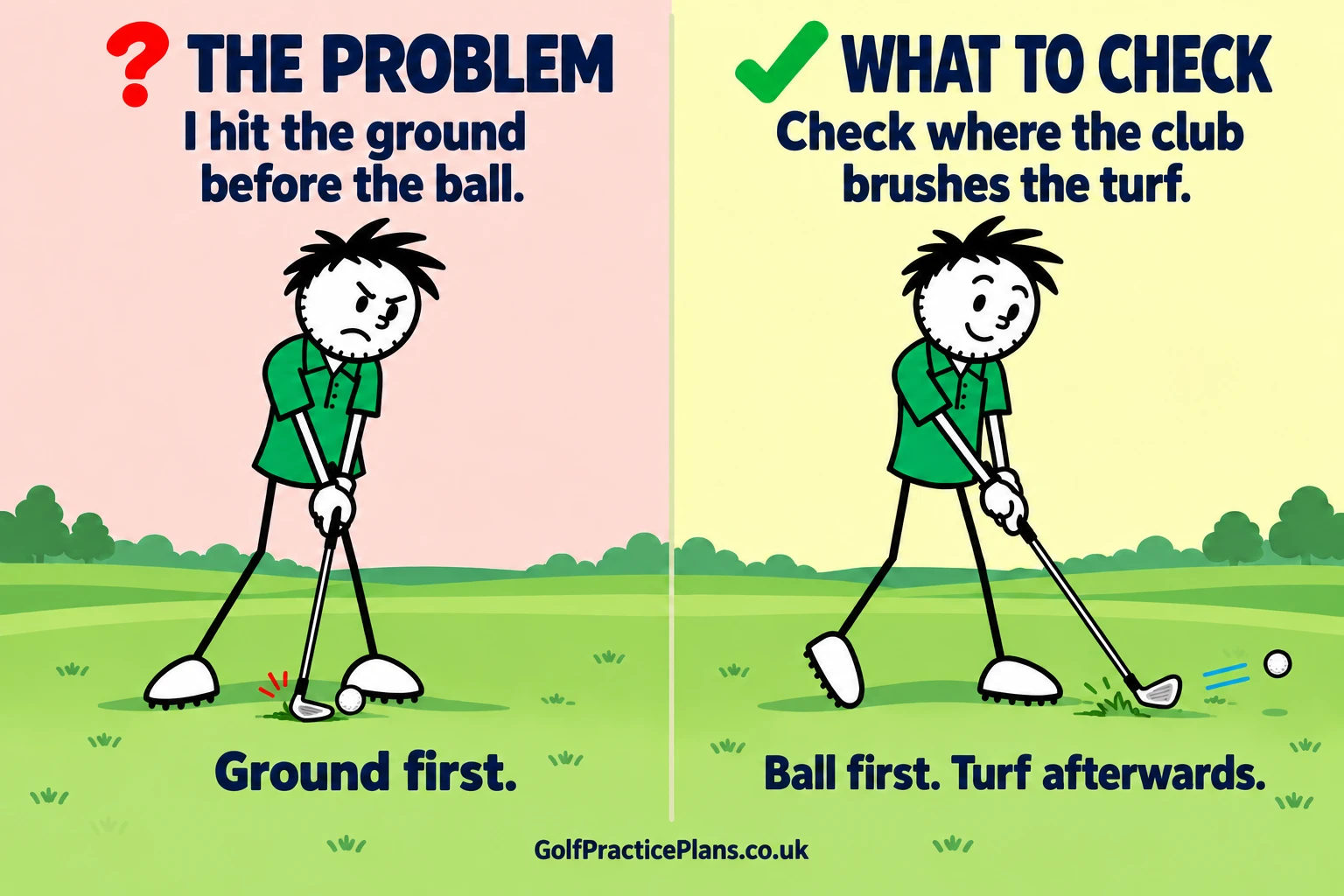
First notice where the club meets the ball, the turf and the face. Short, controlled shots make a strike pattern easier to identify.
| No. | The problem | What to check | Drill to try |
|---|---|---|---|
| 11 | I hit the ground before the ball. | Watch where the club first brushes the turf. A small ball-first contact task can give clearer feedback than trying to lift the ball. | |
| 12 | I catch my irons thin. | Check contact with a shorter swing before adding length. Notice your balance and whether you keep moving through the strike. | |
| 13 | I keep topping the ball. | Begin with small swings and a comfortable setup. Compare contact as you gradually rebuild swing length. | |
| 14 | I shank short iron shots. | Check the strike location and your available space before assuming a cause. Use the two-ball task with generous clearance and controlled swings. | |
| 15 | I strike the ball from different parts of the clubface. | Keep one club and target while testing small swings. Record the strike pattern instead of judging only the longest shot. | |
| 16 | I hang back through iron shots. | Try a small forward-ball exercise, then return the ball to its normal position. Compare whether the movement-through feeling helps contact. | |
| 17 | Range mats hide my heavy strikes. | Where permitted, move to grass and watch the first turf contact. Start with a short iron and a small swing. | |
| 18 | I try to scoop my iron shots into the air. | Explore a controlled impact rehearsal and let the club's loft do its job. Avoid adding a forceful wrist flip to help the ball up. | |
| 19 | I cannot recognise an open or closed face. | Rehearse the different face positions slowly before hitting shots. Use the mirror checks to build awareness, without freezing your wrists in a full swing. | |
| 20 | My strike falls apart when I swing harder. | Return to half swings and compare contact before adding effort. Build through the preset impact progression only while control remains comfortable. |
Problems 21–30
Slices, Hooks and Direction
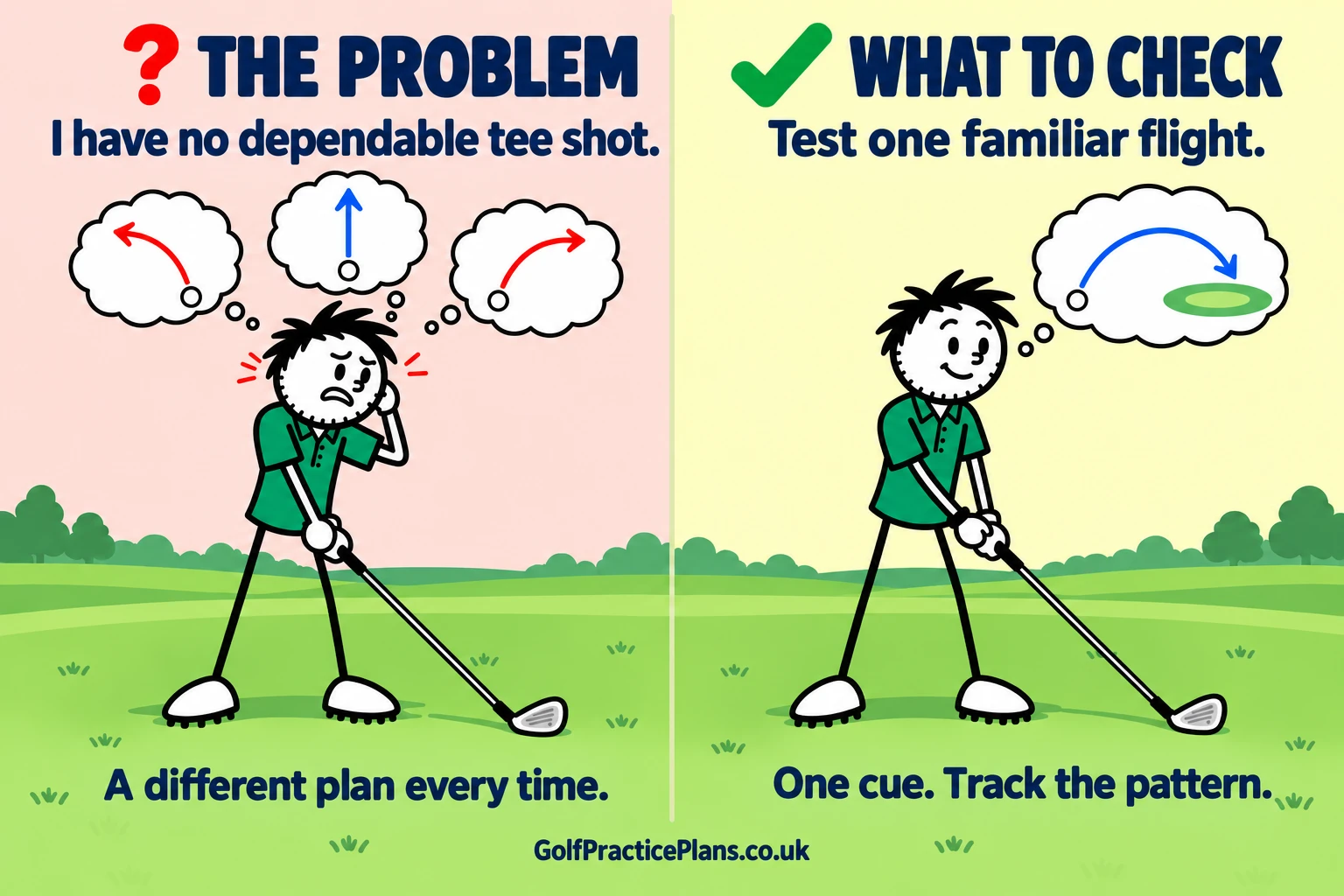
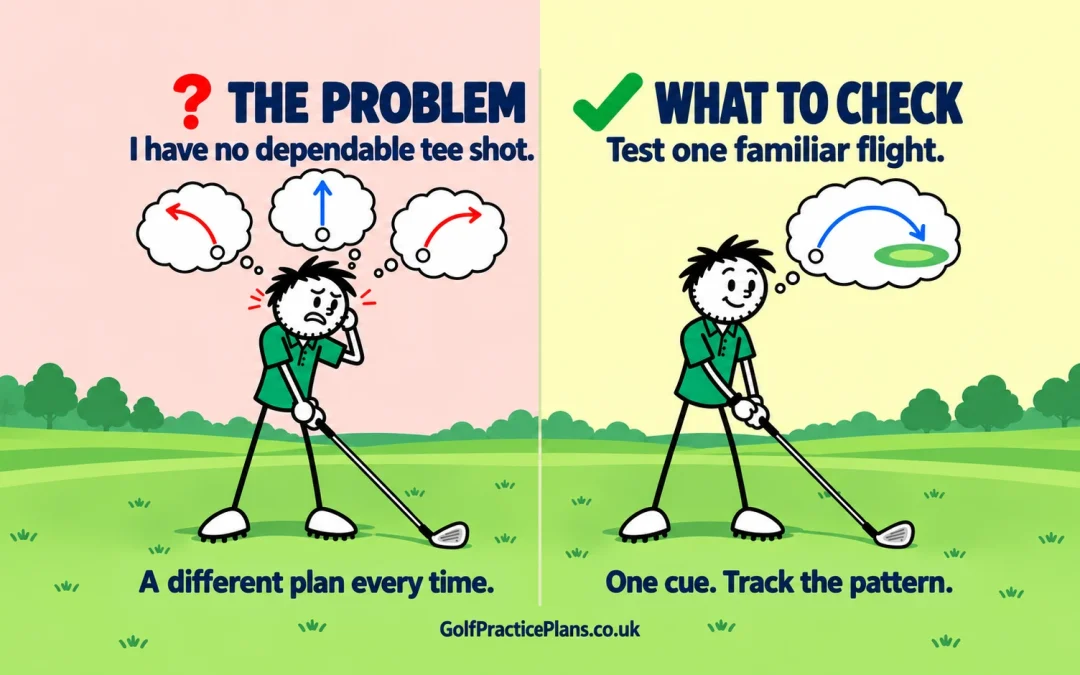
Starting direction, curve and strike location provide different clues. The drills below are ways to investigate a pattern, rather than a diagnosis from ball flight alone.
| No. | The problem | What to check | Drill to try |
|---|---|---|---|
| 21 | My shots keep slicing. | Observe the start line and curve as well as the club's route. A path drill is useful feedback, but face-to-path and strike also need attention. | |
| 22 | I keep hooking the ball. | Check face control, path and strike before trying to swing dramatically left or right. Use a small path task to investigate your usual delivery. | |
| 23 | My shots start right of the target. | Check the target and face alignment first. Then compare the starting direction across several shots rather than changing aim after one miss. | |
| 24 | My shots start left of the target. | Recheck the face and body lines against your intended target. A setup check helps separate aiming left from a delivery issue. | |
| 25 | I swing too far from the inside. | Use the middle-ball task without exaggerating the route. Notice whether the start line and curve become more useful as well as clearing the markers. | |
| 26 | I cut across the ball. | Use a soft noodle reference with short swings to explore the club's route. Keep the clubface and actual ball flight in the assessment. | |
| 27 | I miss on both sides. | Keep one target and record where shots start and how they curve. A consistent setup is the first comparison to establish. | |
| 28 | I steer the club to avoid a slice. | Rehearse a comfortable route with a soft headcover before adding easy shots. Judge contact and flight rather than merely missing the aid. | |
| 29 | I cannot practise different shot shapes. | Begin with manageable wedge flights to explore direction and height. Treat each intended flight as an experiment and note what actually happens. | |
| 30 | I have no dependable tee shot. | Develop a familiar flight and one clear cue. Test its usable spread over several sessions before trusting it on a demanding hole. |
Problems 31–40
Takeaway and Backswing
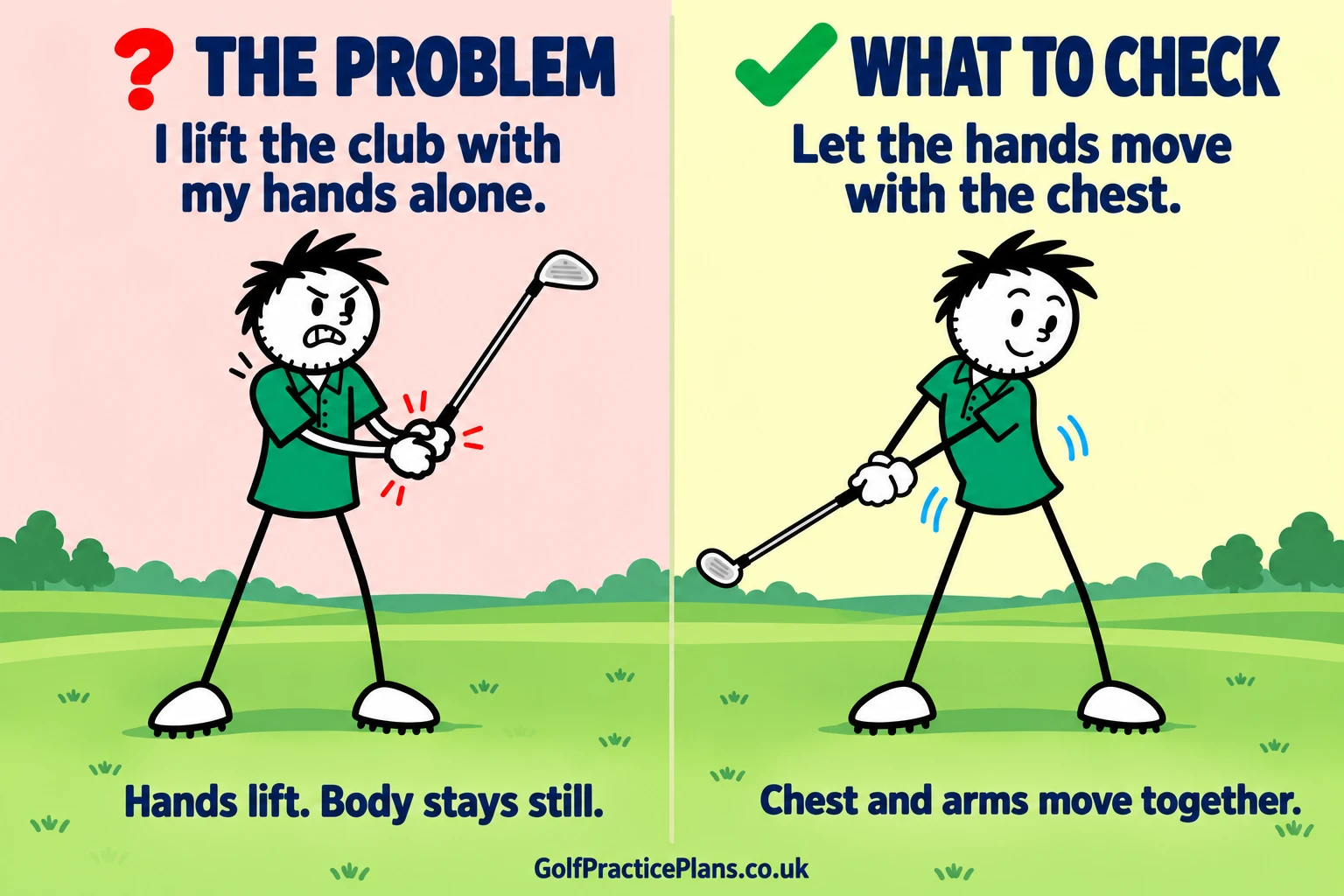
Use slow rehearsals to see the early movement, then return to an ordinary swing. A checkpoint is a reference to explore, not a position to force.
| No. | The problem | What to check | Drill to try |
|---|---|---|---|
| 31 | I cannot start the swing smoothly. | Try one small starting cue that flows into a rehearsal. Avoid adding several trigger movements at once. | |
| 32 | I whip the club sharply inside. | Watch how the hands and chest begin together. Use the takeaway reference slowly, keeping any raised stick clear of full swings. | |
| 33 | I lift the club with my hands alone. | Explore the simple 'club in front' cue in a slow rehearsal. Then make an easy swing instead of holding the club rigidly in place. | |
| 34 | My lead arm separates from my chest early. | Use the glove rehearsal to notice connection during a small movement. Avoid squeezing the arm tightly against your side. | |
| 35 | I lose control at the top. | Compare a comfortable, shorter backswing with your usual length. Use the halfway rehearsal as a reference, then reset before swinging. | |
| 36 | I sway away from the target. | Explore turning within your stance rather than chasing a larger lateral move. Check the feeling with a small, slow rehearsal. | |
| 37 | My hips feel blocked going back. | Try the hip-preset rehearsal within a comfortable range. Return to your normal setup afterwards to see whether the turn feels easier. | |
| 38 | I am unsure what my lead wrist is doing. | Explore the wrist movement slowly with the demonstration. Do not force a shape just because it looks different from your normal swing. | |
| 39 | I force an early wrist hinge. | Compare a later-set rehearsal with your normal movement. Keep the swing easy and assess the result before adopting the cue. | |
| 40 | My backswing feels like a flat sideways twist. | Explore the up-and-around coiling rehearsal without a ball. Stay within an easy range and avoid pulling against a forced stretch. |
Problems 41–50
Transition and Downswing
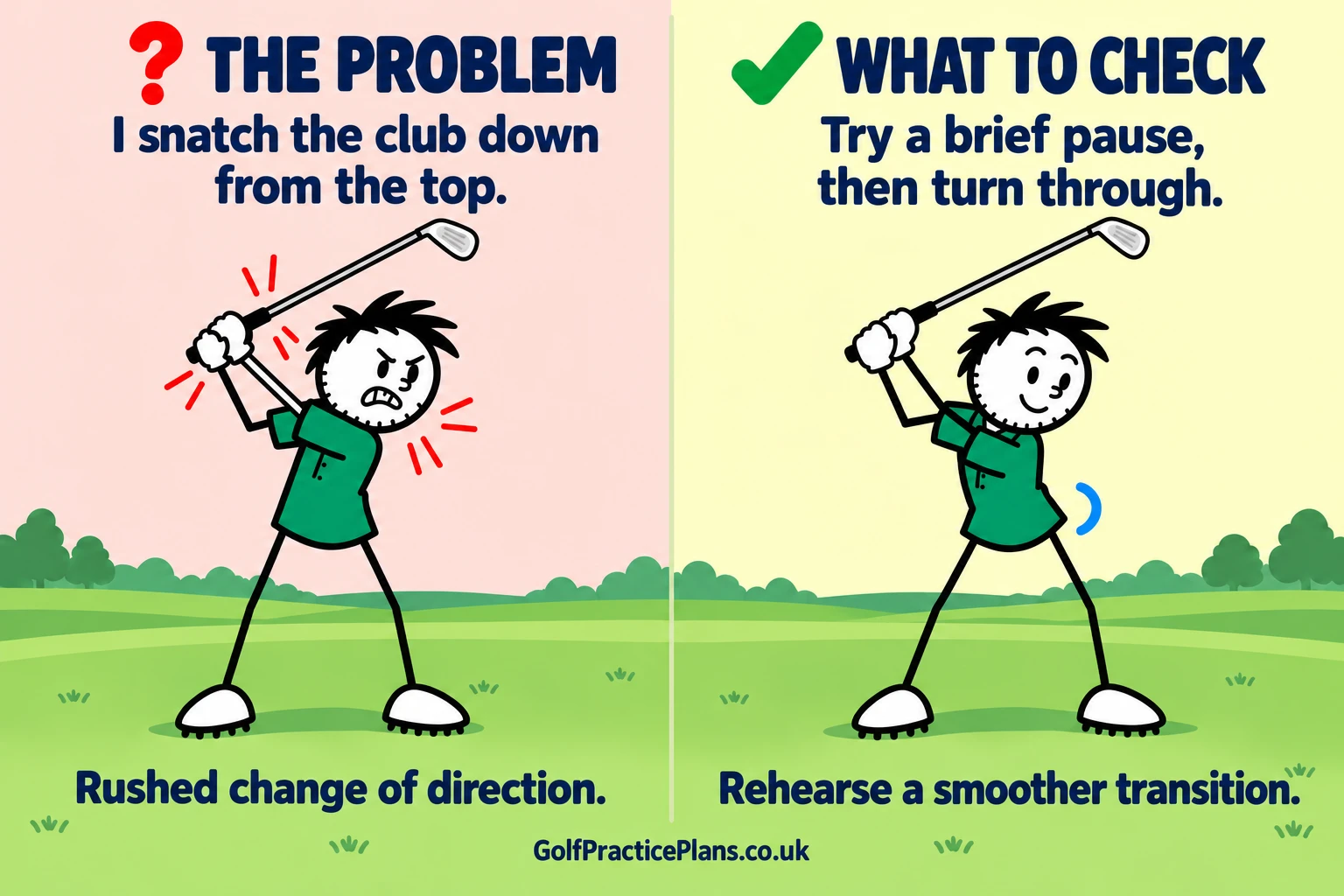
Explore how the turn, arms and pressure shift work together. Start with the rehearsal version, especially when the drill changes your usual sequence.
| No. | The problem | What to check | Drill to try |
|---|---|---|---|
| 41 | I snatch the club down from the top. | Use a brief pause to notice the change of direction. Let the rehearsal flow into a balanced finish without yanking the handle. | |
| 42 | I feel stuck coming down. | Try the continuous back-and-through rehearsal from a partial finish. Keep it small enough that your chest and arms respond together. | |
| 43 | My trail elbow gets trapped behind my hip. | Explore how the trail arm works out in front as the body turns. Use the full stick demonstration to check hand spacing and sequence. | |
| 44 | My hips move towards the ball. | Check whether you are losing room for the arms. Explore a hip-depth rehearsal slowly, then compare your movement on video. | |
| 45 | I slide sideways without turning through. | Separate a small lead-side shift from a prolonged slide. Use the gentle hip-bump rehearsal before adding any faster movement. | |
| 46 | My chest stops through the strike. | Explore a continuing turn rather than holding your upper body fixed at the ball. Begin with a small swing you can finish comfortably. | |
| 47 | I throw the clubhead out immediately. | Rehearse relaxed arms falling in front as you turn. Avoid replacing an early throw with a rigidly held wrist angle. | |
| 48 | I try to hold lag all the way to impact. | Use the relaxed-arm rehearsal to feel the club move and release. Carry the feeling into easy shots instead of forcing a still wrist position. | |
| 49 | My weight stays on the back foot. | Explore the relationship between foot pressure and the turn. Compare the drill with your normal stance and check the finish. | |
| 50 | I pin my trail foot to the ground. | Explore how the feet can support the turn. Let the trail heel respond naturally rather than lifting it as a separate forced action. |
Problems 51–60
Rhythm, Speed and Balance
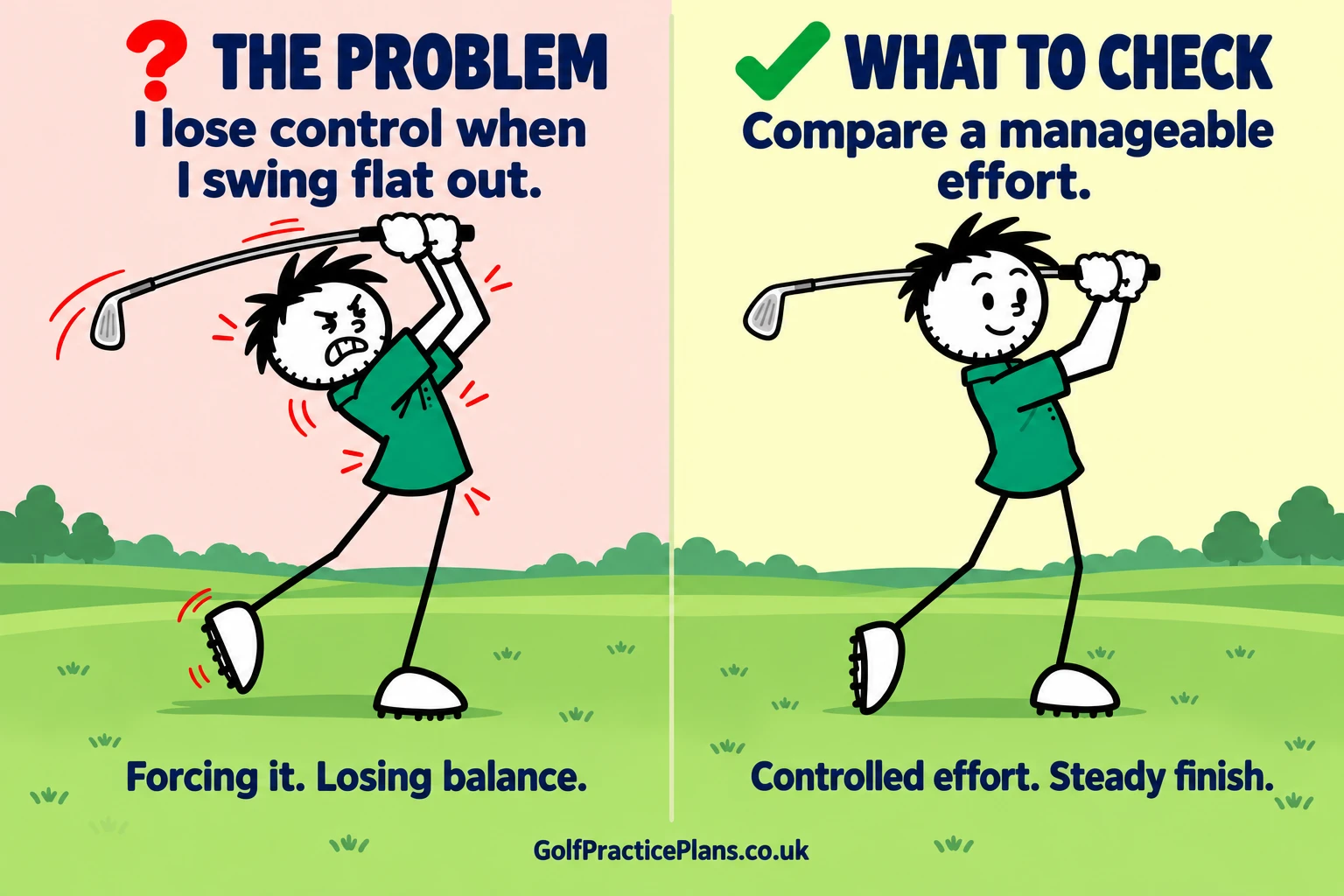
More effort is only useful when you can control the resulting shot. These drills help you compare rhythm, movement and finish without chasing one ideal tempo.
| No. | The problem | What to check | Drill to try |
|---|---|---|---|
| 51 | I lose control when I swing flat out. | Compare a manageable effort with your usual hard swing. Keep the club and target fixed, and assess the spread as well as distance. | |
| 52 | I want more speed without tensing up. | Explore a freer movement with controlled speed drills. Keep contact and balance in the comparison rather than chasing speed alone. | |
| 53 | My swing feels jerky. | Use small feet-together swings to notice a rushed change of direction. Return to your normal stance and compare the rhythm. | |
| 54 | I fall out of my finish. | Hold a comfortable, short follow-through and check your lead-side support. Reduce the swing length or effort if you need a recovery step. | |
| 55 | My body and arms feel out of time. | Try the small step drill to explore movement together. Keep the step controlled and return to your normal stance afterwards. | |
| 56 | My lead arm folds sharply after impact. | Explore a small lead-arm rotation rehearsal. Do not try to force the arm straight through a full-speed swing. | |
| 57 | I stop the swing immediately after the ball. | Use the follow-through reference to explore a freer continuation. Let the movement carry through rather than manufacturing a stretched finish. | |
| 58 | My lower body wobbles through the swing. | Use the band rehearsal to notice steadier legs while the body coils. Treat it as a controlled no-ball exercise, not a reason to lock the knees. | |
| 59 | My arms feel rigid. | Compare small swings with softer arms and a secure grip. Notice whether the movement becomes easier without losing control of the club. | |
| 60 | My routine speeds up after a poor shot. | Use a familiar preparation rhythm and reset behind the next ball. The metronome supports the routine, not a compulsory swing speed. |
Problems 61–70
Putting and Green Reading
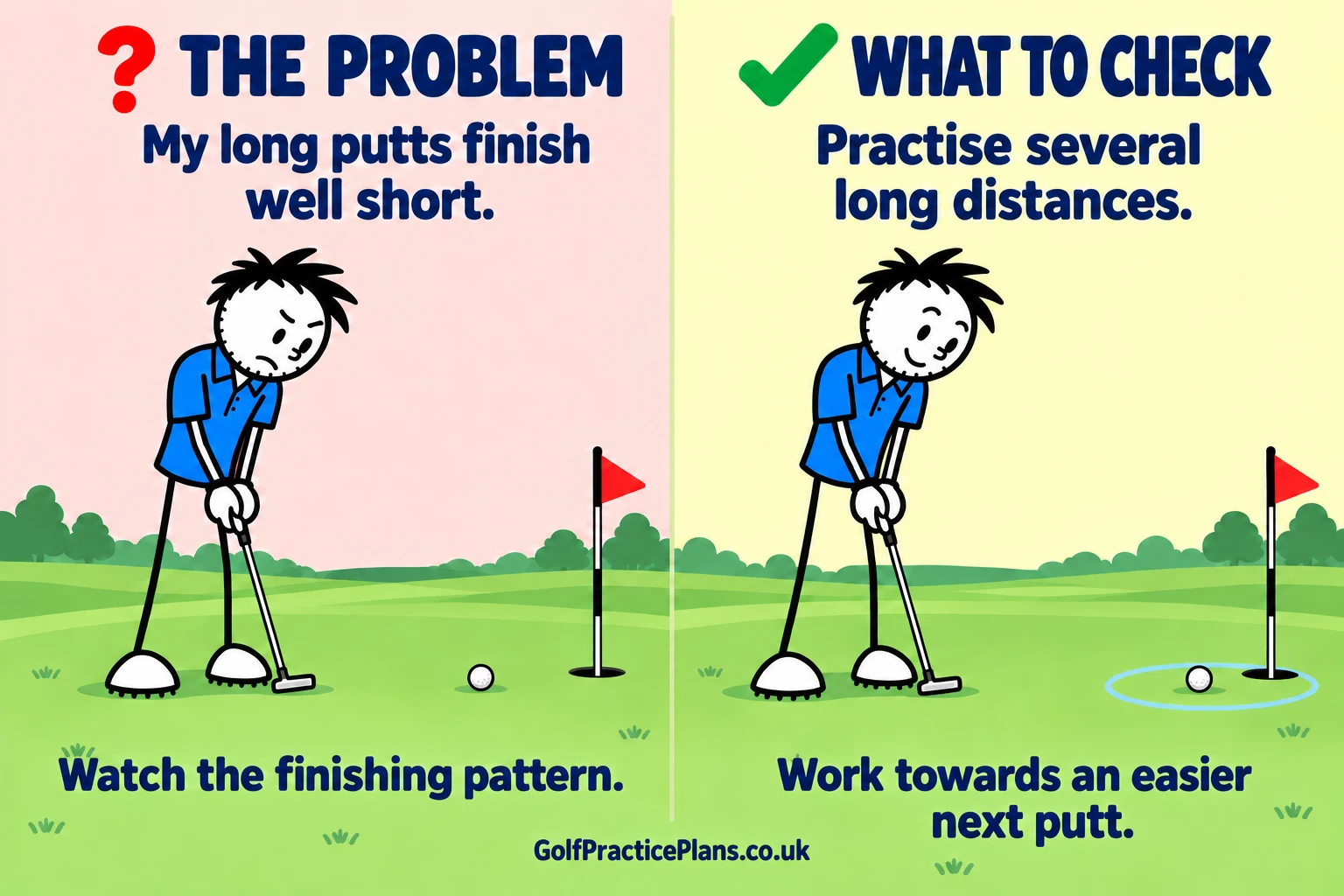
Separate pace, starting line and reading the slope. Pick the part that is letting you down before changing your whole putting stroke.
| No. | The problem | What to check | Drill to try |
|---|---|---|---|
| 61 | My long putts finish well short. | Practise several long distances and watch the finishing pattern. Work towards a manageable next putt rather than trying to hole every long one. | |
| 62 | I repeatedly race putts past the hole. | Use the flagstick boundary to judge pace. Keep your read and routine consistent while comparing the finishes. | |
| 63 | I leave uphill putts short. | Practise uphill and downhill putts as different pace tasks. Notice the length of stroke needed for each slope. | |
| 64 | Downhill putts get away from me. | Compare the downhill version with a familiar uphill putt. Choose a realistic finishing pace before making the stroke. | |
| 65 | I misread how much a putt breaks. | Start by finding a straight-putt reference. Then compare nearby positions around the same hole. | |
| 66 | I struggle to start the ball on my chosen line. | Use the ball-line routine to make the intended start direction visible. Check pace and slope separately from the alignment aid. | |
| 67 | I miss the short putt after a good approach. | Practise one attempt from each marked distance using your full routine. Move on after a miss rather than replaying until it drops. | |
| 68 | I cannot match line and pace on breaking putts. | Explore softer and firmer routes around the coin. Notice how changing pace changes the usable starting line. | |
| 69 | Every read looks different when I stand over it. | Commit to a read using a repeatable process. Use the fresh-read exercise rather than making last-second changes over the ball. | |
| 70 | I putt well until the score matters. | Give each attempt a clear consequence and keep the routine. Choose a pressure game you can repeat and compare. |
Problems 71–80
Chipping and Greenside Contact
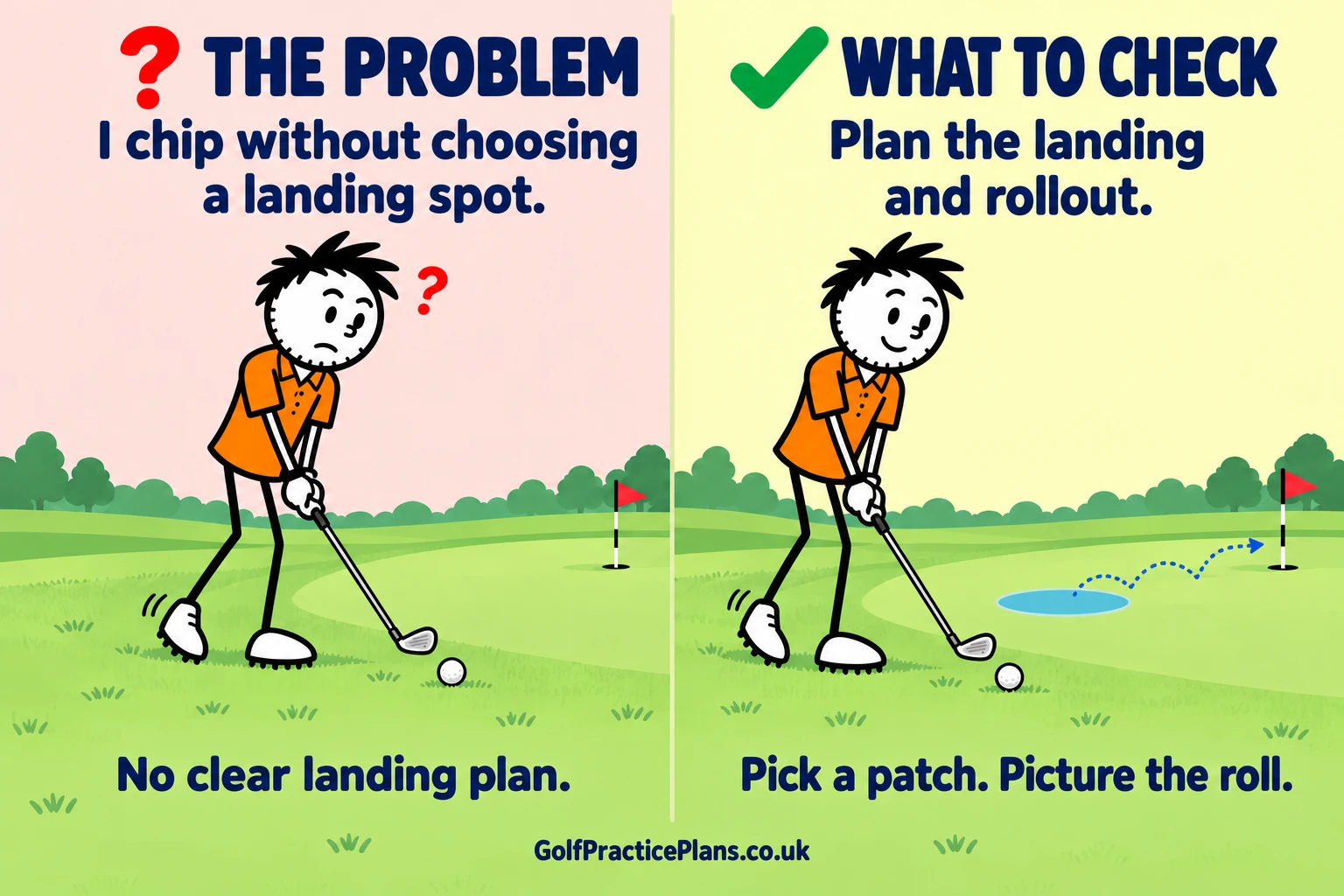
Choose a normal practice lie first and notice contact before judging the finish. Different shots need different setups; explore one drill at a time.
| No. | The problem | What to check | Drill to try |
|---|---|---|---|
| 71 | I hit the ground before my chips. | Check pressure and chest position with a short, easy motion. Watch where the club brushes the turf. | |
| 72 | I blade chips across the green. | Review the setup and keep the motion compact. Assess the first contact before trying to alter the rollout. | |
| 73 | I flick my wrists at the ball. | Use the stick rehearsal to notice a scoop and a stopped turn. Begin slowly and keep the upper end of the stick clear of your side. | |
| 74 | My body freezes while my hands keep moving. | Explore a continuing chest turn through a small chip. Keep the finish comfortable rather than forcing the hands past the ball. | |
| 75 | The club feels too long for a short chip. | Compare your normal grip with a comfortable shorter grip. Keep the lie, club and target the same while comparing landing and rollout. | |
| 76 | I use a lofted shot when there is plenty of green. | Practise a low runner as another option. Choose a landing area on the green and observe how far the ball rolls. | |
| 77 | I need a higher chip that stops sooner. | Explore the one-hop shot from a suitable clean lie. Check the landing and stopping pattern rather than expecting guaranteed spin. | |
| 78 | I chip towards the hole without choosing a landing spot. | Plan the flight, landing and rollout before stepping in. Use the same short routine for each practice ball. | |
| 79 | I rush a chip after missing the green. | Assess the lie and rehearse the intended shot before committing. Judge whether you followed the routine as well as the result. | |
| 80 | My chipping balance changes during the stroke. | Use the supported single-leg exercise as a controlled balance comparison. Start small and follow the full demonstration before trying it. |
Problems 81–90
Wedge Distance and Bunkers
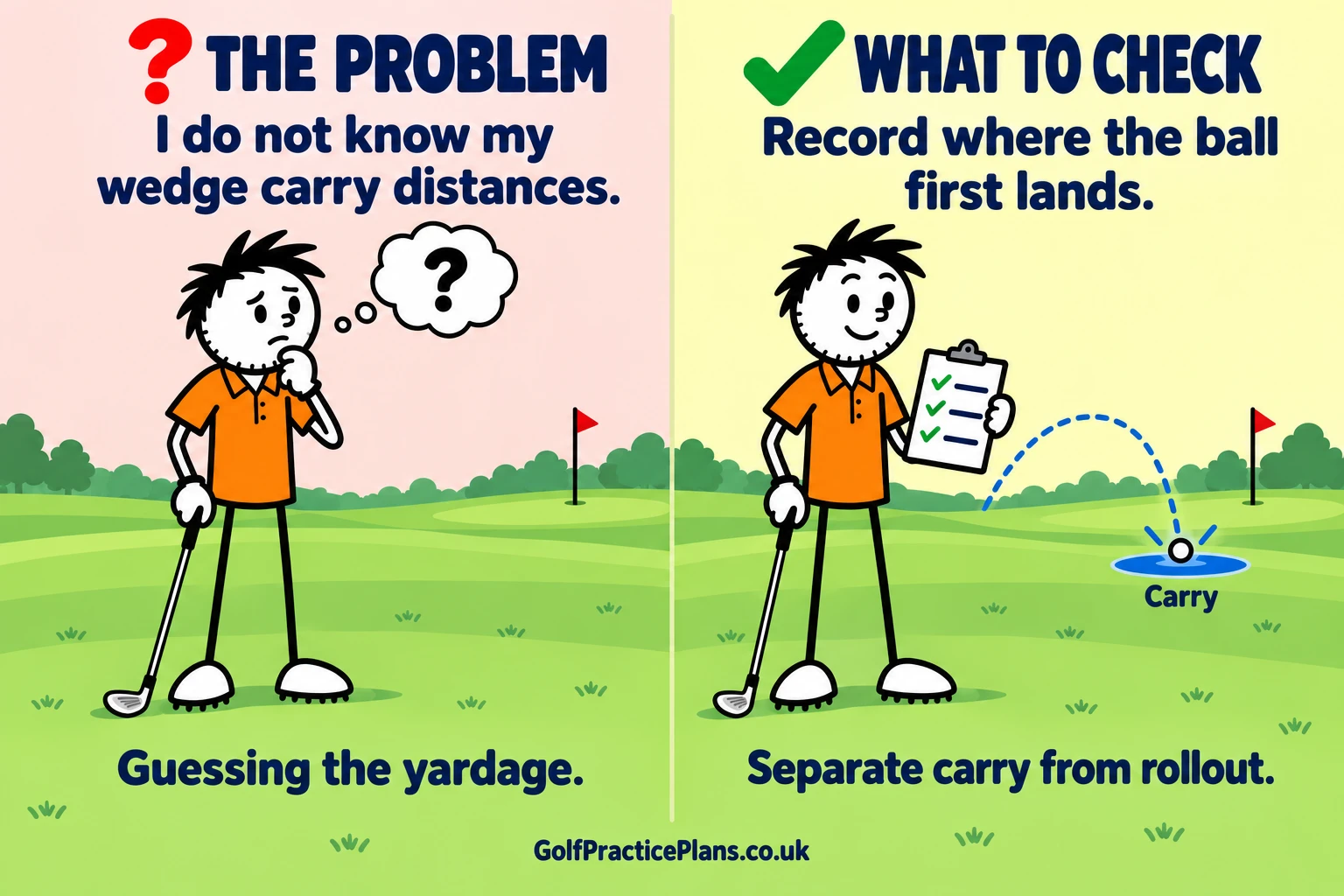
Distinguish carry from total distance on grass, and sand entry from ball contact in bunkers. Begin with normal lies and targets comfortably within reach.
| No. | The problem | What to check | Drill to try |
|---|---|---|---|
| 81 | I do not know my wedge carry distances. | Record where shots first land with one wedge and several repeatable swing lengths. Keep carry separate from the final resting distance. | |
| 82 | I struggle with an in-between wedge distance. | Compare a shot short of the target, one long and one towards it. Use the contrast to judge a manageable in-between feel. | |
| 83 | My wedges land close but roll too far. | Compare different flights to the same target and watch both landing and rollout. Green firmness and lie will also affect the finish. | |
| 84 | I only have one wedge trajectory. | Explore a small range of intended heights and shapes. Keep the target manageable and change one shot intention at a time. | |
| 85 | I lift my chest during pitch shots. | Explore a steadier posture through a compact pitch. Avoid trying to hold your whole body rigid. | |
| 86 | My arms move without my body on a pitch. | Use the towel rehearsal to feel the upper arms and chest work together. Start with short shots rather than squeezing the towel tightly. | |
| 87 | I do not know which lay-up yardage suits me. | Compare finishing groups from several measured distances. Repeat the test another day before choosing a favourite yardage. | |
| 88 | I leave greenside bunker shots in the sand. | Check a stable setup and a continuing splash through the sand. Start with a normal lie and a reachable landing area. | |
| 89 | I am unsure where the ball belongs in a bunker stance. | Use the T-line exercise to compare ball position and lead heel. Follow Rory's setup as one approach rather than mixing several different cues. | |
| 90 | All my bunker shots travel the same distance. | Practise short, medium and longer landing targets with the same normal lie. Change swing length while keeping a committed splash. |
Problems 91–100
Confidence, Focus and Better Practice
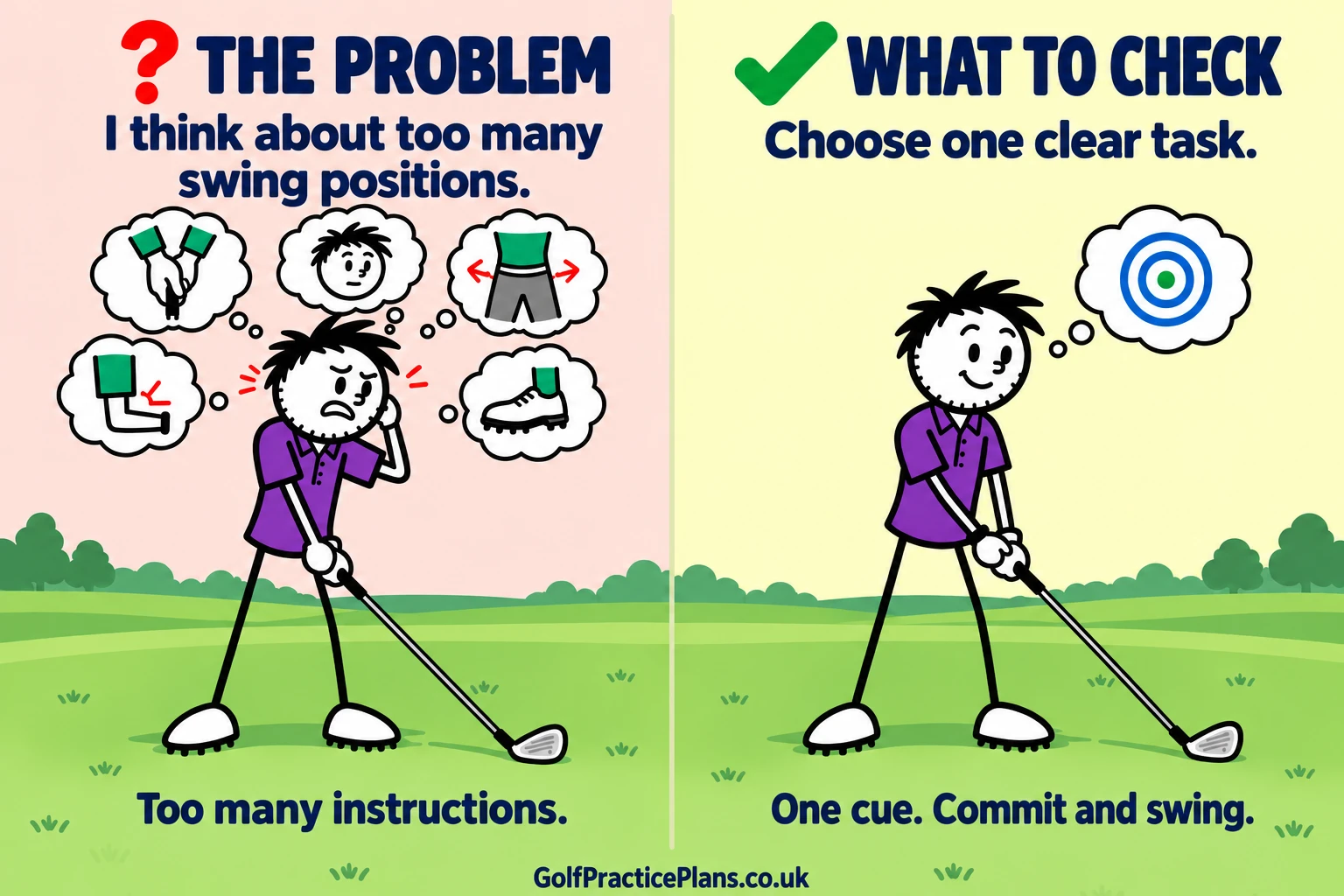
Give every practice task a purpose and a way to review it. You do not need to eliminate nerves or rebuild your swing after every poor round.
| No. | The problem | What to check | Drill to try |
|---|---|---|---|
| 91 | I think about too many swing positions. | Choose one clear task before stepping in. Finish the technical discussion behind the ball so you can play with a simple intention. | |
| 92 | I cannot commit to a target. | Picture a realistic shot and its finish before addressing the ball. Use a feeling of the shot if visual imagery is difficult. | |
| 93 | I feel nervous over an important shot. | Try a comfortable breath as a reset behind the ball. Let breathing return to normal and use the familiar routine that suits you. | |
| 94 | A poor shot distracts me on the next one. | Practise accepting one result and giving the next attempt the same preparation. Score a clear task without changing the rules after a miss. | |
| 95 | I hit a bucket without learning much. | Give a small set of shots a target and scoring rule. Pause afterwards to note what happened before choosing the next task. | |
| 96 | I change swing tips after every bad round. | Use one checkpoint and a repeatable test before moving on. Keep notes across sessions instead of judging a change on one swing. | |
| 97 | I hit it well at the range but struggle on the course. | Add a target, a full routine and one attempt that counts. Competitive practice lets you rehearse resetting when the result matters. | |
| 98 | I lose concentration during long practice sessions. | Use short practice intervals with a clear task and breaks. Finish each interval by noting one useful observation. | |
| 99 | I cannot get to the range regularly. | Use no-ball movement rehearsals in a clear space at home. Test any new feeling with ordinary shots when you next have the chance. | |
| 100 | I cannot tell whether my practice is helping. | Choose one measurable task and repeat the same test later. Keep the conditions and scoring rule comparable so the result means something. |
George’s Practice Tip
Choose the problem that costs you shots most often. Choose a drill. Keep the club, target and conditions consistent enough to learn from a group of attempts, then note one useful observation.
After the drill, return to your normal setup and play a few ordinary shots without the training aid. Check whether the useful feeling carries over. Repeat the same test another day before adding a second change; if the pattern remains unclear, take your notes to a teaching professional.
A hundred problems make a useful reference. Your next session only needs one clear task.
Wondering which familiar swing tips need a rethink? Read 100 Worst Golf Swing Tips Ever Given — And What to Do Instead alongside this guide.
