Browse by category
DRILL OVERVIEW
Wedge Nine Ball Flights Drill
Your drill at a glance
Wedge playDrill category
Height + shapePractice focus
15 minutesPractice time
9 / 10Difficulty
Wedge, balls + targetEquipment
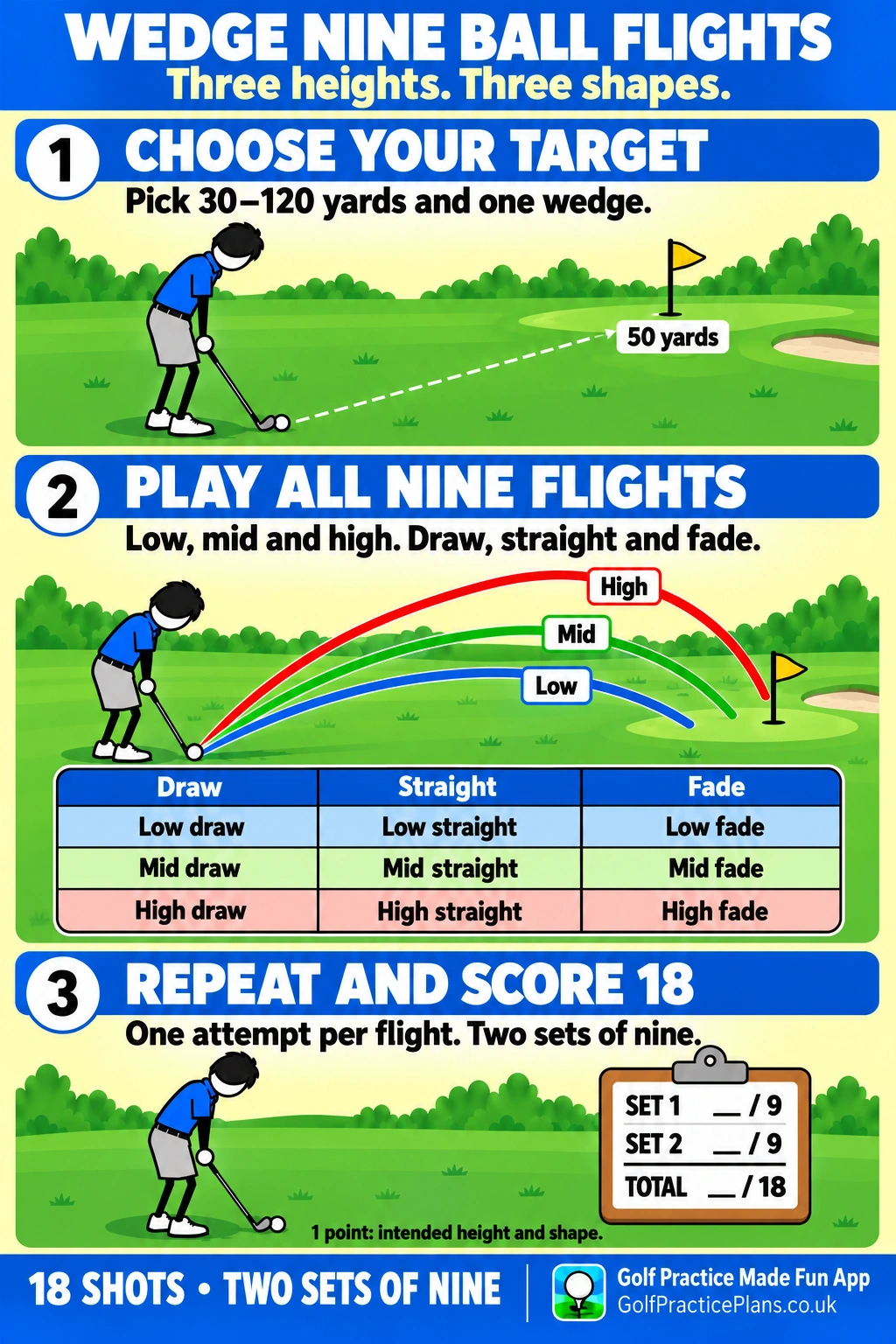
Build a varied short-game session with the Golf Practice Made Fun App.
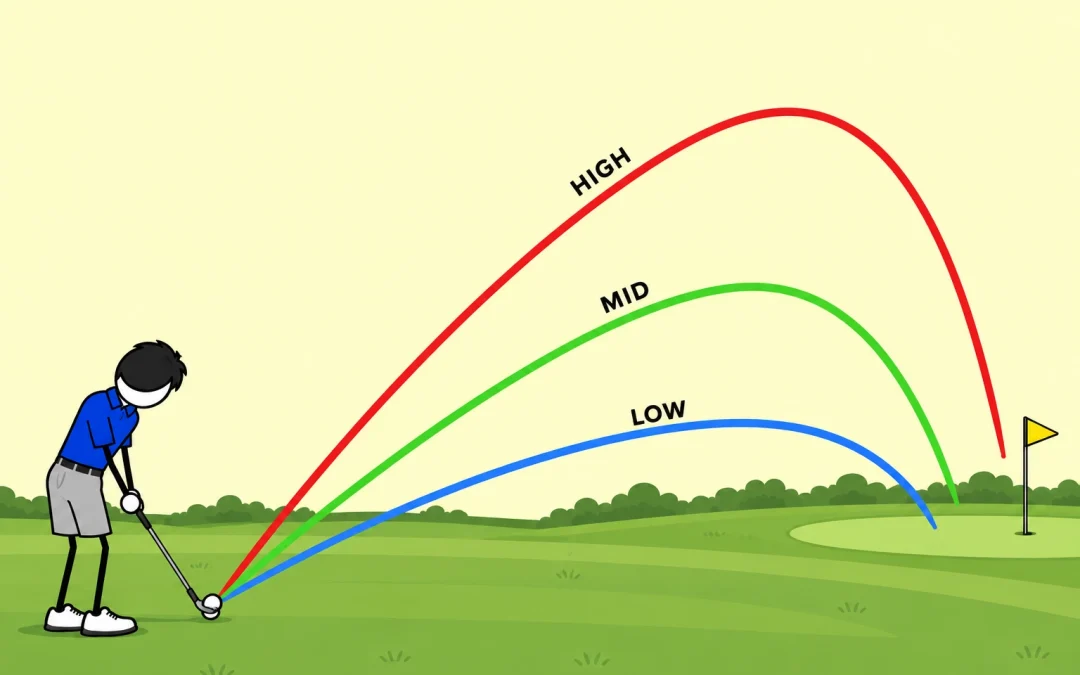
The wedge nine ball flights drill builds creativity by combining three heights with three shot shapes. Practise low, mid and high draws, straight shots and fades towards one target.
Choose a distance from 30 to 120 yards and use one appropriate wedge. Work through all nine combinations once, then repeat for a total score out of 18. The aim is to produce the flight you chose before the swing.
Watch how to change wedge ball flights
Watch Rick Shiels demonstrate changing wedge flight. The original post’s nine-flight challenge is adapted below into two sets of nine, with one scored attempt at each combination instead of counting attempts until you complete it.
Step 1. Choose your distance and wedge
What to do
| Action | What to do |
|---|---|
| Pick a target | Choose a clear practice target between 30 and 120 yards. For example, place a flag or marker 50 yards away. |
| Choose one wedge | Select an appropriate wedge for the distance, such as a 52° wedge. Use the same club and target throughout both sets. |
| Establish your normal flight | Hit a few unscored warm-up shots. Use your normal trajectory as the reference for low, mid and high. |
| Prepare nine balls | Set aside nine balls for the first set. Keep the lie and starting position consistent while you explore the different flights. |
Choose a distance where you can make a controlled swing and see the ball clearly. You do not need to start at the longest distance to make this a useful challenge.
Step 2. Play the nine ball flights
What to do
Before each shot, name the height and shape you want. Play one attempt at each combination in the table, working left to right across each row.
| Height | Draw | Straight | Fade |
|---|---|---|---|
| Low | Low draw | Low straight | Low fade |
| Mid | Mid draw | Mid straight | Mid fade |
| High | High draw | High straight | High fade |
| Flight | What to look for |
|---|---|
| Low, mid and high | Judge the height relative to your normal flight with this wedge and distance. Make the three trajectories visibly different. |
| Draw | For a right-handed golfer, the ball curves from right to left in the air. |
| Straight | The ball shows little visible sideways curve. |
| Fade | For a right-handed golfer, the ball curves from left to right in the air. |
For a left-handed golfer, draw and fade curve in the opposite directions. Judge the ball’s flight through the air rather than the direction it rolls after landing.
Quick practice checks
| Watch for | Try this |
|---|---|
| Changing the plan after impact | Call the intended height and shape before the swing, then judge that shot against your original plan. |
| Mistaking starting direction for curve | A ball starting left is not automatically a draw. Watch whether it curves as it flies. |
| Trying too many changes at once | Use the video as your guide and explore one flight at a time in unscored practice if needed. |
| Barely visible curve | Short wedge shots can show little curve. If you cannot see the intended shape clearly, record zero and a note rather than guessing. |
Step 3. Repeat and score 18 shots
What to do
Play each of the nine height-and-shape combinations once, then repeat for eighteen shots.
| Score | When to award it |
|---|---|
| 1 point | The shot has both the intended height and intended shape. |
| 0 points | Either the intended height or shape is missing. |
Add your points for a total out of eighteen.
George’s Conclusion
Use the wedge nine ball flights drill to explore what you can make the ball do. Choose the flight first, make the swing, then watch the result with curiosity.
Keep your score out of 18 and one short note about the flight that needs practice. To learn your usual carry numbers first, try the Distance Wedge Control Drill.
MAKE THE NEXT BUCKET COUNT
Pick a card. Practise with purpose.