Browse by category
DRILL OVERVIEW
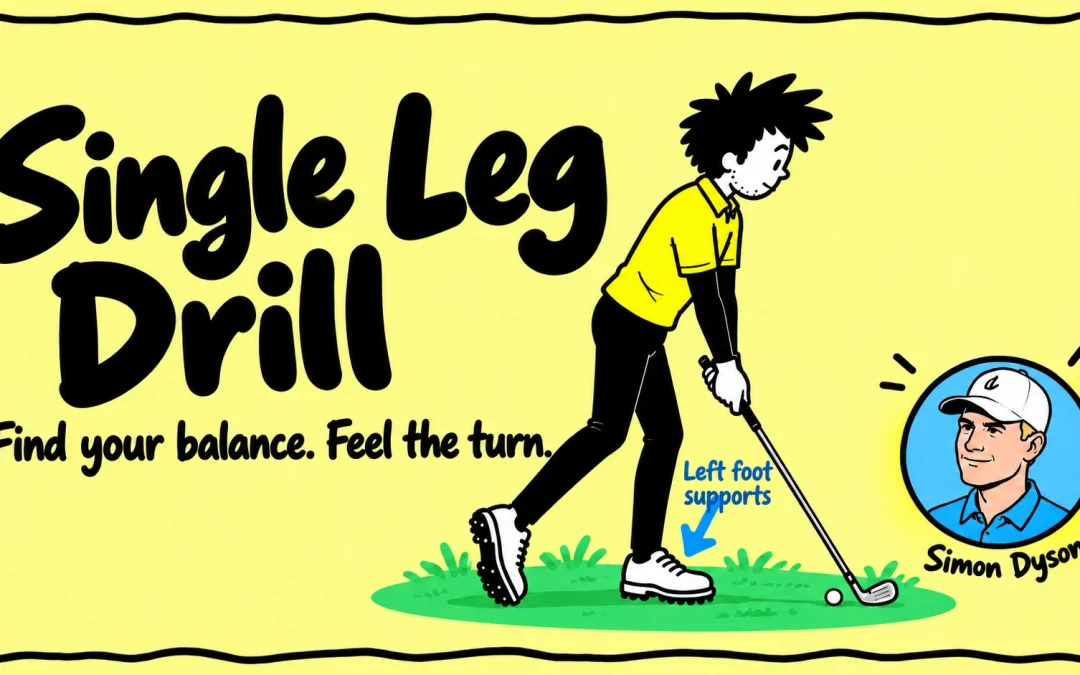
Simon Dyson Single Leg Drill: Find Your Balance, Feel the Turn
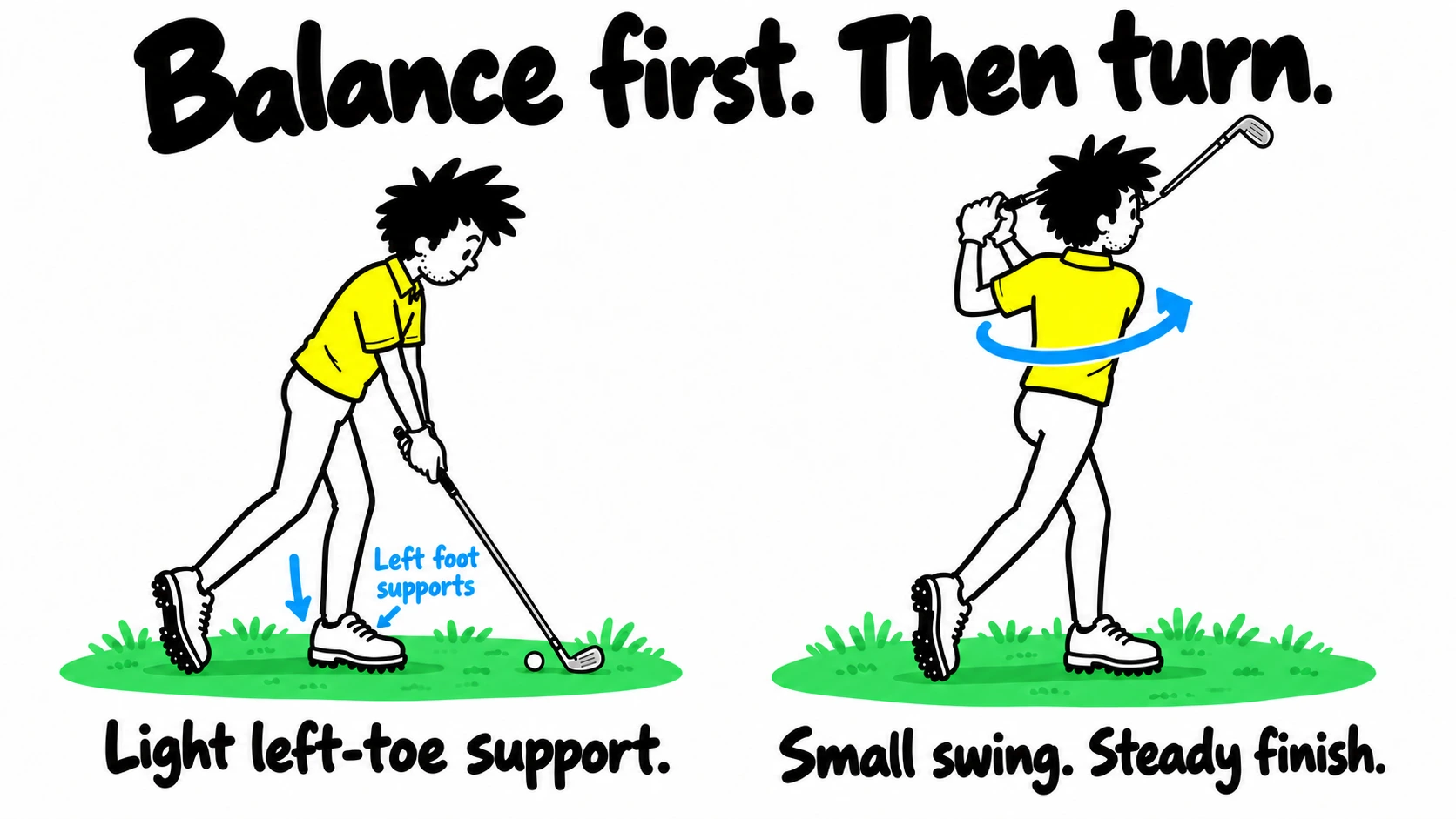
Your drill at a glance
This drill is from the Golf Practice Made Fun App.
A smaller base of support makes it easier to notice swaying and learn to turn without losing your balance. With most of your weight on one foot, an oversized swing or sudden sideways movement becomes easier to feel. Small, controlled swings encourage your arms and body to move together, helping you explore steadier contact. Afterwards, take that balanced turning feel back to your normal two-foot stance.
Step 1. Watch Simon’s single-leg drill
Watch Simon Dyson’s demonstration from 3:42. Notice the planted right foot, light left-foot support and the way his body turns through while he stays balanced.
Step 2. Find your balance, then make a small swing
Set up on your trail foot
For a right-handed golfer, put most of your weight on the right foot. Move the left foot slightly behind you and let its toes touch the ground lightly for support. Keep the supporting knee soft and hinge comfortably from the hips. For a left-handed golfer, reverse the feet.

You do not need to lift the supporting toes completely off the ground. Start on level ground with enough room for the club to move. If the position feels unsteady, use more toe support and shorten the swing.
Start with gentle rehearsals

Make a few slow no-ball swings with a short iron. Begin with a small backswing and let your chest turn with the arms. Simon demonstrates a three-quarter swing, but there is no need to copy that length immediately. Build only as far as you can stay steady.
Turn through and finish under control

Let the chest turn towards the target while the planted foot supports you. Keep the swing easy enough to finish without a sudden step or lurch. Avoid trying to turn as far as possible or force the arms into a particular finishing height. Once the rehearsals feel manageable, add a ball and play small shots.
| Practice cue | What to do |
|---|---|
| Supporting foot | Right foot for a right-handed player; left foot for a left-handed player. Keep it planted and the knee soft. |
| Light toe support | Let the other toes touch behind you. Use enough support to keep the movement controlled. |
| Small swing | Start with gentle rehearsals or short shots. Increase the length only if you stay steady. |
| Turning finish | Let the chest turn through without forcing the hips forward or throwing the arms upwards. |
| Transfer the feel | Return to a normal two-foot stance after the round and notice whether the same steady turn carries over. |
How this relates to early extension


Early extension describes the hips moving towards the ball and the body losing its forward tilt too soon. This drill can help you notice balance and movement, but it does not automatically fix every cause of early extension. A low finish alone is not proof of a correct swing.
What to watch for
| What you notice | What to try |
|---|---|
| Wobbling or stepping | Use more support from the other toes and make a smaller swing. |
| Locked supporting knee | Keep the knee soft so the body can turn comfortably. |
| Leaning back onto the heel | Find a comfortable, steady foot pressure rather than forcing all your weight onto the heel or toes. |
| Rushing the downswing | Slow the movement and let the arms and chest turn together. |
| Poor contact | Shorten the shot and practise a few no-ball swings before adding a ball again. |
| Discomfort | Stop the single-leg movement instead of pushing through it. |
Step 3. Complete your round
What to do
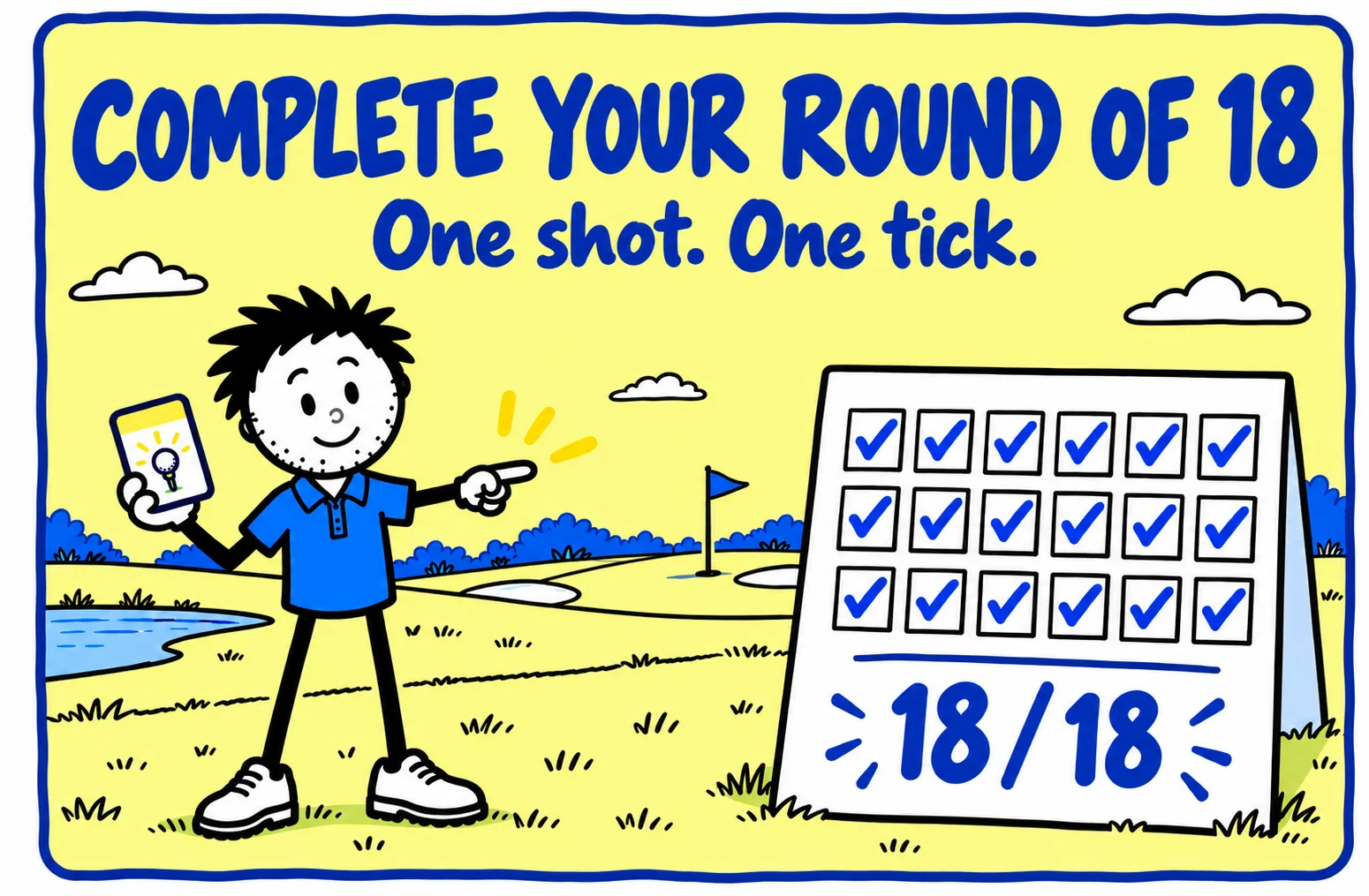
Play 18 controlled single-leg shots in two sets of nine. Begin with small shots, keeping the other toes lightly on the ground. A preparation rehearsal can help you settle before each ball.
No-ball option: complete 18 controlled swing rehearsals in two sets of nine. One full movement back and through, returning to rest, is one tick. Choose either shots or rehearsals for the round so the counting stays clear.
| Score | When to award it |
|---|---|
| 1 point | You complete the shot, routine or movement described above. |
| 0 points | You do not complete the attempt. |
George’s Conclusion
I like the immediate feedback this drill gives: a swing that is too big or rushed is harder to balance. Keep some toe support, start small and let the turn happen without a lurch. Then return to your normal stance and see whether that steadier feeling stays with you.
Explore the Sam Snead Fancy Footwork Drill, try the Early Extension Fix Drill, or browse more long game drills.
MAKE THE NEXT BUCKET COUNT
Pick a card. Practise with purpose.