
How to Fix a Golf Slice: 3 Drills for a Better Swing Path
Clearer swing path
A slice is easier to work on when you can see what your club is doing through the ball.
The Anti-Slice Downswing, Headcover Anti-Slice and Three Ball Golf Drill use a foam noodle, a soft headcover and two outside balls to give clear feedback as you build a smoother swing path. Work through them one at a time with short, controlled swings, resetting the layout before each shot. Keep watching the starting direction and curve: missing a marker alone does not fix a slice, because the clubface relative to the path also matters.
↓ Download free infographicSave to your device or print for practice.
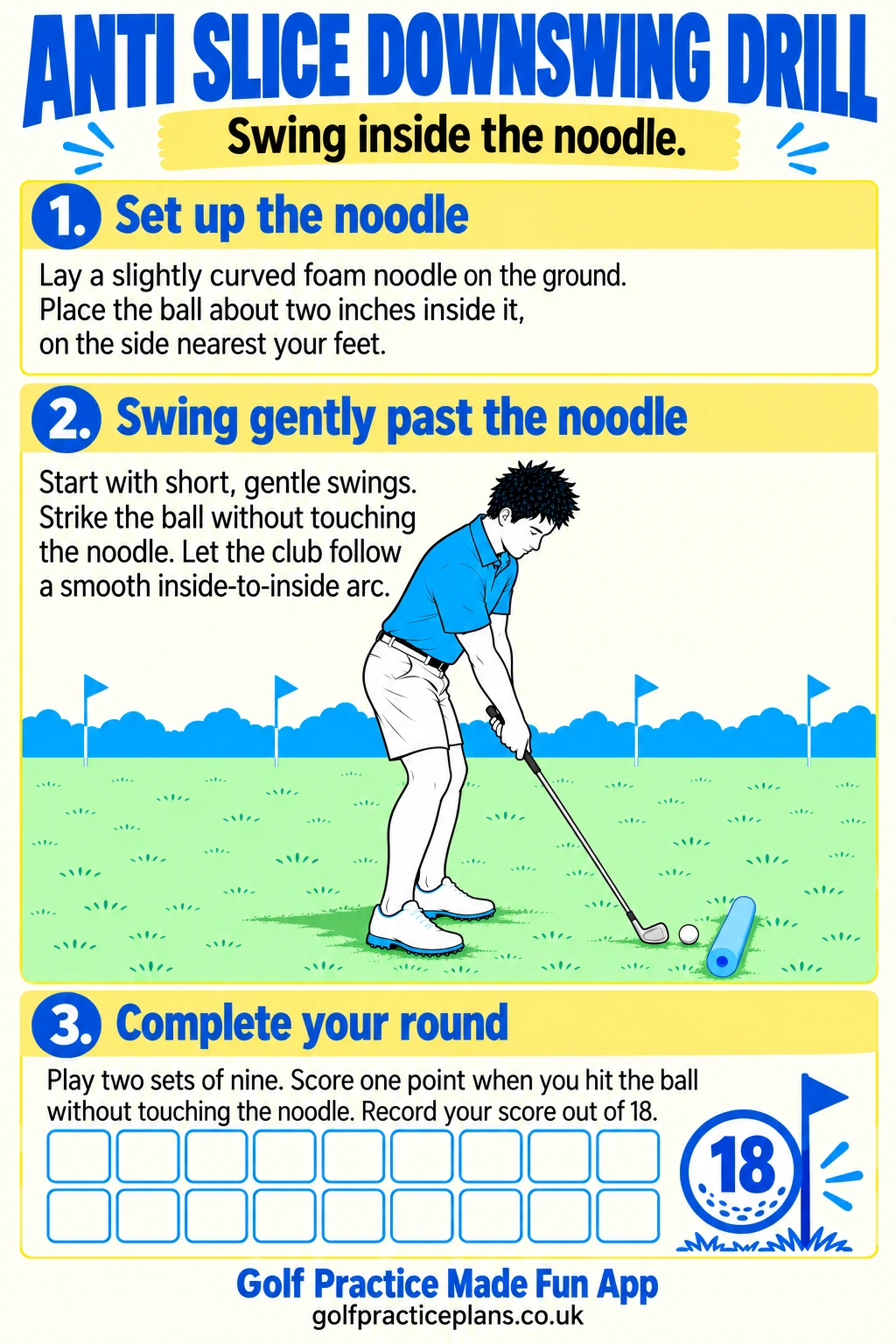
Drill 1. Anti-Slice Downswing: Swing Inside the Noodle
| Step | What to do |
|---|---|
| 1 | Lay a slightly curved foam swim noodle on the ground outside the ball, matching the demonstration. Place the ball about two inches inside it, and take your normal address with an iron. |
| 2 | Begin with short, gentle swings. Strike the ball without touching the noodle and let the club follow a smooth inside-to-inside arc. If the club catches the noodle, reset it and make a smaller, slower rehearsal before trying again. |
| 3 | Play eighteen controlled shots in two sets of nine. Keep the same comfortable setup, checking the noodle between attempts. Build swing length gradually as contact and clearance become repeatable, without forcing an exaggerated path. |
See the full Anti-Slice Downswing Drill and noodle setup demonstration →
Drill 2. Headcover Anti-Slice: Rehearse a Clear Route

| Step | What to do |
|---|---|
| 1 | Choose a target and take a comfortable stance with a short iron. Put a soft headcover inside-left of the ball, on the side nearer your feet, matching the source demonstration. Leave generous clearance for the club and use a headcover without a hard insert. |
| 2 | Make slow half-swing rehearsals through the intended ball position before adding a ball. If you touch the headcover or feel you must make an awkward movement to miss it, move it farther away and rehearse again. |
| 3 | Hit eighteen controlled half-shots in two sets of nine, keeping the club, target and swing size consistent. Look for a clean strike with the headcover untouched. Reset between shots and observe the ball flight as well as the clearance. |
Watch the full Headcover Anti-Slice Rehearsal and check the marker position →
Your focus: Clearer swing path
Drill 3. Three Ball Golf Drill: Strike the Middle Ball

| Step | What to do |
|---|---|
| 1 | Arrange three balls in a diagonal line at roughly forty-five degrees to the target line. The middle ball is the one to hit. Leave generous space between the outside balls for the clubhead to pass. |
| 2 | Take your normal stance with an iron and use a short, controlled swing to strike the middle ball. Leave both outside balls untouched. If either moves, reset the layout, check the spacing and return to a smaller swing. |
| 3 | Play eighteen controlled shots in two sets of nine with the same spacing, resetting before every attempt. Once you can repeatedly strike the middle ball cleanly, remove the outside balls and try the same comfortable movement in normal practice. |
FAQs
What equipment do I need?
Iron, balls + aids.
How do I set up Anti-Slice Downswing?
Lay a slightly curved foam swim noodle on the ground outside the ball, matching the demonstration. Place the ball about two inches inside it, and take your normal address with an iron. Begin with short, gentle swings. Strike the ball without touching the noodle and let the club follow a smooth inside-to-inside arc. If the club catches the noodle, reset it and make a smaller, slower rehearsal before trying again. Play eighteen controlled shots in two sets of nine. Keep the same comfortable setup, checking the noodle between attempts. Build swing length gradually as contact and clearance become repeatable, without forcing an exaggerated path.
How do I practise Headcover Anti-Slice?
Choose a target and take a comfortable stance with a short iron. Put a soft headcover inside-left of the ball, on the side nearer your feet, matching the source demonstration. Leave generous clearance for the club and use a headcover without a hard insert. Make slow half-swing rehearsals through the intended ball position before adding a ball. If you touch the headcover or feel you must make an awkward movement to miss it, move it farther away and rehearse again. Hit eighteen controlled half-shots in two sets of nine, keeping the club, target and swing size consistent. Look for a clean strike with the headcover untouched. Reset between shots and observe the ball flight as well as the clearance.
How does Three Ball Golf work?
Arrange three balls in a diagonal line at roughly forty-five degrees to the target line. The middle ball is the one to hit. Leave generous space between the outside balls for the clubhead to pass. Take your normal stance with an iron and use a short, controlled swing to strike the middle ball. Leave both outside balls untouched. If either moves, reset the layout, check the spacing and return to a smaller swing. Play eighteen controlled shots in two sets of nine with the same spacing, resetting before every attempt. Once you can repeatedly strike the middle ball cleanly, remove the outside balls and try the same comfortable movement in normal practice.
Do I need to practise every drill in one session?
Choose one drill that matches what you want to work on. Follow its setup and practice task, then use what you notice to decide what to repeat next time.
Should I use the same score for every drill?
Follow the practice record given for each drill. Keep its distance, target and equipment consistent when you compare sessions.
What drill do you recommend I do next?
Try Headcover Barrier next to give shank practice a clear headcover barrier.
You could also use Shorter Backswing Drill to compare nine usual swings with nine shorter backswings. For another focused practice task, try Towel-Behind-Ball Golf Drill to use a towel to check ball-first iron contact.
Give your next practice a purpose.
Find illustrated drills, save your favourites and record your practice in the Golf Practice Made Fun App.
Try the App Free ↗14 days free · No card required