

Find the Straight Putt Drill: A Simple Green-Reading Reference
Read the slope
A straight-putt reference makes the slope easier to understand. Find a short uphill putt that rolls with little sideways curve, then compare it with putts from either side. You will practise noticing the slope and checking your read against the ball’s actual roll.
↓ Download free infographicSave to your device or print for practice.

Watch the green-reading demonstration
Step 1. Read the slope from the low side
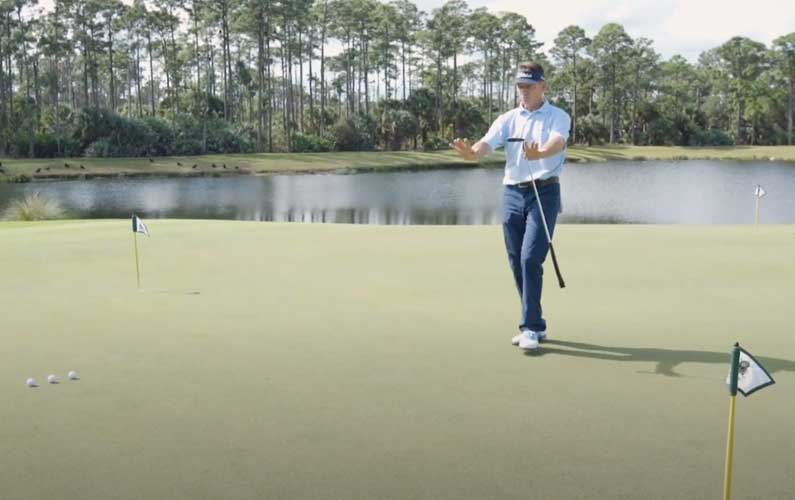
Choose a practice hole on a gentle, fairly even slope. Look from behind the ball, then move to the low side, roughly opposite the middle of the ball-to-hole line. That side-on view helps you judge whether the putt is uphill or downhill. Walk clear of other players’ putting lines.
Notice the slope under your feet as well as what you can see. You do not need a fixed viewing distance or a perfect triangle: give yourself enough space to see the ball, the hole and the ground between them.
Step 2. Find a short straight uphill putt
From the low side of the hole, choose a starting spot roughly four to six feet away. Roll a few test putts at a pace that would finish close to the hole. Move the starting spot a little around the hole until the ball rolls with little sideways curve. This is your straight uphill reference for this patch of green.
A pushed or pulled stroke can look like a misread. Use several reasonably consistent rolls before deciding that the starting position needs changing. If the contours are complicated, choose a simpler practice hole.
Place one ball either side

Put one ball at your straight reference and one a little either side, keeping all three approximately the same distance from the hole. Start with the centre ball, then read and putt each side ball. Decide whether you expect it to curve left, right or stay nearly straight before you roll it.
On a simple, even slope, the side balls usually show different directions of break. Real greens can change slope within a few feet, so use the result as feedback rather than assuming a fixed pattern. Your pace also changes how much a putt curves.
| Ball | What to practise |
|---|---|
| Centre | Check your straight uphill reference with a controlled roll. |
| One side | Predict the direction of break and choose a start line. |
| Other side | Make a fresh read; compare the curve and pace with the first two balls. |
A worked example
“My centre ball rolls almost straight. The ball on one side curves left and the other curves right. I will use the centre line as a reference, then make a fresh read for each ball.”
Watch for these easy mistakes
| Instead of… | Try… |
|---|---|
| Judging everything from behind the ball | Add a low-side view to see the slope between ball and hole. |
| Calling every sideways miss a bad read | Check your start line and pace before moving the reference position. |
| Forcing the side balls to break opposite ways | Observe the actual contours; choose a simpler slope if needed. |
| Raking a ball back and hitting it again | Move to the next ball and give it a fresh routine. |
| Hitting hard enough to hide the break | Use a pace that would leave a manageable next putt. |
For another explanation, see Brad Faxon’s straight-putt lesson on Titleist. To explore reading slope with your feet, try the AimPoint Express Putting Drill.
Your focus: Read the slope
Step 3. Complete your round
What to do
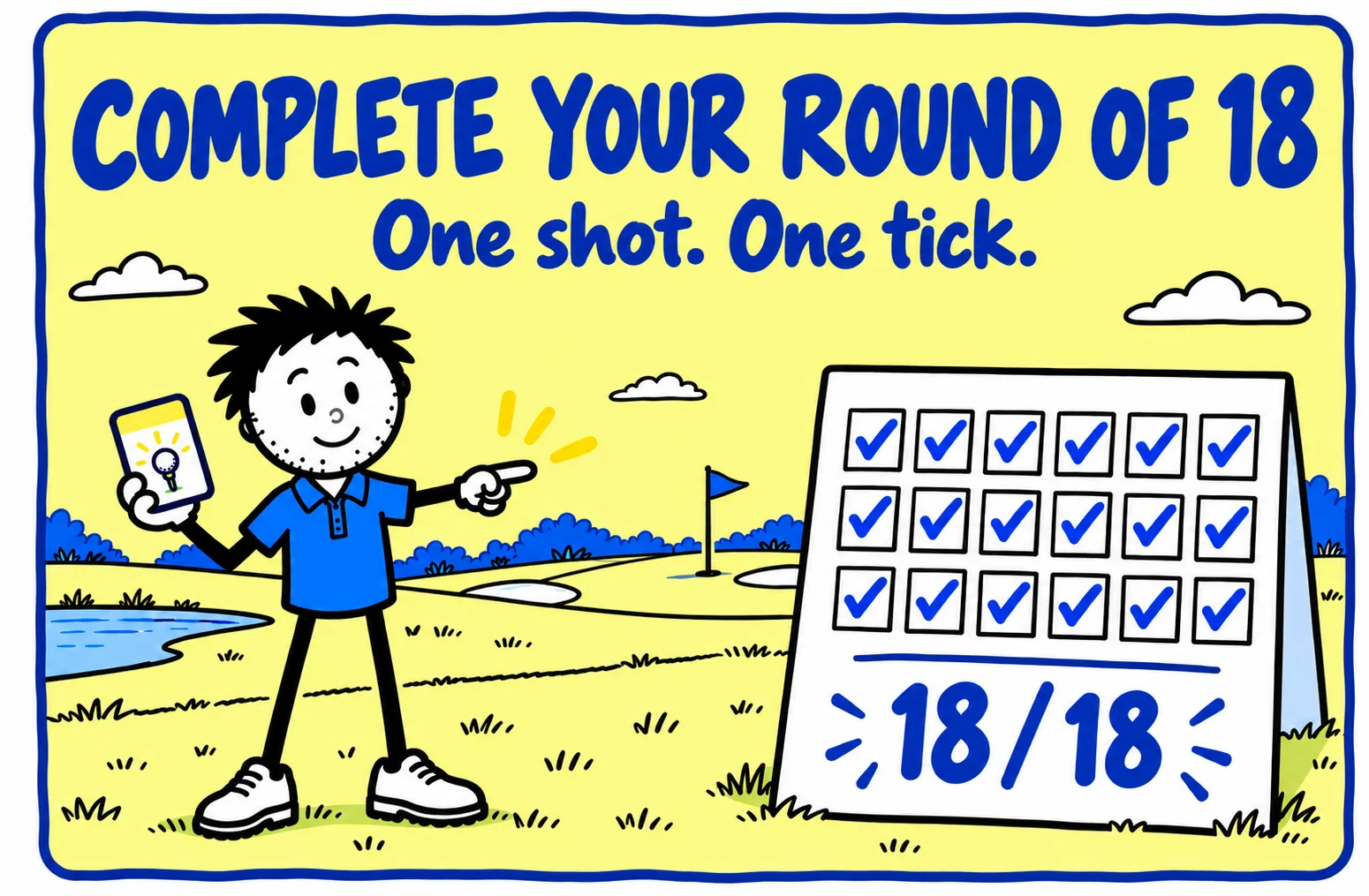
Complete 18 putts: six sets of three. In each set, putt the straight reference first, then the two side balls. Make your prediction before each roll and watch what happens.
| Score | When to award it |
|---|---|
| 1 point | You complete the shot, routine or movement described above. |
| 0 points | You do not complete the attempt. |
FAQs
How do I set up this drill?
Choose a practice hole on a gentle, fairly even slope. Look from behind the ball, then move to the low side, roughly opposite the middle of the ball-to-hole line. That side-on view helps you judge whether the putt is uphill or downhill. Walk clear of other players’ putting lines.
Notice the slope under your feet as well as what you can see. You do not need a fixed viewing distance or a perfect triangle: give yourself enough space to see the ball, the hole and the ground between them.
What should I focus on during practice?
From the low side of the hole, choose a starting spot roughly four to six feet away. Roll a few test putts at a pace that would finish close to the hole. Move the starting spot a little around the hole until the ball rolls with little sideways curve. This is your straight uphill reference for this patch of green.
A pushed or pulled stroke can look like a misread. Use several reasonably consistent rolls before deciding that the starting position needs changing. If the contours are complicated, choose a simpler practice hole.
How should I record my practice?
Complete 18 putts: six sets of three. In each set, putt the straight reference first, then the two side balls. Make your prediction before each roll and watch what happens.
What should I keep in mind when practising?
I like having one clear reference before I start guessing at a breaking putt. Find a straight roll, compare the balls beside it and let the result teach you something. A miss can still be useful if you noticed the start line, pace and curve.
Give your next practice a purpose.
Find illustrated drills, save your favourites and record your practice in the Golf Practice Made Fun App.
Try the App Free ↗14 days free · No card required