
Browse by category
DRILL OVERVIEW
Down Out Up Drill: Feel Your Lead Wrist Through the Backswing

Your drill at a glance
This drill is from the Golf Practice Made Fun App.
Becoming aware of your lead wrist gives you a clearer way to explore clubface control during the backswing. Your grip and wrist position affect how the clubface is presented as you swing. The down, out and up cues turn that movement into three simple checkpoints, so you can rehearse slowly instead of guessing at full speed. Use them to notice how your clubface changes, then test a small adjustment with easy shots. They are rehearsal feels, rather than wrist angles that every golfer must copy.
Step 1. Watch the three wrist feels
Watch the demonstration and notice how the back of the lead hand changes direction as the club moves through the backswing. For a right-handed golfer the lead hand is the left; reverse the sides if you play left-handed.
Step 2. Rehearse down, out and up
Use a comfortable stance and a relaxed grip. Start with slow rehearsals without a ball, leaving plenty of room for the club. Let your body turn with the movement and keep the wrist within a comfortable range.
Down: the early backswing

From takeaway towards the shaft-parallel position, explore the feeling that the back of the lead hand points more towards the ground. In the demonstration, the glove logo turns away from the golfer’s view. Use that as a simple visual cue, without twisting the wrist as far as possible.

At this checkpoint, compare the leading edge of the clubface with the angle of your tilted upper body. This is a reference to explore, rather than proof that the face will be square at impact. Your grip also affects the relationship.
Out: the three-quarter backswing

Continue the turn and allow the hands to rise. At roughly three-quarter backswing, feel the back of the lead hand pointing out, away from your body. Move smoothly between checkpoints instead of adding a separate forceful wrist twist.
Up: the top of the backswing

Finish the backswing at a length you can control. Explore the feeling of the back of the lead hand facing more upwards, with a relatively flat lead wrist as shown. You do not need to reach a longer backswing or force a perfectly flat wrist.
| Checkpoint | Simple rehearsal cue |
|---|---|
| Down | Early backswing: notice the back of the lead hand angled towards the ground. |
| Out | Three-quarter backswing: notice the back of the lead hand facing away from your body. |
| Up | Top of backswing: explore the hand facing more upwards within your comfortable range. |
| Return | Lower the club gently back to address. One complete rehearsal includes all three checkpoints and the return. |
Two optional alignment references
You can practise the wrist feels without a station. If you use an alignment stick, start with it laid flat on the ground and clear of your club’s path.

Station one: use the target-line reference to notice where the ball starts. The demonstration explores starting the ball to the right of the line and drawing it back for a right-handed golfer. Treat that as feedback, rather than a ball flight everyone needs to produce.


Station two: the demonstration places a raised stick along the back of the target line, directly above the ball, roughly a grip length high. These photographs show the setup. Before trying it, rehearse slowly and check that the support and stick are secure and outside the club’s path. If you cannot establish clearance, use a flat ground reference instead.
What to watch for
| What you notice | What to try |
|---|---|
| A strong hook appears | Reduce the exaggerated wrist feel and shorten the swing. Do not keep increasing the movement to chase a draw. |
| Wrist tension or discomfort | Relax the grip and use a smaller range. Stop if the movement hurts. |
| Three disconnected movements | Pause briefly when learning the checkpoints, then blend them into one slow backswing. |
| Trying to copy an exact glove angle | Allow for your grip and posture. Focus on noticing the clubface rather than forcing a photograph’s shape. |
| The stick could meet the club | Remove the raised station and use a flat reference well clear of the swing. |
Step 3. Complete your round
What to do
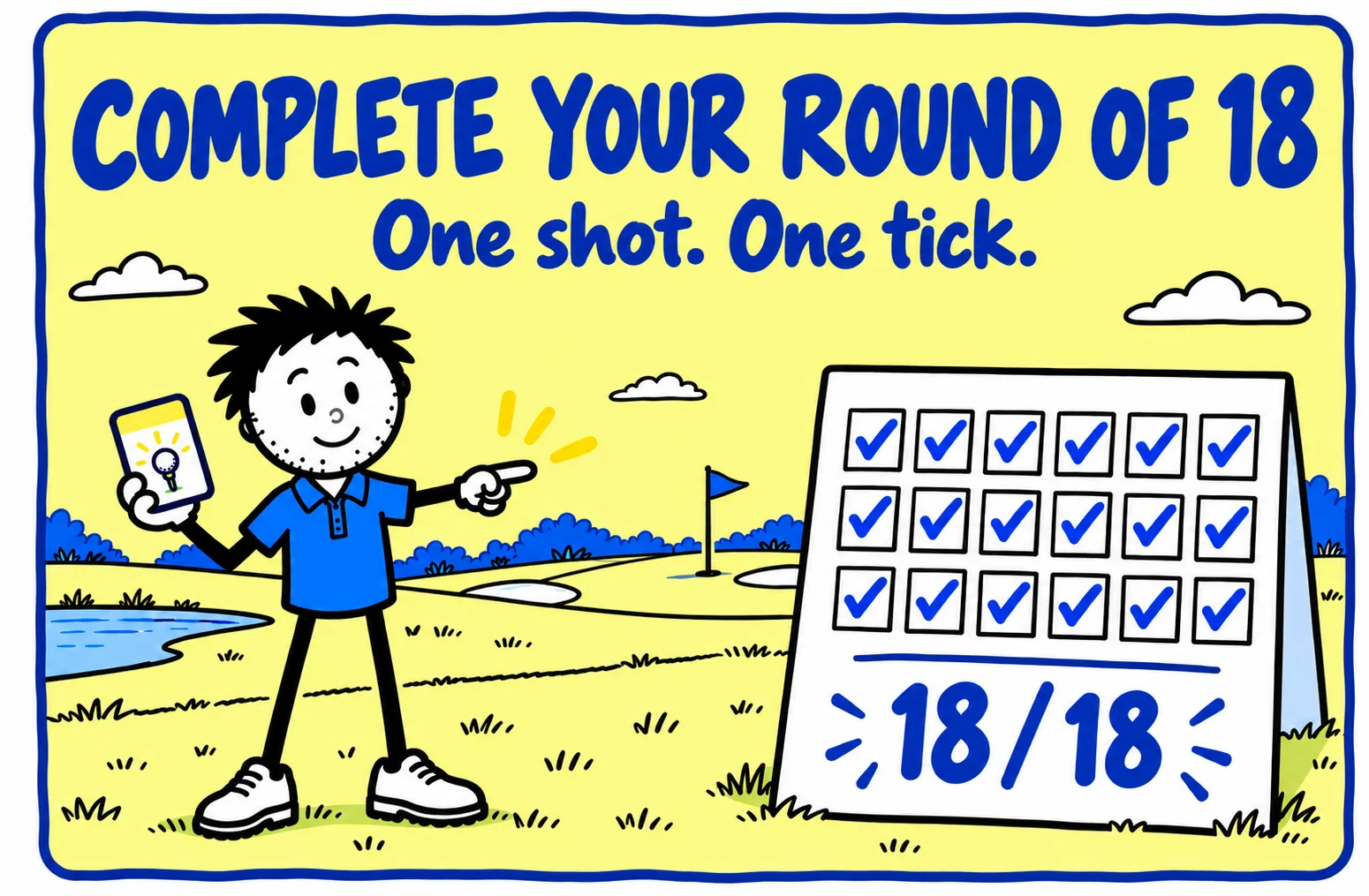
Play 18 easy shots in two sets of nine. Before each shot, make one slow rehearsal of the down, out and up feels. Then play a controlled shot towards a clear target. Start with a short swing and a comfortable distance; build up only when the movement and ball flight are manageable.
No-ball option: complete 18 slow backswings and returns, in two sets of nine. One full down-out-up-and-return rehearsal is one tick. Choose either shots or rehearsals for this round, so you keep one clear counting method.
| Score | When to award it |
|---|---|
| 1 point | You complete the shot, routine or movement described above. |
| 0 points | You do not complete the attempt. |
George’s Conclusion
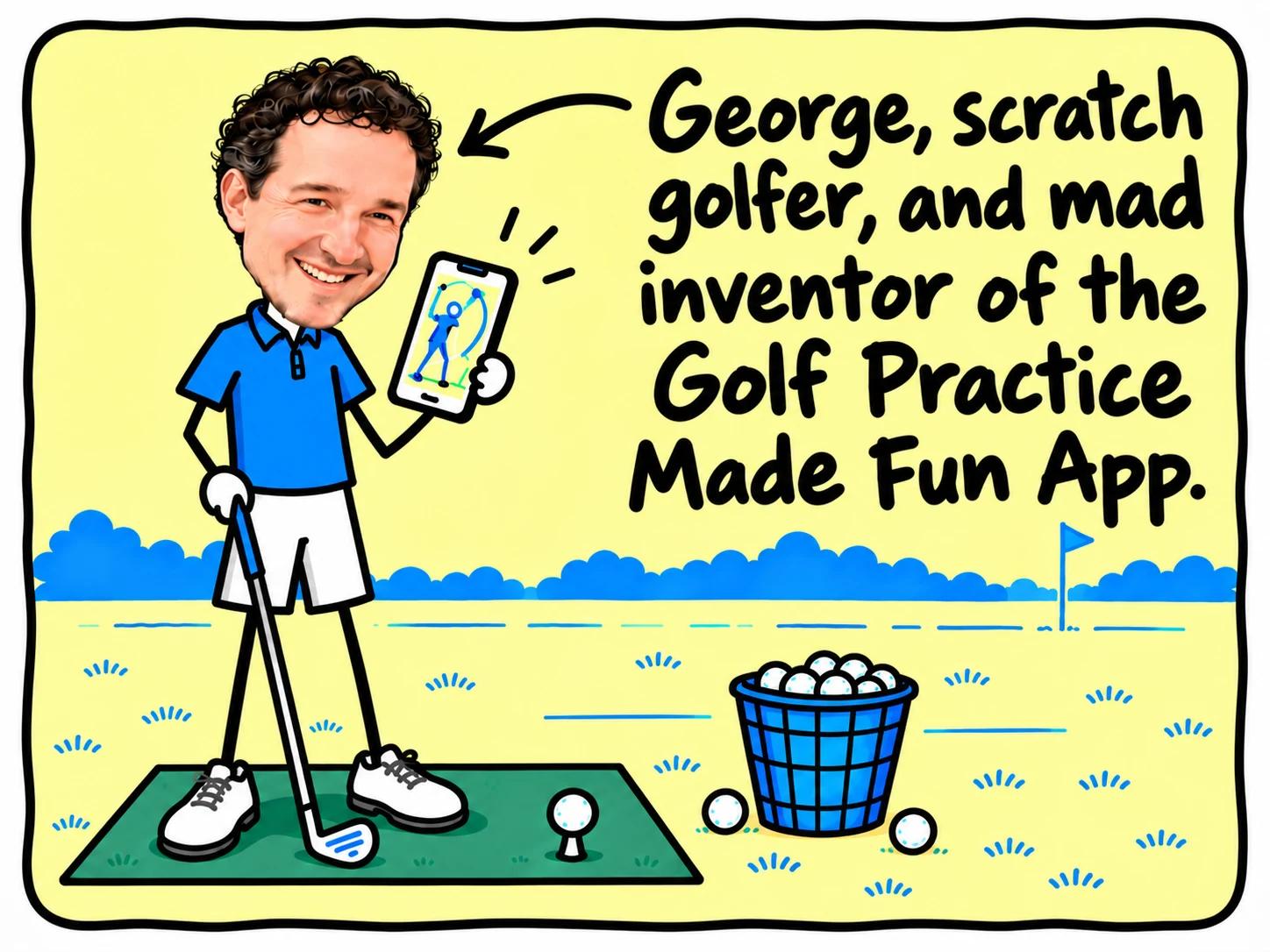
I like having three memorable words to guide a slow backswing. Start small, notice the clubface and let the shot tell you whether the feel is useful. A smaller adjustment that you can repeat is more useful than an exaggerated position you have to force.
Explore another wrist checkpoint with the Cupped Left Wrist Fix Drill, try the Lead Wrist Feel Drill, or browse more long game drills.
MAKE THE NEXT BUCKET COUNT
Pick a card. Practise with purpose.