
Browse by category
One drill. One useful habit.
Read the green.
Commit to your putt.
Your drill at a glance

This drill is from the Golf Practice Made Easy App.
Give every putt a fresh read. Use Brad Faxon’s green-reading ideas to notice the slope, choose a start line and roll the ball with confidence. Move to a new position after each putt so you practise the decision as well as the stroke.
Step 1. Watch Brad Faxon read the green
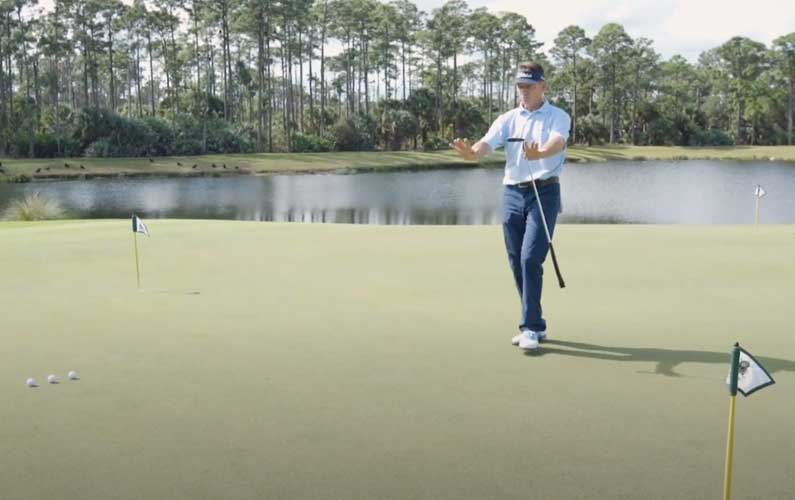
Watch how Brad looks at the slope, checks the putt from different angles and commits to his chosen line. Notice the difference between the initial start line and the curved path the ball follows.
Step 2. Read, aim and trust
Start with the slope
Choose a putt of roughly 20 feet on a quiet practice green. As you approach, notice the high and low sides. Look from behind the ball, then move to the low side, roughly opposite the middle of the ball-to-hole line. Use that view to judge uphill or downhill and the likely direction of break.
Notice the slope under your feet as well. There is no fixed distance you must stand from the putt: give yourself enough room to see the ground between ball and hole, while keeping clear of other golfers’ lines.
A straight uphill putt can help you understand the surrounding slope. Explore this with the Find the Straight Putt Drill.
Notice the surface

Where grain is visible, especially on Bermuda grass, notice the direction the grass lies. It can influence pace and break alongside the slope. Observe the surface and the ball’s roll; you do not need to scrape or drag your putter across the green.
Choose your start line
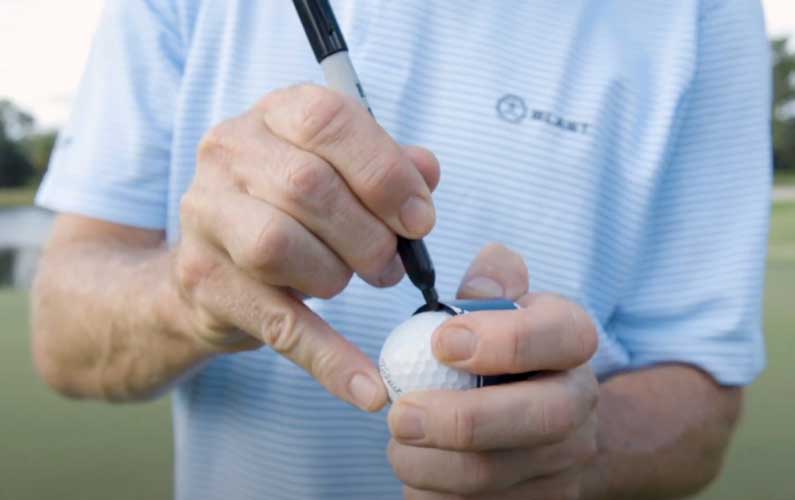
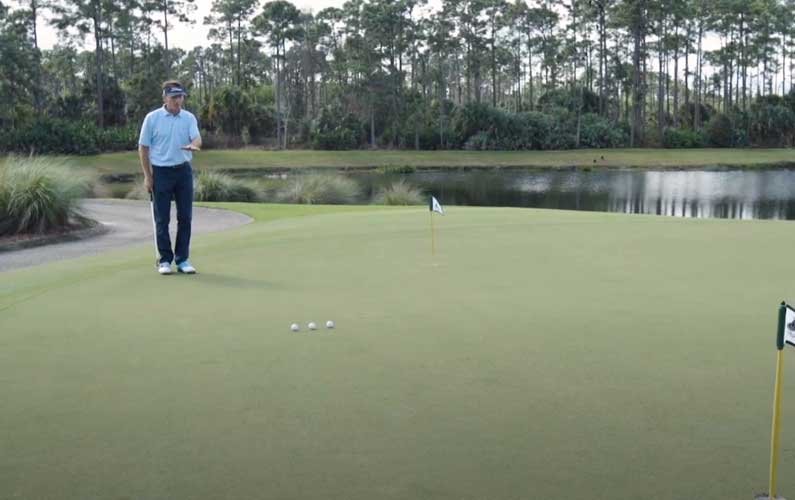
Return behind the ball and decide where it should start, and how firmly you want to roll it. If you like using a line on your ball, align it with that initial direction. A ball line is optional; the useful habit is making a clear decision before you address the putt.

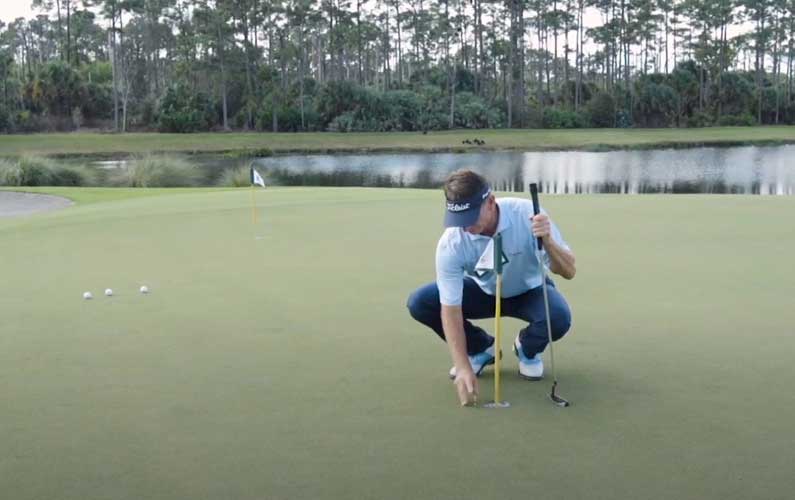
On the practice green, you can use a tee beside the hole as a visual reference for the direction your ball starts. Keep it outside the ball’s path and remove it when you finish. The start line is the initial direction, not the highest point of the curve. Your pace affects how much the ball breaks.
Picture the roll and commit

Picture the ball starting on your chosen line and curving towards the hole. The Reading Greens Using Rulers Drill gives you another way to explore that picture in practice.
Settle into your stance and make the stroke. Watch the result: did the ball start where you intended, was the pace suitable, and did the curve match your read? Then move to a fresh position. From 20 feet, a useful practice goal is a well-read roll that leaves a manageable next putt.
A worked example
“This putt looks slightly downhill and should curve right. I’ll start it left of the hole with a gentle pace. After the roll, I’ll check the start line, speed and curve before moving to my next putt.”
Watch for these easy mistakes
| Instead of… | Try… |
|---|---|
| Only looking from behind the ball | Add a low-side view to judge the slope between ball and hole. |
| Aiming at the top of the curve | Choose the initial start line and match it with your intended pace. |
| Changing your mind over the ball | Step back if needed, make a clear decision and begin again. |
| Calling every miss a bad read | Check the start line and pace as well as the amount of break. |
| Repeating the same putt immediately | Move to a different position and practise a fresh read. |
Step 3. Complete your round
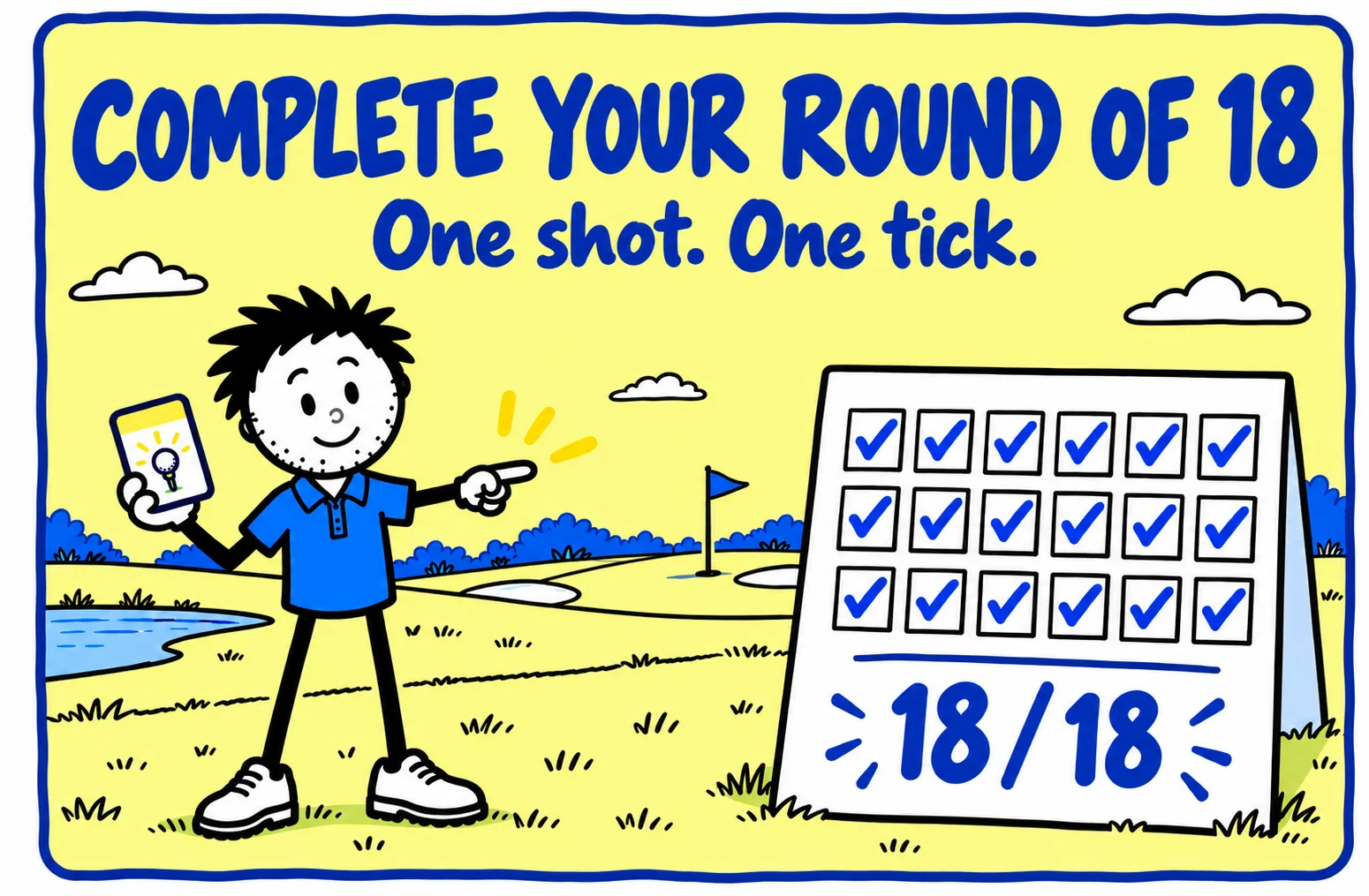
Complete 18 fresh reads and putts. Take one ball around the practice hole, choosing a new starting position after each roll. Read the slope, choose your line and pace, then commit.
If you’re using the Golf Practice Made Easy App, tick one box in your Practice Round after each completed read-and-putt routine. One completed routine is one tick, whether the putt goes in or misses.
| Round | What to do |
|---|---|
| First nine | Complete nine putts from different positions around the hole, roughly 20 feet away. Give every ball a full read. |
| Second nine | Choose another practice hole or a different mix of slopes. Complete nine more fresh reads and putts. |
| Record | Record routines completed out of 18 and one observation about your read, start line or pace. |
Pause after the first nine. Keep going after a miss; each roll gives you feedback. If you stop early, record what you completed and leave the remaining boxes unticked.
George’s Conclusion

I like the simplicity of giving every putt a proper read, then trusting the decision. Use your eyes, notice the slope under your feet and let the ball’s roll teach you something. Eighteen fresh putts give you eighteen chances to practise that habit.
Build on this with the Find the Straight Putt Drill, the AimPoint Express Putting Drill, or the Putting Hypnosis Drill.
MAKE THE NEXT BUCKET COUNT
Pick a card. Practise with purpose.