Browse by category
DRILL OVERVIEW
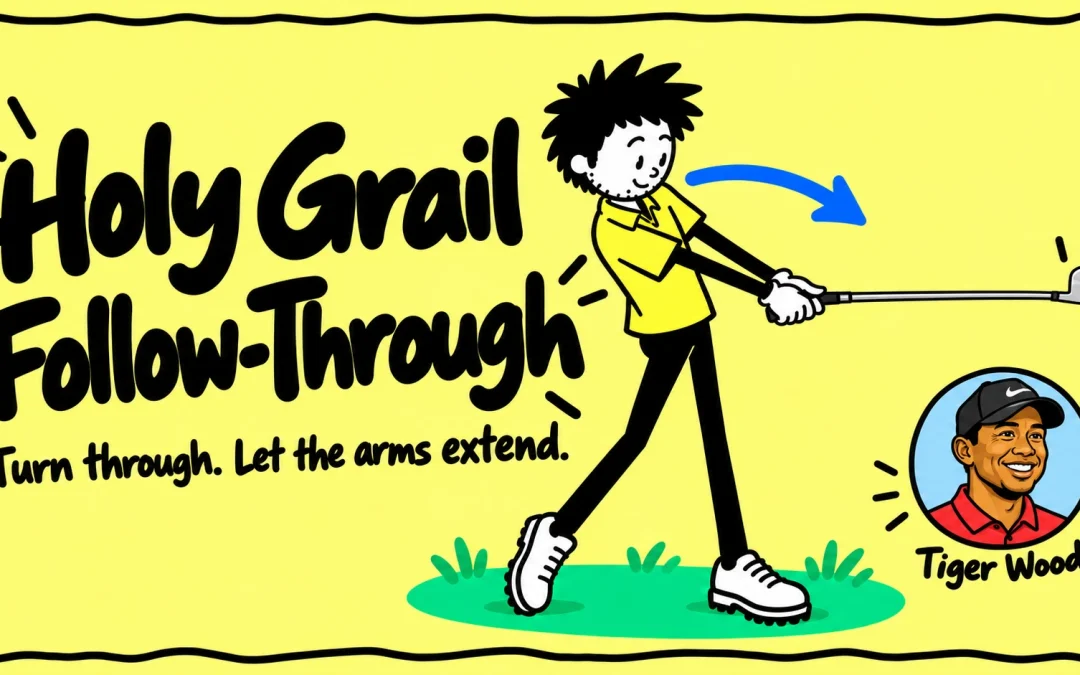
Holy Grail Follow-Through Drill: Learn from Tiger Woods
Your drill at a glance
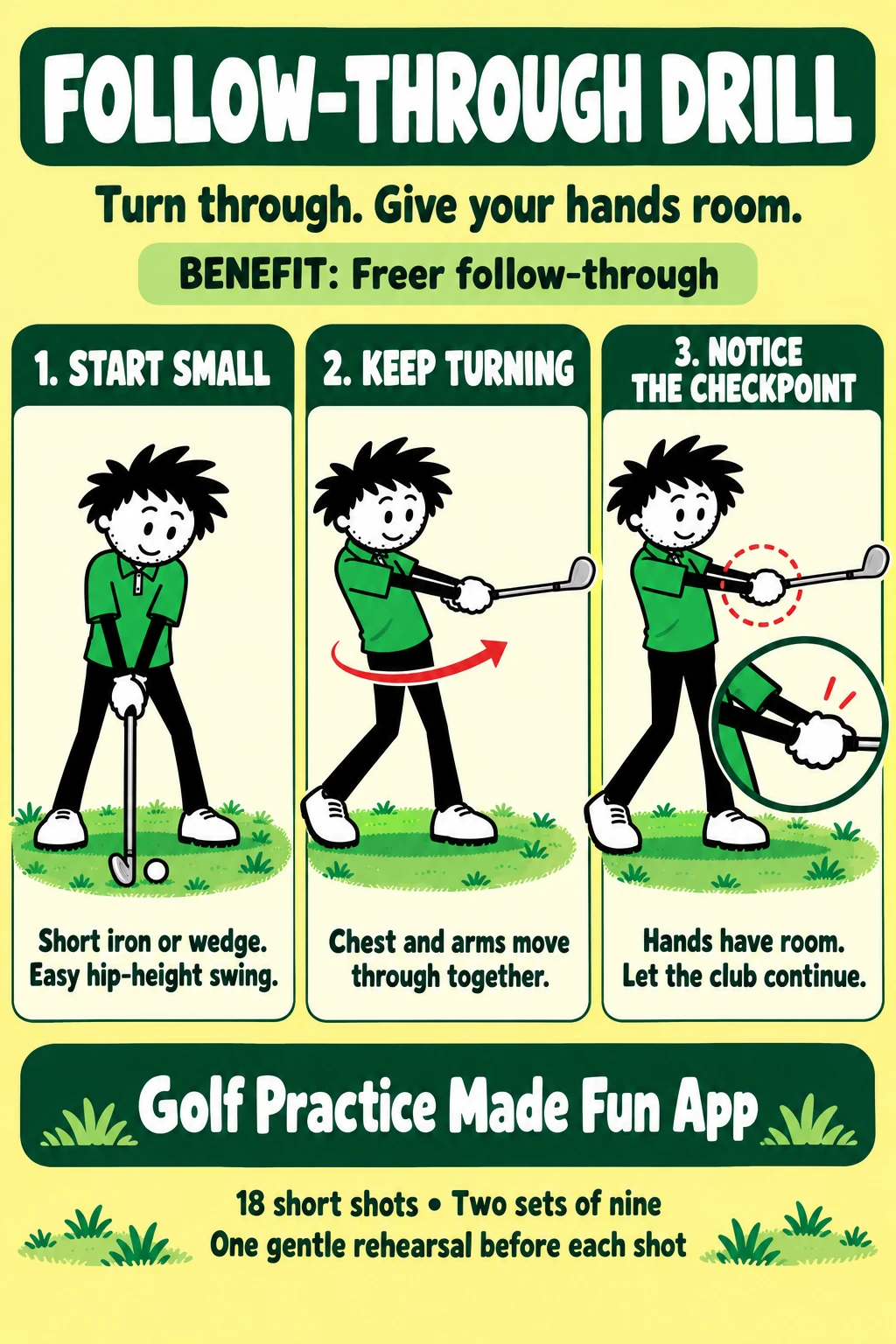
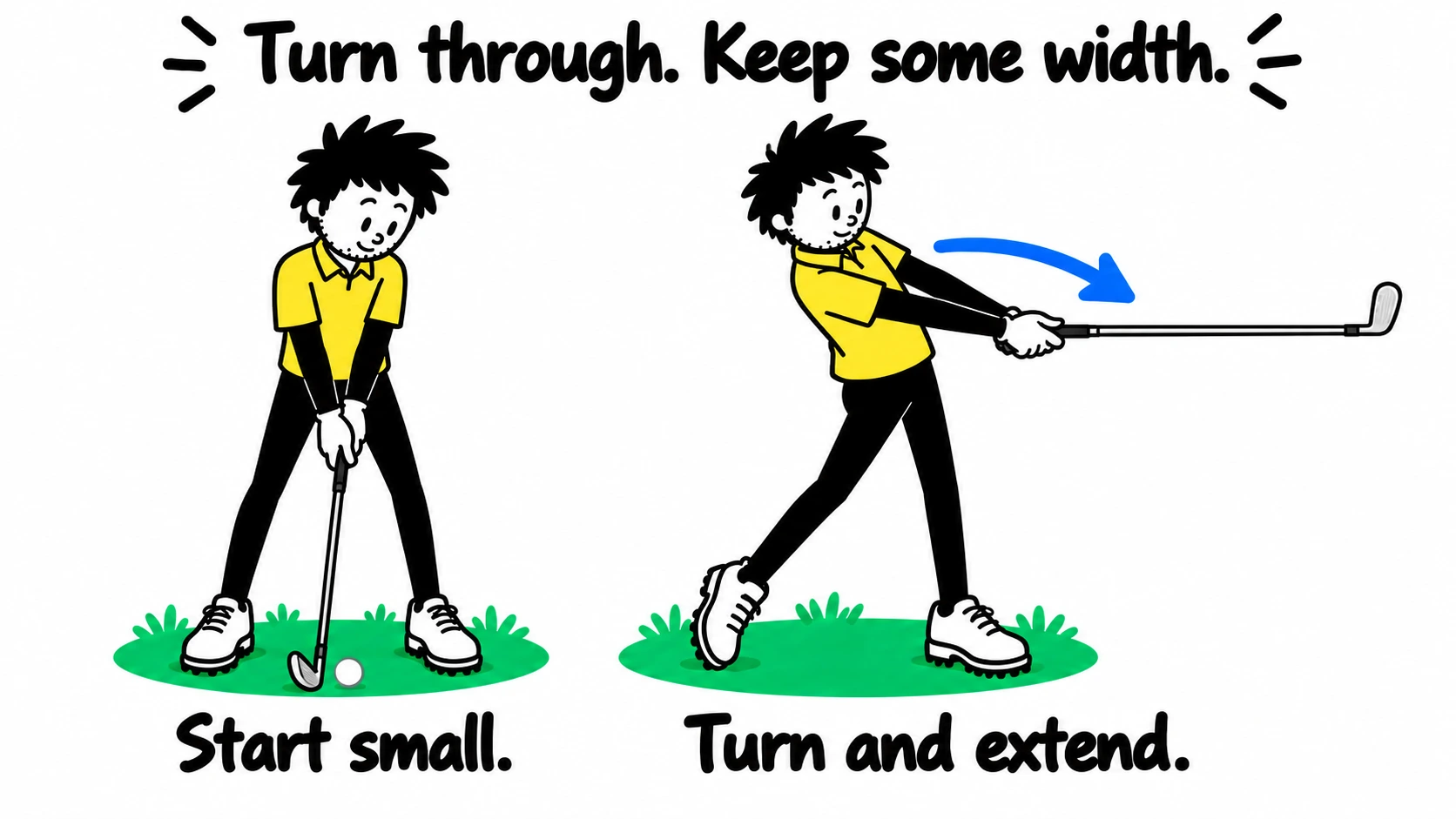
A waist-high checkpoint gives you something clear to observe just after the strike. Looking at the space between your hands and body can help you notice whether the chest keeps turning and the arms have room to travel, without chasing a rigid or exaggerated finish.
This drill is from the Golf Practice Made Fun App.
A continuing body turn and comfortable arm extension can help you swing through the ball instead of pulling the club abruptly back towards your body. A small, waist-high finish gives you a clear checkpoint: notice whether the hands have some room in front of you while the chest keeps turning. Rehearsing that movement can make it easier to take the same flowing feel into short shots. Use the quality of contact and your balance as feedback, rather than treating a wider finish as a guaranteed cure.
Step 1. Watch the follow-through checkpoint
Watch the demonstration from 1:08. Notice how the coach compares the spacing between the hands, grip and body when the club reaches roughly waist height after impact.
Watch the follow-through demonstration on YouTube from 1:08.
Step 2. Turn through and let the arms extend
The useful idea is simple: let the body keep turning as the arms move through the shot. Begin with short swings, taking the club back to about hip height and through to a similar height. Look for some room between the hands and body without locking the elbows or reaching as far as possible.
| Checkpoint | What to do |
|---|---|
| Start small | Choose a short iron or wedge. Make a slow rehearsal before adding a ball. |
| Keep turning | Let the chest turn through with the arms rather than stopping at the ball. |
| Notice the finish | At roughly waist height, observe whether the hands have room in front of the body. Keep the elbows soft. |
| Add a short shot | Use an easy hip-height swing. Let the club continue naturally after the checkpoint. |
| Check the result | Notice contact, balance and ball flight. Keep or soften the feel according to what happens. |
Compare the four teaching examples
The photographs use handicap numbers as labels for different follow-through shapes. They can help you compare arm extension and hand-to-body spacing. A finish photograph does not predict a golfer’s handicap, and more extension does not automatically mean better contact.


Use these as visual comparisons, then explore a finish you can reach comfortably. Avoid measuring a fixed hand-to-body distance or trying to copy a position at the expense of balance and contact.
Learn from the professional examples
Justin Thomas, Jordan Spieth and Tiger Woods show different versions of extension through the shot. Look at how the arms move with the continuing body turn. You do not need to copy their speed, jump or exact reach.


What to watch for
| What you notice | What to try |
|---|---|
| The chest stops at the ball | Make a smaller swing and let the body continue turning through. |
| Locked elbows or maximum reach | Soften the arms and use a comfortable amount of extension. |
| Trying to hold a frozen finish | Use waist height as an observation point, then let the club continue naturally. |
| Thin or heavy contact | Reduce the swing size and check the strike. A finish cue alone cannot diagnose the cause. |
| Losing balance | Lower the pace and keep the movement small enough to finish steadily. |
| Discomfort while reaching | Stop forcing the position and shorten the movement. |
If you film a few shots, use the same camera position so comparisons are useful. Look for a change in your own movement rather than trying to match a professional frame exactly.
Step 3. Complete your round
What to do
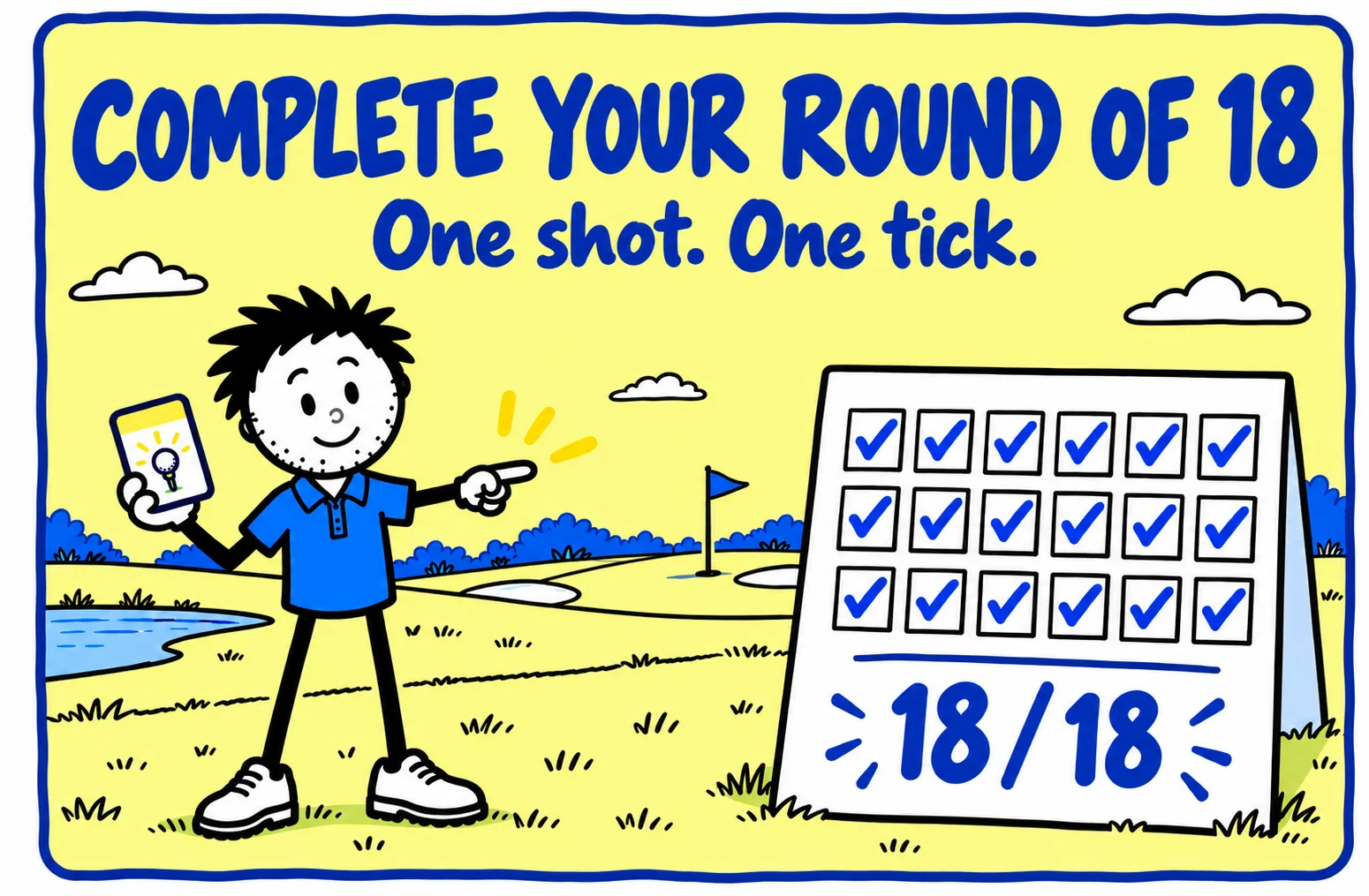
Play 18 short shots in two sets of nine. Before each shot, make a gentle rehearsal of the waist-high follow-through. Then play the shot with an easy hip-height swing, letting the chest turn and the arms extend comfortably.
No-ball option: complete 18 slow, comfortable through-swing rehearsals in two sets of nine. One rehearsal from the start, through the waist-high checkpoint and back to rest is one tick. Choose either shots or rehearsals for your round so the counting stays clear.
| Score | When to award it |
|---|---|
| 1 point | You complete the shot, routine or movement described above. |
| 0 points | You do not complete the attempt. |
George’s Conclusion
This is one of my favourite follow-through drills because it gives you one clear thing to notice after the strike. Start small, let the chest keep turning and allow the hands some room in front of you. Keep the version that improves your contact and balance, rather than chasing the widest possible finish.
For a related arm-rotation rehearsal, try the Chicken Wing Fix Drill. Explore the Down Out Up Drill, or browse more long game drills.
MAKE THE NEXT BUCKET COUNT
Pick a card. Practise with purpose.