
Browse by category
One Bucket. A Clear Challenge. More Fun.
Your practice at a glance
These golf drills are from the Golf Practice Made Fun App.
These driving range games turn a bucket of balls into a clear challenge for accuracy, distance control or shot creativity.
Choose Jack Nicklaus Competitive Practice to give every shot a target, try the Wedge Bank Drill to test your distance judgement, or explore height and shape with Wedge Nine Ball Flights. Pick one game for your next range visit and warm up before starting. Competitive Practice and Nine Ball Flights each use eighteen shots; Wedge Bank uses ten. Use the range’s existing flags, marked distances or tracking screen to choose targets and judge results.
Game 1. Jack Nicklaus Competitive Practice: Make Every Ball Count
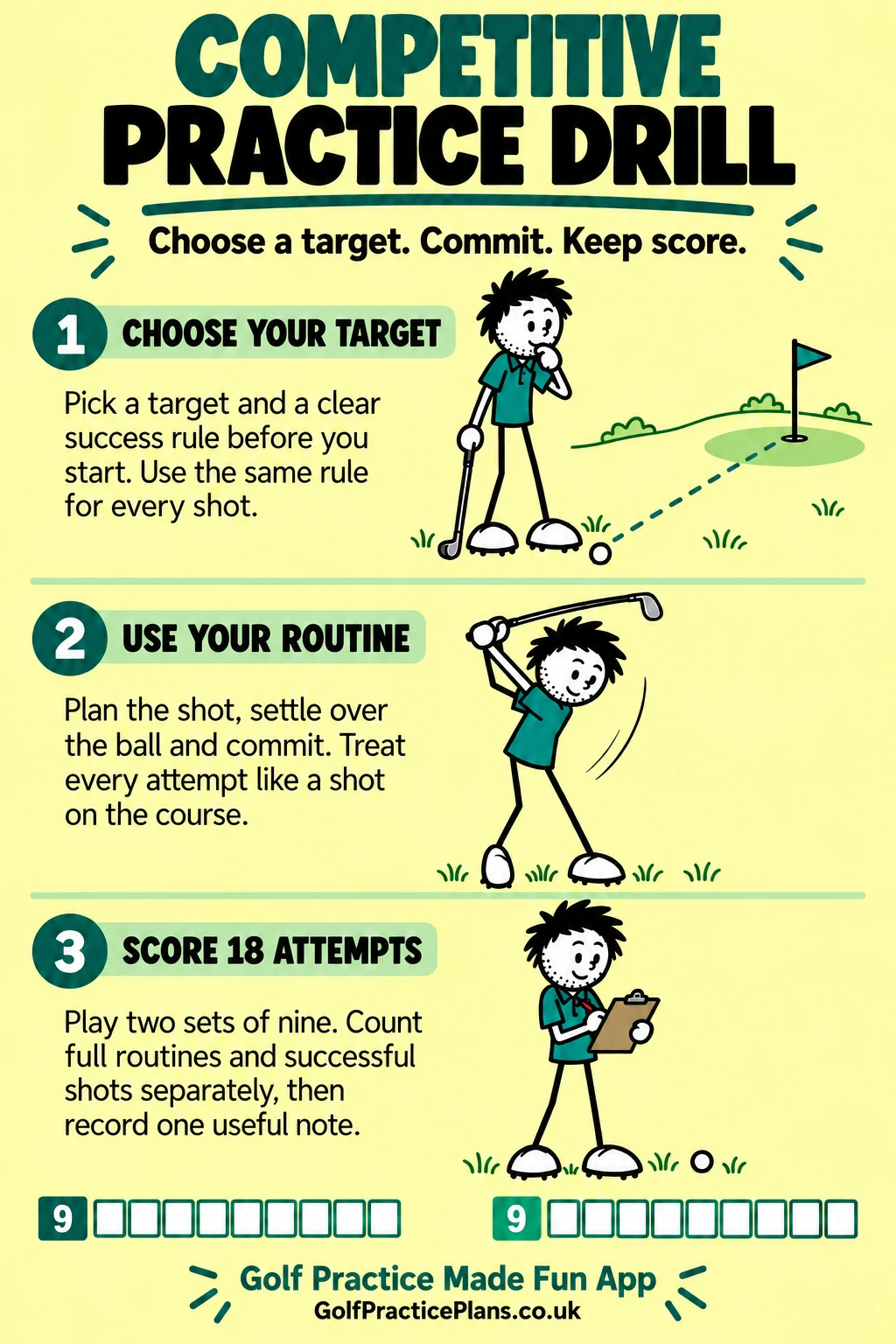
This game helps you practise the target choice, commitment and reset you need when each shot matters on the course.
A defined target gives you something more useful to notice than whether the swing felt good. Following the same routine after a miss helps you practise starting afresh, rather than rushing the next ball. You can make the challenge easier or harder by changing the size of your target area before the next round.
| Step | What to do |
|---|---|
| 1 | Choose a club and a visible range target. Define a clear success area before starting, such as a marked target green or the space between two range markers. Keep the same target and rule for all eighteen attempts. |
| 2 | Before every shot, stand behind the ball, choose the flight and picture the target. Step in, settle and commit. Watch the result, then reset and start your routine again for the next ball. |
| 3 | Play two sets of nine shots. Award one point when a shot meets your target rule and zero when it does not, for a total out of eighteen. Separately note how many shots included your full routine, then write one useful observation for next time. |
Game 2. Wedge Bank: Can You Keep Money in the Bank?
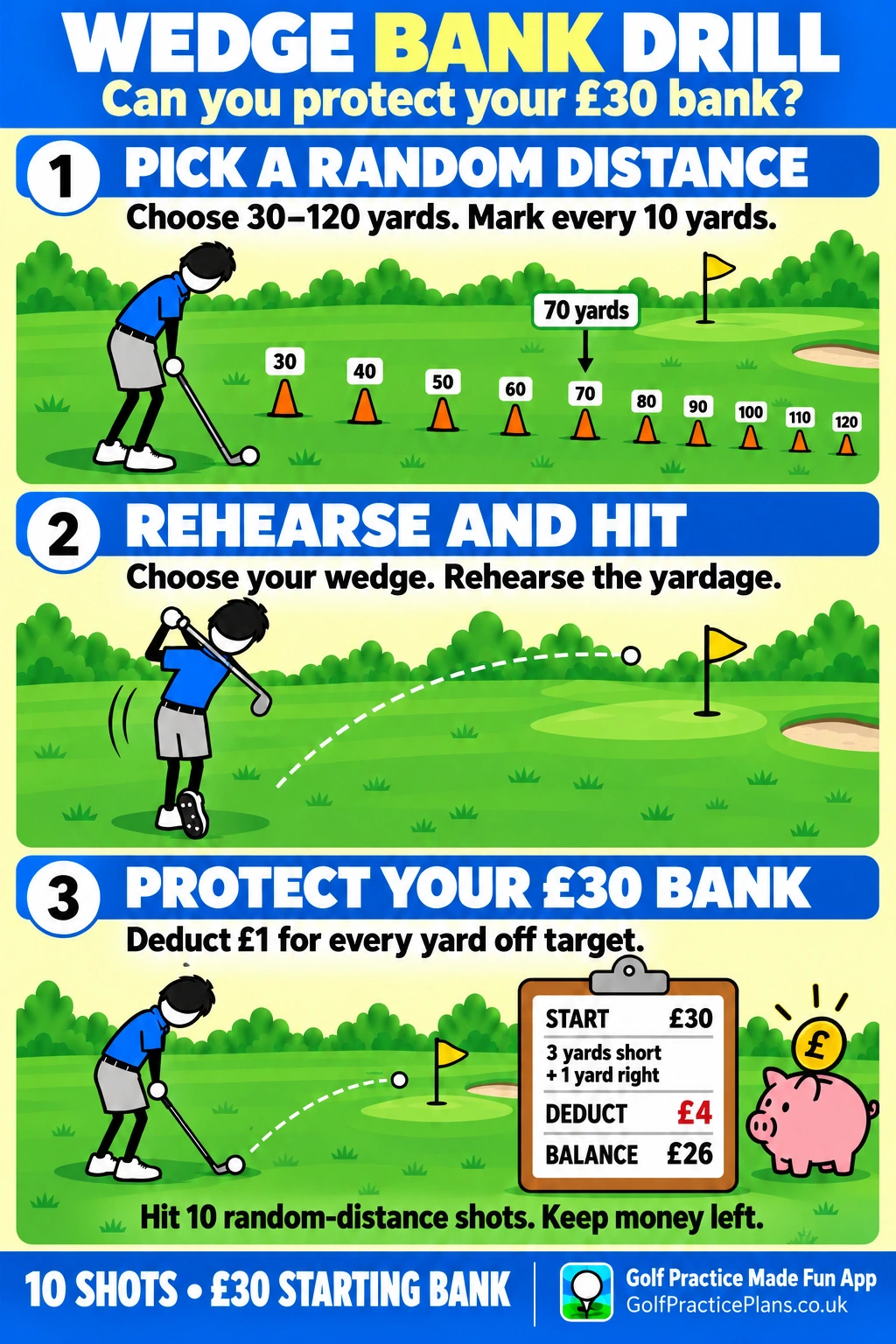
The Wedge Bank game helps you judge a fresh distance and commit to one wedge shot instead of repeating the same comfortable yardage.
Changing the yardage asks you to choose the club and swing for the shot in front of you. The imaginary balance makes a wide or poorly judged shot noticeable without involving real money. Your final balance and biggest misses can show which distances deserve another practice session.
| Step | What to do |
|---|---|
| 1 | Start with an imaginary £30 bank. Choose a random distance between 30 and 120 yards using the range’s existing targets, distance markers or tracking screen. Identify a clear target point for that shot. |
| 2 | Choose the wedge you would use for that yardage and make a rehearsal swing. Hit one ball, then judge how many yards it finishes short or long and how many yards left or right. Use the same method of judging every attempt. |
| 3 | Add the two miss distances and deduct £1 for each yard from your imaginary bank. For example, three yards short plus one yard right costs £4, leaving £26 after the first shot. Choose a fresh random distance each time and play ten shots. The aim is to finish with money left. |
Game 3. Wedge Nine Ball Flights: Explore Height and Shape
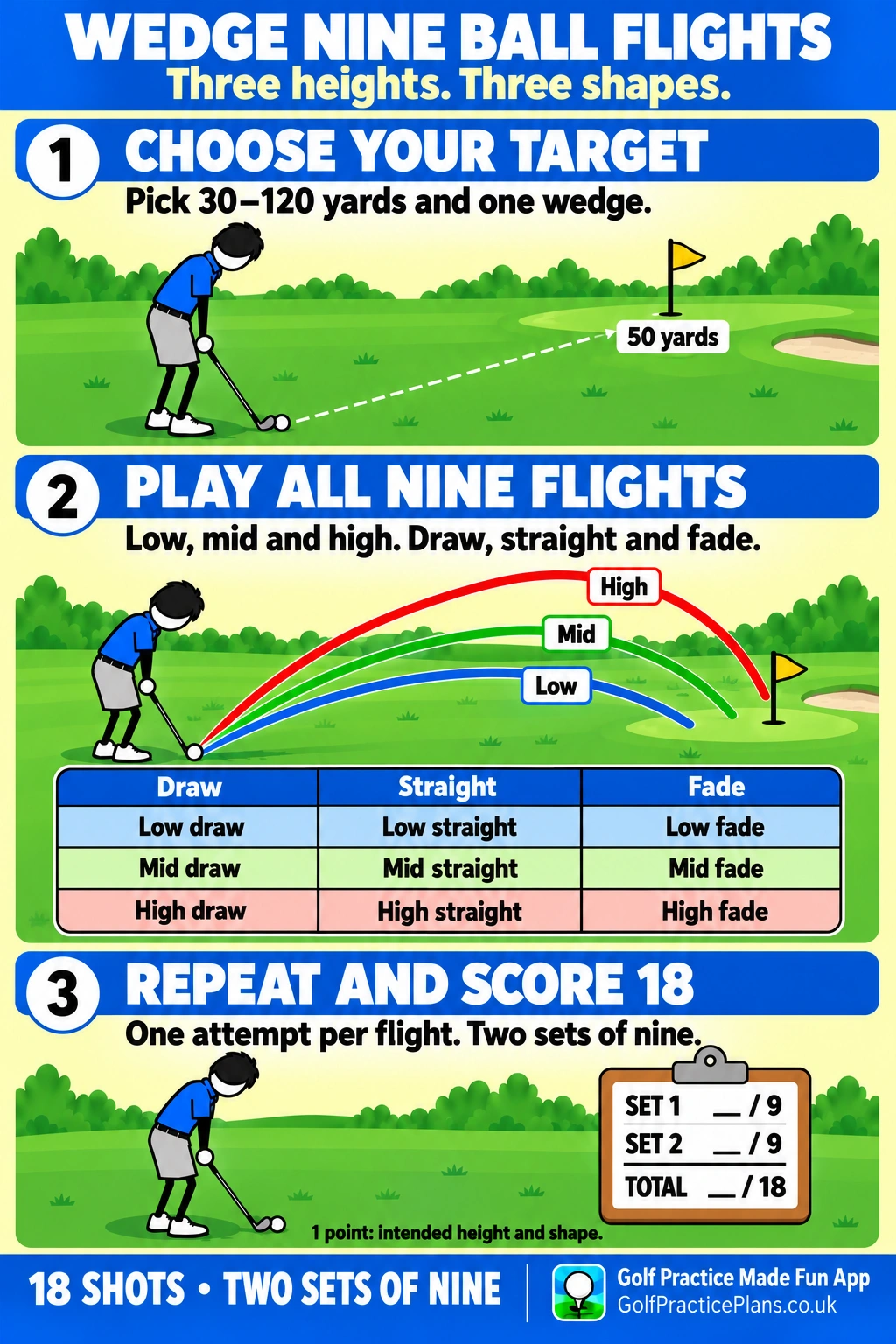
The Nine Ball Flights game develops your ability to choose a trajectory and notice what the ball actually does through the air.
Exploring different flights builds a clearer picture of the shots available to you. A lower flight, a higher landing shot or a small curve may give you another option when the course asks for it. This is the most demanding game here: explore individual flights in unscored practice first if the full set feels unfamiliar.
| Step | What to do |
|---|---|
| 1 | Choose one clear range target between 30 and 120 yards and one suitable wedge. Keep both the target and club the same. Hit a few warm-up shots to establish your normal flight as a reference for low, mid and high. |
| 2 | Call the intended flight before each shot. Play these nine combinations once: low draw, low straight, low fade; mid draw, mid straight, mid fade; high draw, high straight, high fade. Judge height against your normal flight and judge curve through the air, rather than the direction the ball rolls. |
| 3 | Repeat all nine combinations once more for eighteen shots in total. Award one point only when the ball shows both your intended height and shape; otherwise award zero. Keep one total out of eighteen and a short note about the flight you want to explore next. |