Browse by category
One drill. One useful habit.
Make a smaller swing.
Find a smoother strike.
Your drill at a glance
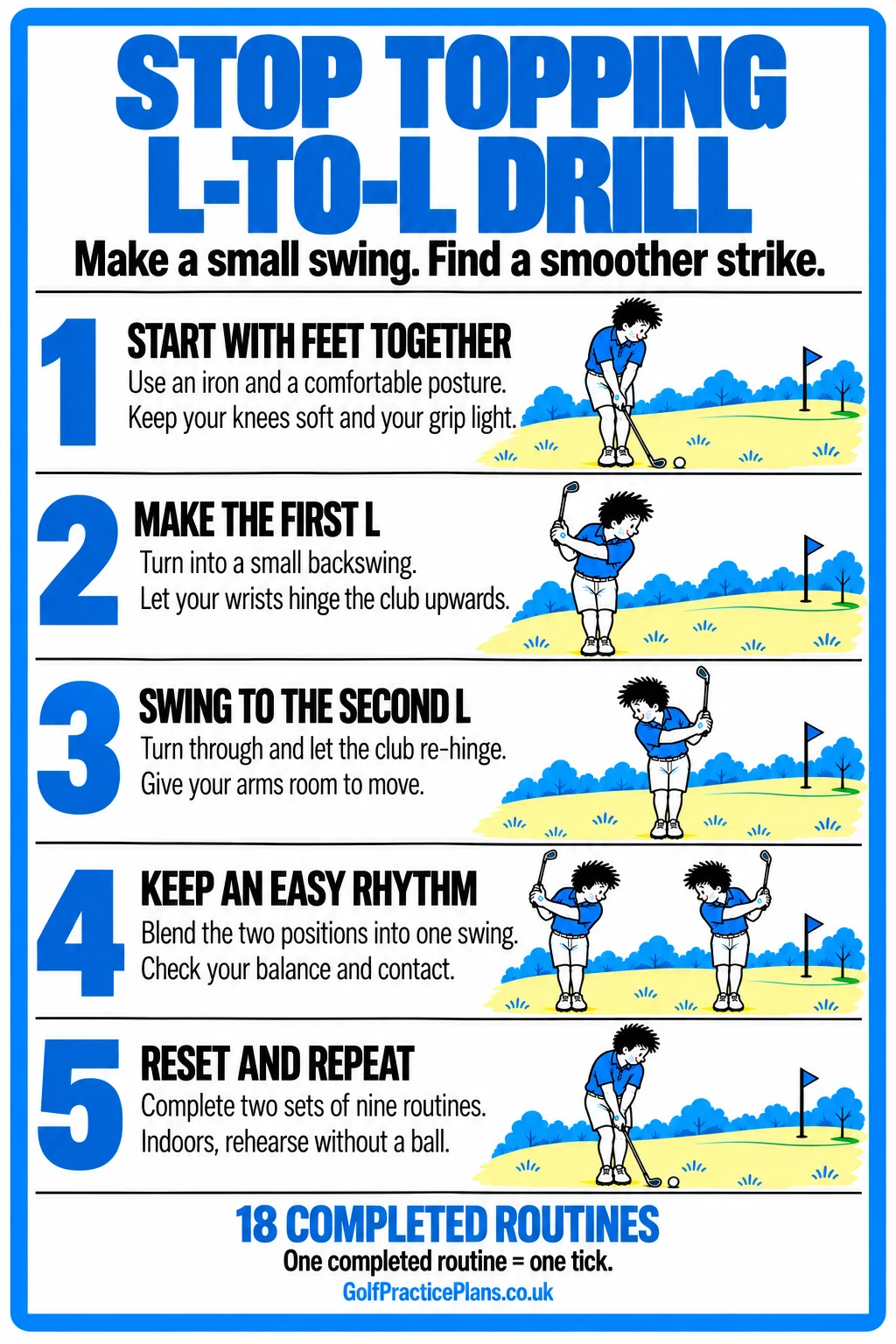
This drill is from the Golf Practice Made Easy App.
Give your arms and club room to move through a small swing. The L-to-L drill uses two simple checkpoints: a wrist hinge in the backswing and a natural re-hinge in the follow-through. Start with easy rehearsals, then use the same rhythm to explore your contact.
Step 1. Watch the L-to-L demonstration
Watch the instructor demonstrate the feet-together setup and the two L positions. Notice the small swing and how the arms move through before the club re-hinges.
Step 2. Make a smooth L-to-L swing
Start with your feet together
Take your usual iron grip and place your feet close together. Hinge comfortably from your hips, soften your knees and begin without a ball. Keep the swing small enough to stay balanced.
Find the first L
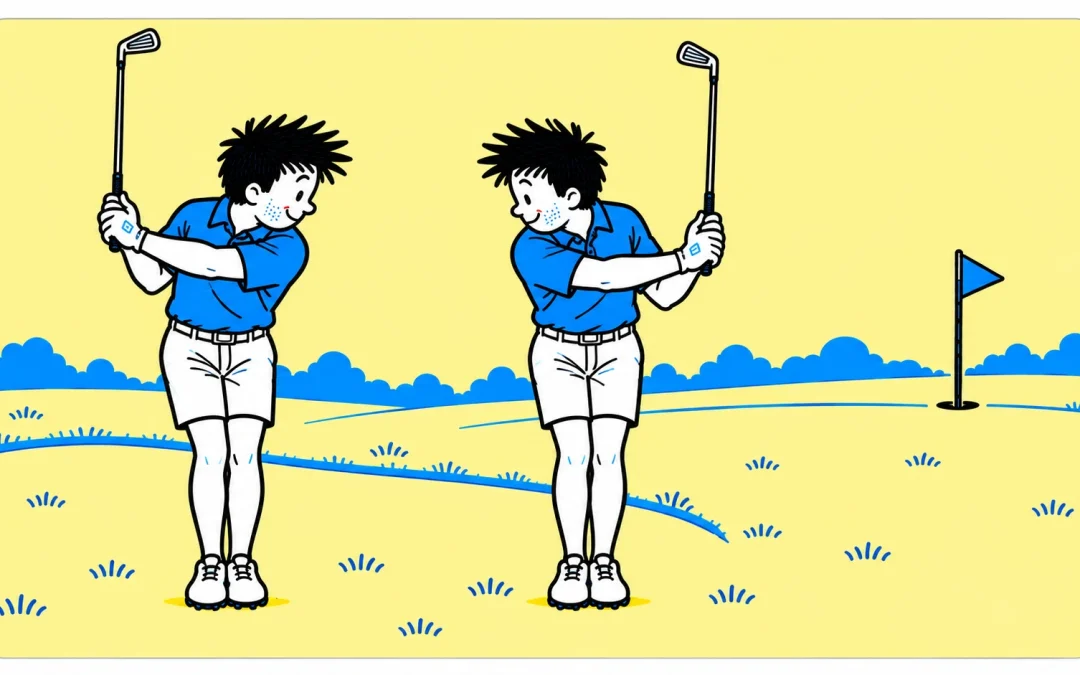
Turn into a half-backswing. As your lead arm reaches roughly chest height, allow your wrists to hinge so the arm and club shaft form an approximate L shape. For a right-handed golfer, the lead arm is the left arm; reverse this if you play left-handed.
Swing through to the second L
Turn through the imaginary hitting area. Give your arms room to extend comfortably, then allow the club to re-hinge in the follow-through. Your trail arm and the shaft form the second approximate L. For a right-handed golfer, the trail arm is the right arm.
Blend the two checkpoints into one easy swing. Keep turning as the club moves through. Avoid locking your elbows or forcing a perfect right angle at each end.
Check rhythm, balance and contact
Once the rehearsals feel comfortable, try a few short iron shots at the range with the same small motion. Choose a nearby target and swing at an easy speed. Notice where the club meets the ball and ground, and finish balanced.
If your feet-together stance makes you wobble, make the swing smaller or widen your feet slightly. Indoors, use slow rehearsals without a ball and only where you have enough room to swing.
A worked example: Make one slow rehearsal from the first L to the second L. Reset, choose a nearby range target and hit an easy shot with the same rhythm. Notice the contact, then reset before the next routine.
Small swing. Soft grip. Turn through.
Watch for these common mistakes
| Mistake | Useful reset |
|---|---|
| Making a full-speed swing with feet together | Reduce the speed and length until you can finish balanced. |
| Pulling the arms tightly against the body | Let them move comfortably through as your body turns. |
| Locking the elbows or forcing the L shapes | Keep the arms soft and let the wrists hinge and re-hinge naturally. |
| Trying to hit steeply down to cure a top | Return to the small, smooth motion and check your contact. |
The drill gives you a useful movement to explore; topped shots can have more than one cause. If your contact remains inconsistent, use the feedback from your shots rather than assuming one fault explains every miss.
Step 3. Complete your round
Complete two sets of nine L-to-L routines. Use the first nine for slow rehearsals without a ball. For the second nine, repeat the rehearsals or play easy iron shots at the range. Reset your setup before every routine.
| Round | Practice | Record |
|---|---|---|
| First nine | Slow L-to-L rehearsals with a small, balanced swing. | Routines completed out of 9 |
| Second nine | More rehearsals, or easy iron shots with the same rhythm. | Routines completed out of 9 |
| Total | Count each completed routine, regardless of the shot result. | Routines completed out of 18 |
If you’re using the Golf Practice Cards App, tick one box in your Practice Round for each completed L-to-L routine. Keep any notes about balance, rhythm and contact separate from the completion count.
George’s Conclusion

I like the L-to-L drill because it makes the swing feel manageable. You can rehearse the two positions slowly, blend them into a comfortable rhythm and then see what happens to your contact. Start small and let a useful feeling grow from there.
Try the Maintain Spine Angle Drill or the Rotational Golf Swing Feel Drill for another way to explore a comfortable movement through the strike.
MAKE THE NEXT BUCKET COUNT
Pick a card. Practise with purpose.