Browse by category
DRILL OVERVIEW
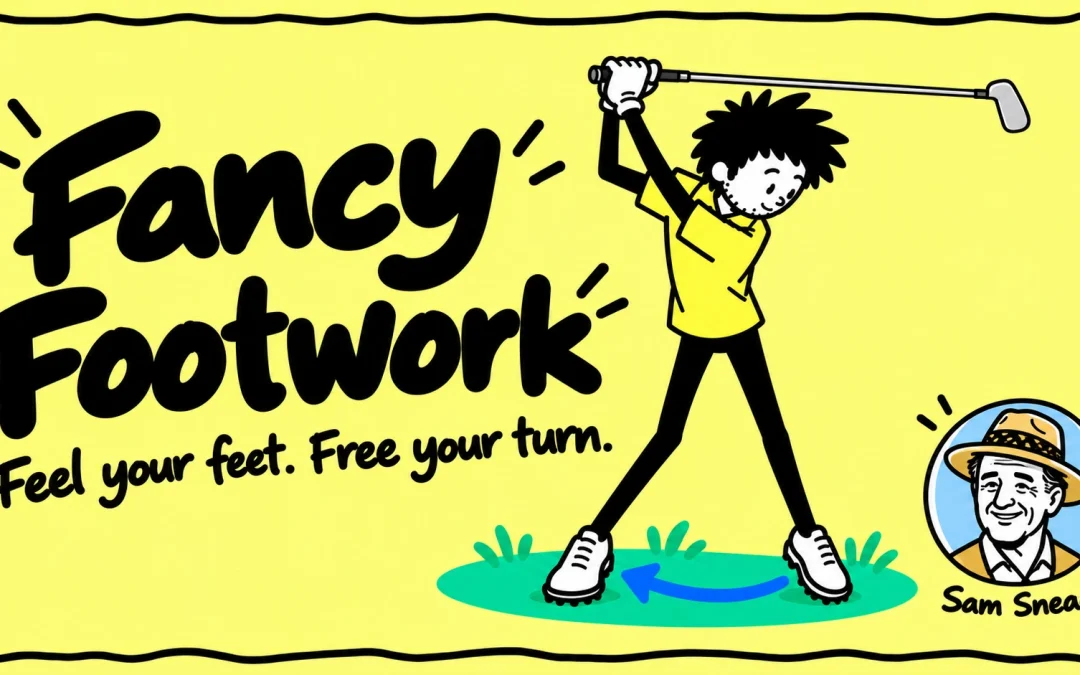
Sam Snead Fancy Footwork Drill: Feel Your Feet Help the Turn
Your drill at a glance
This drill is from the Golf Practice Made Fun App.
Feeling how pressure changes beneath your feet can help your body turn more freely while you stay balanced through the swing. If you try to keep both feet rigidly fixed, the turn can feel restricted. Sam Snead’s footwork gives you a visible way to explore how the heels and toes respond as the body turns back and through. Start with slow rehearsals, then short shots, and notice whether the movement feels easier and the strike more repeatable. The aim is a useful pressure shift, not an exact copy of someone else’s feet.
Step 1. Watch the fancy footwork
Watch the demonstration and pay attention to the feet as the body turns. Notice the pickle-jar analogy, the backswing pressure pattern and how the footwork changes through the shot.
Watch the Sam Snead Fancy Footwork demonstration on YouTube.
Step 2. Explore the pressure under your feet
Think of opening a pickle jar
To open a jar, one hand steadies it while the other turns the lid. The opposing actions help create rotation. The feet can play a similar supporting role in the swing: explore how pressure changes under them as the body turns.

Use this as a feel rather than trying to wrench your feet against the ground. Rehearse slowly on a level, secure surface, with enough space to move a club.
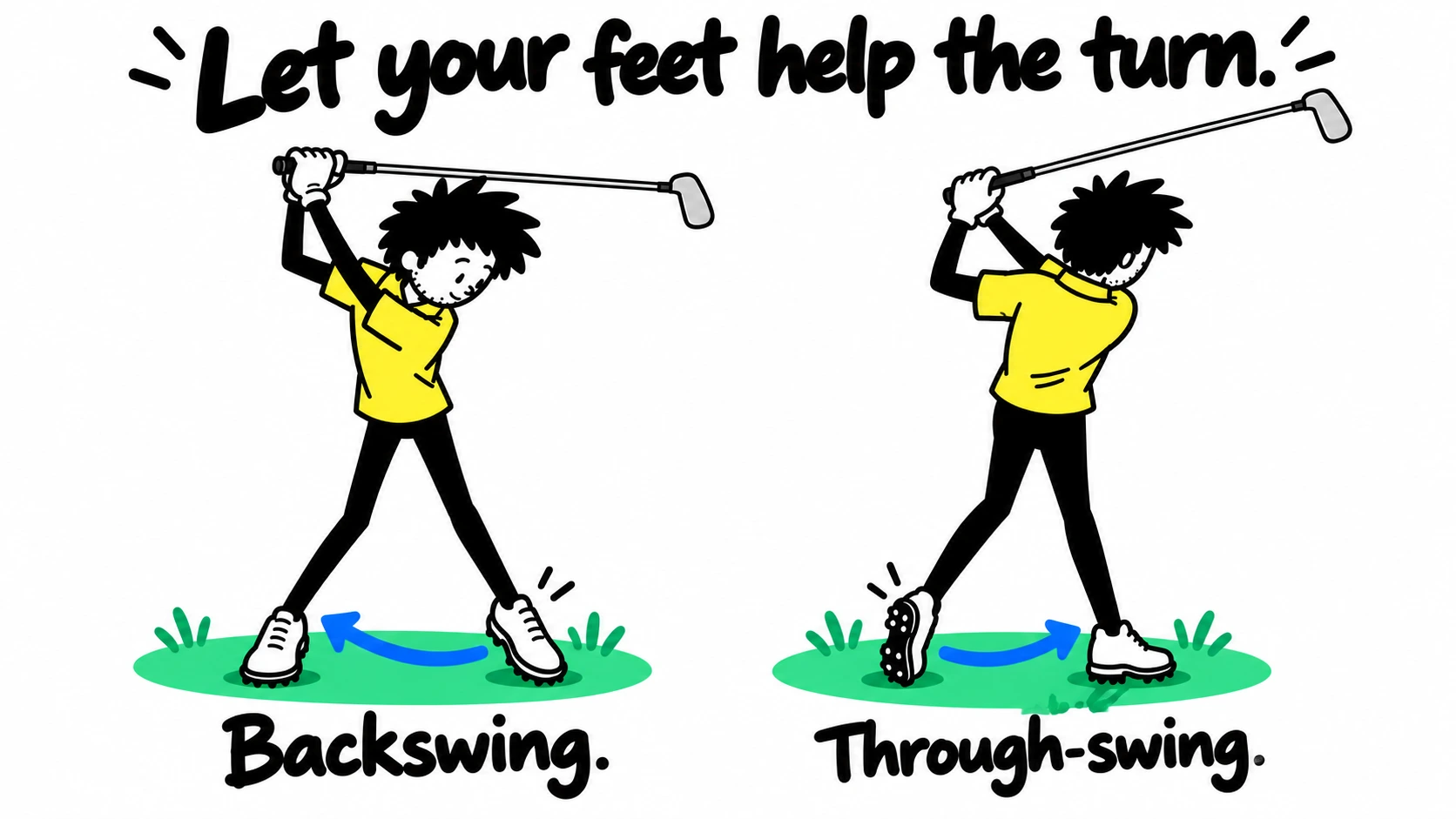
Backswing: lead toe and trail heel

For a right-handed golfer, the lead foot is the left and the trail foot is the right. Reverse the sides if you play left-handed. As you turn back, explore pressure towards the lead big-toe area and the trail heel. A small lead-heel lift may help the turn feel less restricted. Let it happen gently rather than balancing high on your toes.
Through-swing: trail toe and lead heel

As you turn through, explore pressure moving towards the lead heel while the trail heel begins to lift and the trail toe stays in contact with the ground. The demonstration also highlights the lead toe becoming lighter. Treat that as an observation to explore, rather than a requirement to lift the toe deliberately at impact.
| Rehearsal | What to feel |
|---|---|
| Set up | Find a steady golf stance with softly flexed knees and pressure spread comfortably under both feet. |
| Turn back | Explore lead big-toe and trail-heel pressure. Allow a small lead-heel lift if it helps. |
| Turn through | Explore trail-toe and lead-heel pressure as the body turns towards the target. |
| Finish steadily | Let the trail heel rise naturally. Keep enough control to pause comfortably at the end. |
| Add a ball | Use a short iron or wedge and an easy, small swing. Notice contact and balance. |
Begin without a ball so you can look at your feet between rehearsals. When you play a shot, return your attention to the ball rather than watching your feet during the strike. Increase the swing size only when the small version feels manageable.
What to watch for
| What you notice | What to try |
|---|---|
| Both feet feel rigid | Slow down and allow a small natural heel movement with the turn. |
| Rocking onto the outer edges | Reduce the movement and keep secure contact with the ground. |
| Exaggerated heel or toe lifts | Use less movement. The pressure feel matters more than copying a dramatic position. |
| Swaying far from the ball | Make a smaller turn and finish in balance rather than shifting the whole body sideways. |
| Looking at the feet during a shot | Check them in a rehearsal, then look at the ball for the shot. |
| Twisting discomfort in the knees or ankles | Stop forcing the footwork and use a smaller, comfortable movement. |
Step 3. Complete your round
What to do
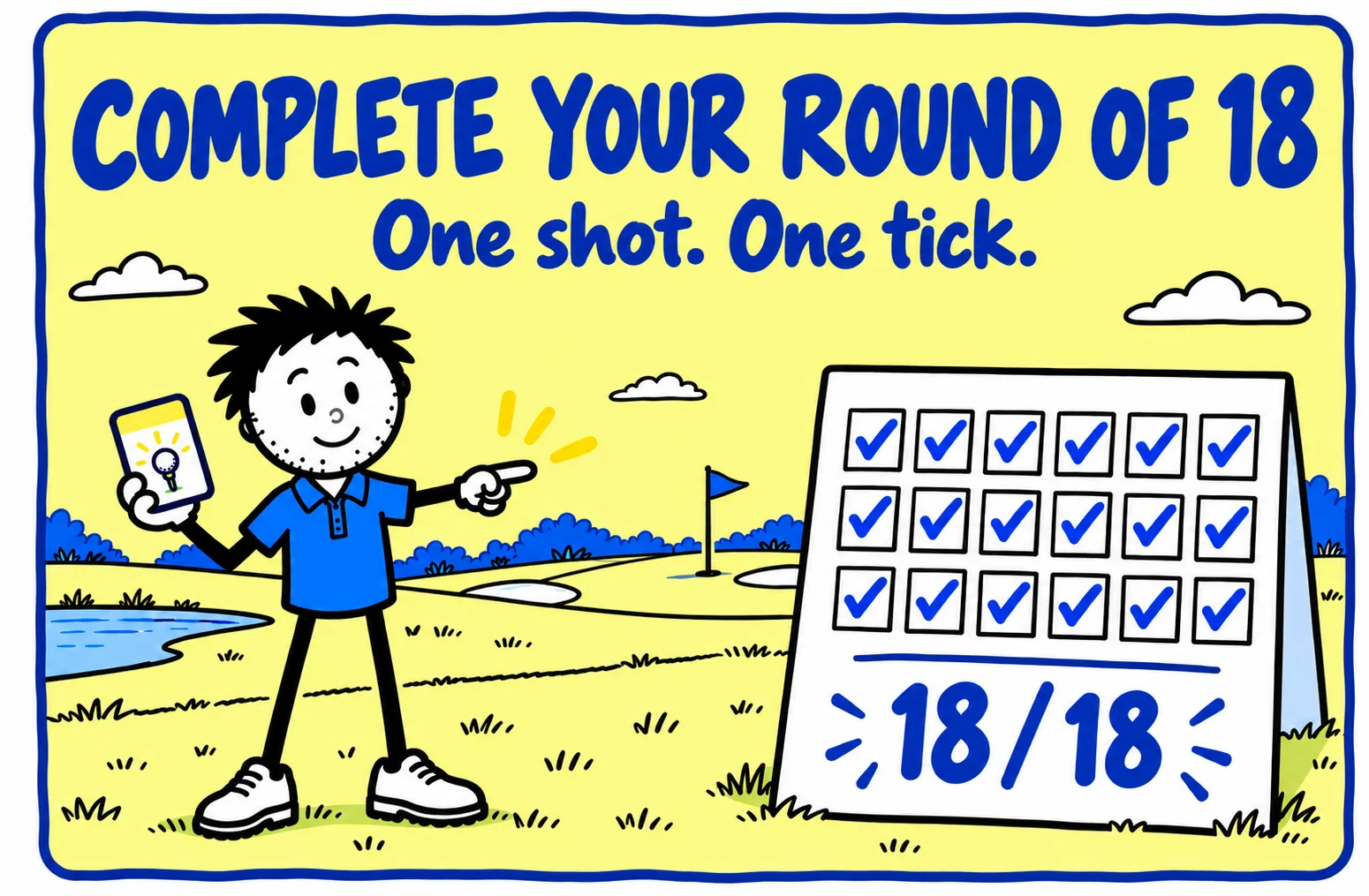
Play 18 short shots in two sets of nine. Before each shot, make a slow rehearsal to feel the pressure change from backswing to through-swing. Then play a small, easy shot and notice whether you finish steadily.
No-ball option: complete 18 slow backswing-and-through-swing rehearsals in two sets of nine. One full rehearsal, finishing steadily and returning to rest, is one tick. Choose either shots or rehearsals for your round so the counting stays clear.
| Score | When to award it |
|---|---|
| 1 point | You complete the shot, routine or movement described above. |
| 0 points | You do not complete the attempt. |
George’s Conclusion
I like the pickle-jar analogy because it makes the role of the feet easy to picture. Keep the movement small, feel the pressure change and let your body turn with it. Use the footwork that helps you strike the ball and finish steadily, rather than chasing an exact photograph of Sam’s swing.
Pair this with the Holy Grail Follow-Through Drill, explore the Chicken Wing Fix Drill, or browse more long game drills.
MAKE THE NEXT BUCKET COUNT
Pick a card. Practise with purpose.