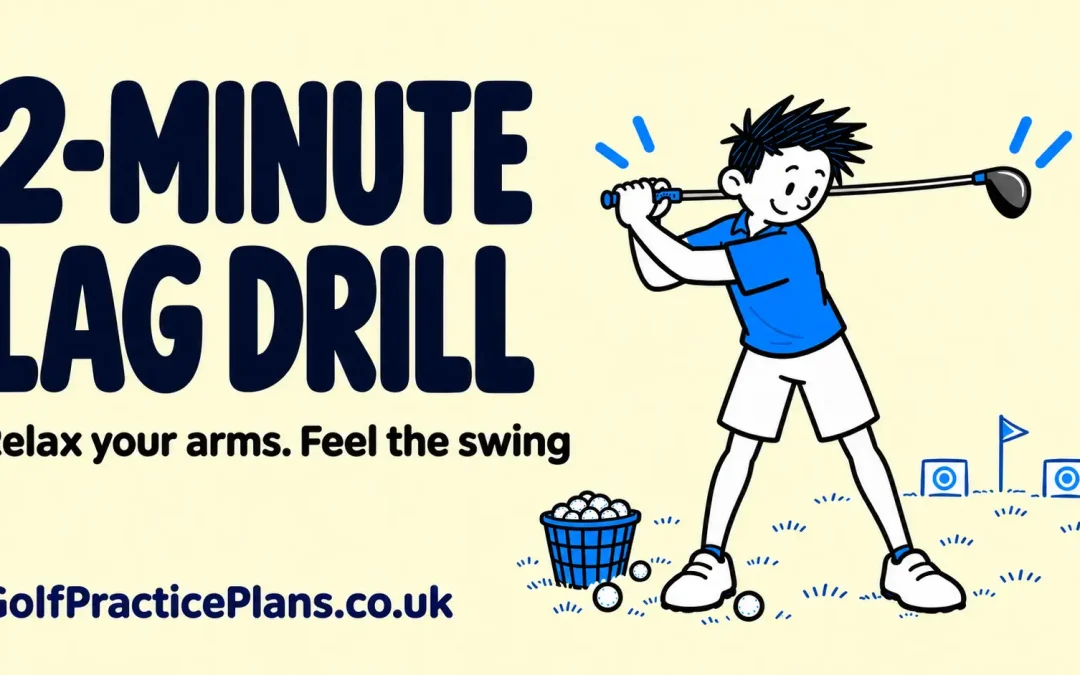
2 Minute Lag Drill: Relax Your Arms and Feel the Swing
Relaxed arms and lag feel
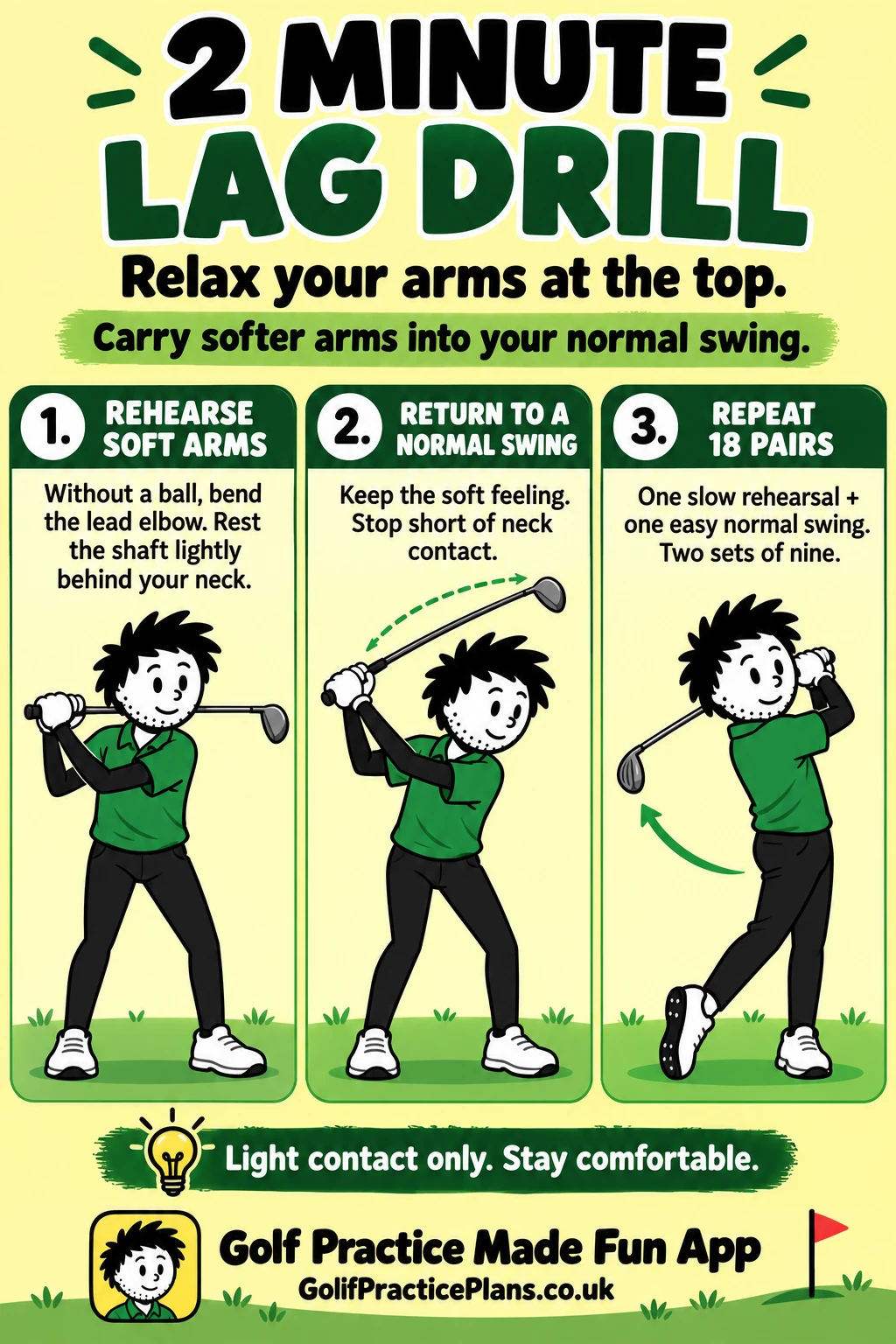
Relaxing your arms at the top can help the club move more freely into the downswing. The bent-arm rehearsal makes it easier to feel the difference between a rigid position and a softer swing. Carrying that feeling into your normal backswing gives you a simple way to explore release timing without trying to force or hold a particular wrist angle.
↓ Download free infographicSave to your device or print for practice.
Watch the shaft-on-neck rehearsal
Step 1. Soften your arms at the top

For a right-handed golfer, the lead arm is the left arm. For a left-handed golfer, it is the right arm. Hold the driver with both hands and make a slow backswing without a ball.
Let your lead elbow bend on purpose. Bring the shaft gently behind your neck, roughly parallel to the ground, as shown in the demonstration. Make only light contact; keep your neck comfortable and stop short if the position does not suit you.
Notice how the bent arm feels less rigid. From there, rehearse an easy downswing and finish in balance. Let the movement flow instead of trying to lock your wrists into an angle.
Step 2. Carry the feeling into a normal swing
Make your next backswing with the same soft arms, but stop short of touching your neck. Use a comfortable swing length. At the range, try a gentle shot from this normal backswing.
| Rehearsal | What to notice |
|---|---|
| Bend the lead arm | A softer feeling at the top. |
| Rest the shaft lightly behind the neck | The position shown in the video, without pressing or forcing it. |
| Return to a normal backswing | Keep the relaxed feeling while stopping short of contact. |
Look at the four original lag positions
Compare the relationship between the lead arm and club shaft during the downswing. They are visual examples, rather than four positions you must copy exactly. Phil Mickelson’s left-handed swing is mirrored relative to a right-handed golfer.



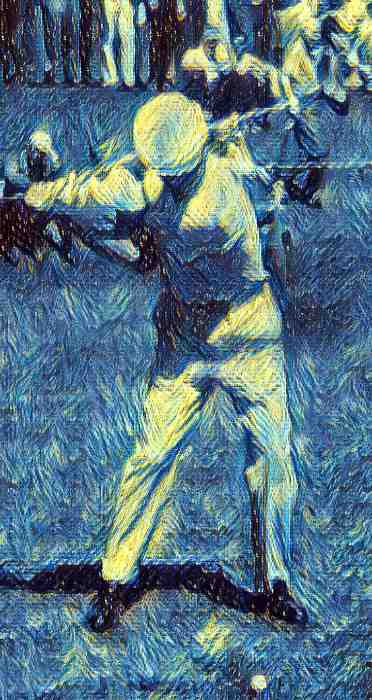
The cue is “Soft arms, easy swing.” At home, use a mirror for a slow rehearsal if you have room for the driver.
Your focus: Relaxed arms and lag feel
Step 3. Complete your round

What to do
Complete 18 controlled repetitions. Each repetition consists of one slow shaft-on-neck rehearsal, followed by one easy, normal swing that stops short of touching your neck. Reset before the next repetition.
| Score | When to award it |
|---|---|
| 1 point | You complete the shot, routine or movement described above. |
| 0 points | You do not complete the attempt. |
FAQs
What equipment do I need?
A driver.
How do I set up this drill?
For a right-handed golfer, the lead arm is the left arm. For a left-handed golfer, it is the right arm. Hold the driver with both hands and make a slow backswing without a ball.
Let your lead elbow bend on purpose. Bring the shaft gently behind your neck, roughly parallel to the ground, as shown in the demonstration. Make only light contact; keep your neck comfortable and stop short if the position does not suit you.
What should I focus on during practice?
Make your next backswing with the same soft arms, but stop short of touching your neck. Use a comfortable swing length. At the range, try a gentle shot from this normal backswing.
Compare the relationship between the lead arm and club shaft during the downswing. They are visual examples, rather than four positions you must copy exactly. Phil Mickelson’s left-handed swing is mirrored relative to a right-handed golfer.
How should I record my practice?
Complete 18 controlled repetitions. Each repetition consists of one slow shaft-on-neck rehearsal, followed by one easy, normal swing that stops short of touching your neck. Reset before the next repetition.
What should I keep in mind when practising?
Use the bent-arm rehearsal to find a softer feeling, then bring that feeling back to your normal swing. Keep the contact light and the motion comfortable. A round of 18 gives you a simple practice task without turning every repetition into a test of how much lag you can create.
Give your next practice a purpose.
Find illustrated drills, save your favourites and record your practice in the Golf Practice Made Fun App.
Try the App Free ↗14 days free · No card required