

Golf Transition Drill: 3 Steps to a Smoother Downswing
Smoother swing transition
A smoother change of direction helps the body and club move together. The brief pause gives you time to notice the start of the downswing instead of immediately pulling at the club with your arms. Rehearsing a turn towards a balanced finish helps you explore a calmer transition that you can carry into a gentle shot.
↓ Download free infographicSave to your device or print for practice.

Watch the transition
Step 1. Pause, then turn through

Take your normal golf posture and make a comfortable backswing. Pause briefly at the top. Then think about your hips and legs helping you turn through, instead of snatching the club down with your arms.
Keep the movement relaxed and finish in balance. Once a full pause feels familiar, shorten it to a small hesitation.
Step 2. Try the throwing-a-ball cue
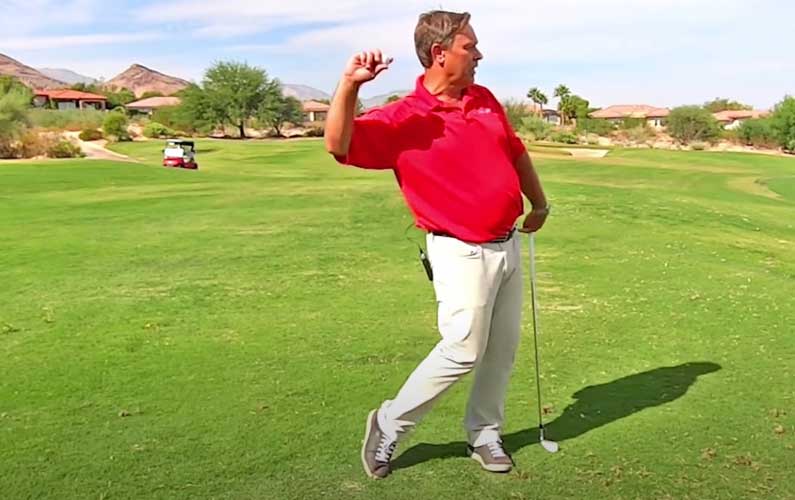
Imagine gently throwing a ball towards a target. Notice how your body turns and your weight moves towards your lead foot. Carry that feeling into your next rehearsal: “Swing as if throwing a ball.”
For a right-handed golfer, the lead foot is the left; reverse this for a left-handed swing. You can mime the throw without releasing a ball.
At the range, try a few easy shots in the original drill’s 50–100-yard range, or shorter if that helps you stay relaxed. Distance is secondary to the rhythm.
Your focus: Smoother swing transition
Step 3. Complete your
What to do
Complete 18 controlled practice swings. Make your backswing, pause or hesitate, then turn through to a balanced finish. Tick one box after each complete swing and reset before the next.
| Score | When to award it |
|---|---|
| 1 point | You complete the shot, routine or movement described above. |
| 0 points | You do not complete the attempt. |
FAQs
What equipment do I need?
One golf club.
How do I set up this drill?
Take your normal golf posture and make a comfortable backswing. Pause briefly at the top. Then think about your hips and legs helping you turn through, instead of snatching the club down with your arms.
Keep the movement relaxed and finish in balance. Once a full pause feels familiar, shorten it to a small hesitation.
What should I focus on during practice?
Imagine gently throwing a ball towards a target. Notice how your body turns and your weight moves towards your lead foot. Carry that feeling into your next rehearsal: “Swing as if throwing a ball.”
For a right-handed golfer, the lead foot is the left; reverse this for a left-handed swing. You can mime the throw without releasing a ball.
How should I record my practice?
Complete 18 controlled practice swings. Make your backswing, pause or hesitate, then turn through to a balanced finish. Tick one box after each complete swing and reset before the next.
What should I keep in mind when practising?
The pause gives you time to change your swing thought. Keep it easy, let your body join the downswing and finish in balance. A round of 18 is enough to explore the feeling without chasing distance.
What drill do you recommend I do next?
Try How to Improve Golf Swing Rhythm next to explore a smoother pace with three rhythm drills.
You could also use Connected Backswing Drill to practise turning your chest and arms together. For another focused practice task, try Backswing Posture Drill to check your shoulder turn with a club across your chest.
Give your next practice a purpose.
Find illustrated drills, save your favourites and record your practice in the Golf Practice Made Fun App.
Try the App Free ↗14 days free · No card required