Browse by category
DRILL OVERVIEW
Club Face Alignment: Check It Before You Swing
Your drill at a glance

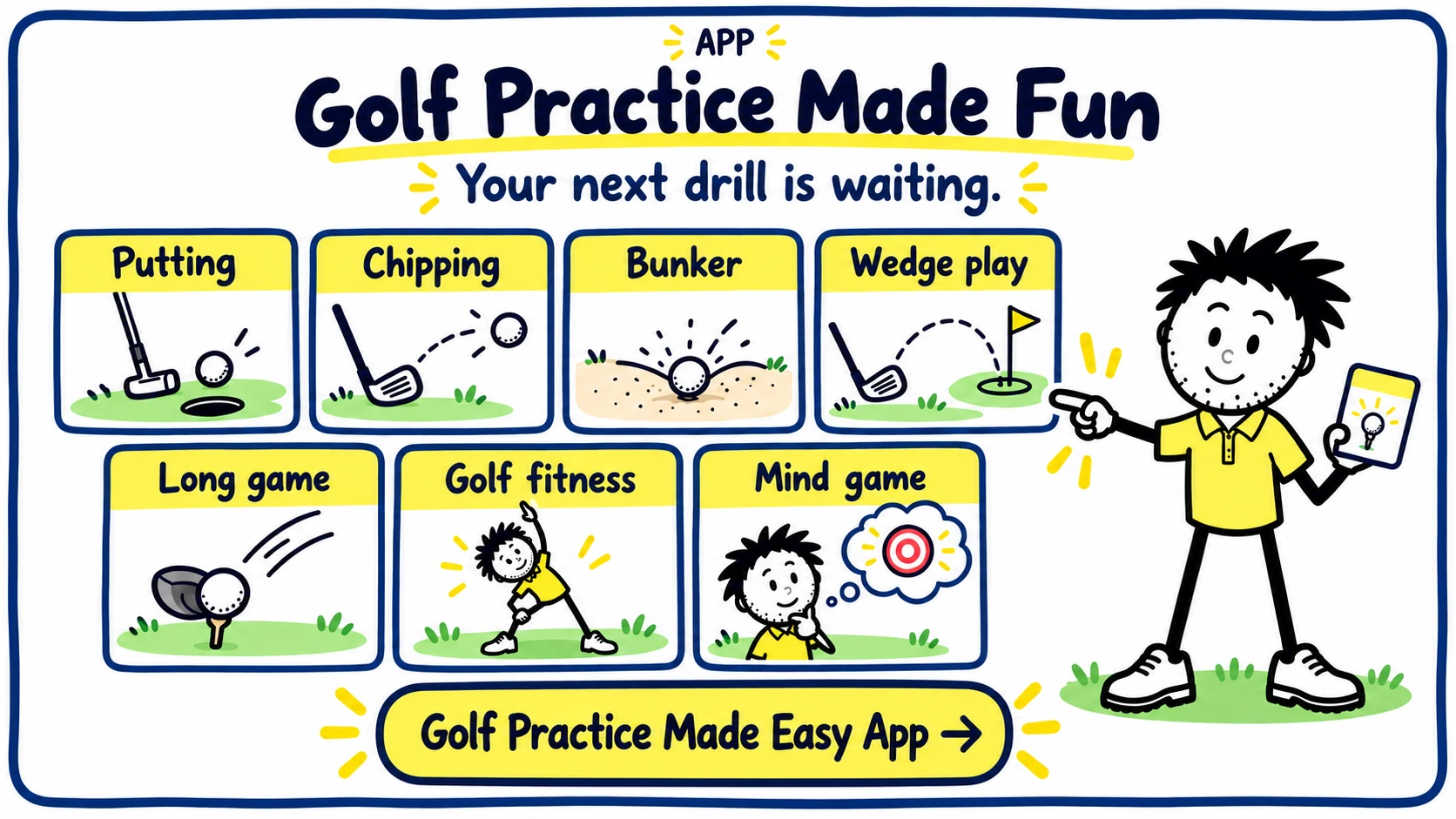
This drill is from the Golf Practice Made Fun App.
Checking the clubface gives every shot a clearer starting point. An unnoticed setup change can send you chasing a swing fault when the clubface was already pointing somewhere unexpected. This drill helps you notice that starting position, test one small adjustment and compare the ball flight, so your practice is guided by what the shot actually does.
Step 1. Watch the clubface and shaft work together
In this lesson, Mike Malaska discusses how the clubface and shaft position relate to impact. The video starts at the section used in the original drill. Watch the demonstration, then try the idea at an easy pace.
Treat a slightly open face as an experiment, because there isn’t one address angle that every golfer absolutely must copy. For the ball’s starting direction, the face position at impact matters most.
Step 2. Check the face, then take your stance

| Step | What to do |
|---|---|
| 1. Pick a specific target. | From behind the ball, choose a flag or range marker. Find a small reference point on the ground along that line. |
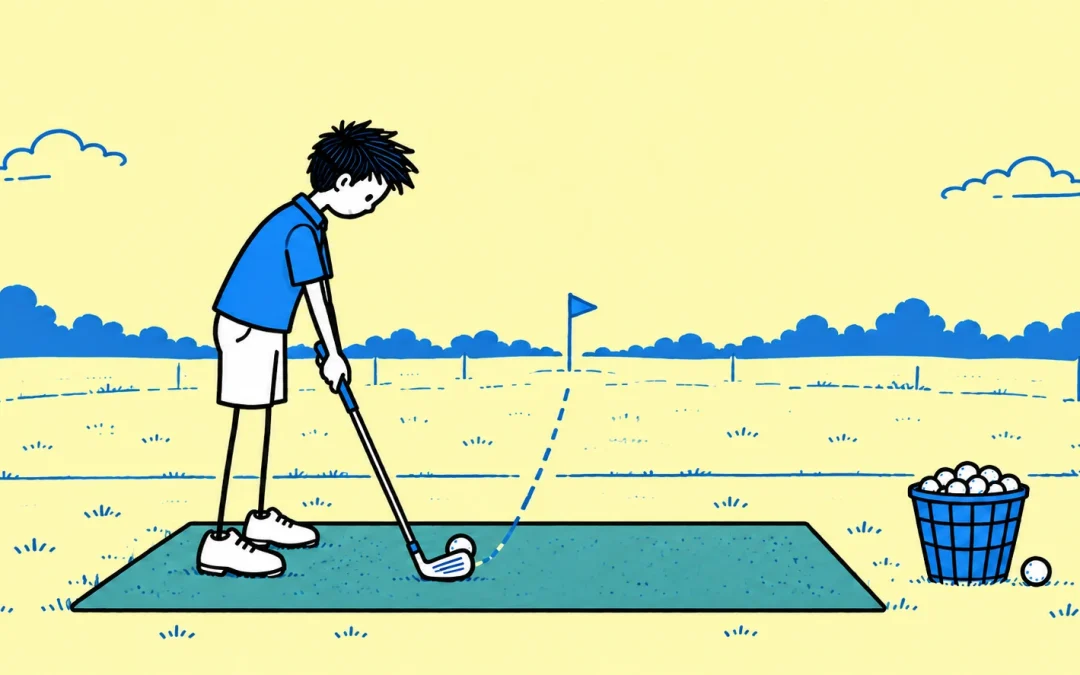
| 2. Place the clubhead behind the ball. | Notice where the face points in your usual setup before changing it. |
| 3. Rehearse the video’s small adjustment. | Turn the face slightly open, rather than making a large change. For a right-handed golfer, open means pointing to the right of the target line; for a left-handed golfer, it means to the left. |
| 4. Keep the rest familiar. | Take your normal grip and stance. Recheck the face after settling in, then make an easy swing. |
A worked example
“Seven iron to the middle flag. Check the face behind the ball. A small opening for this test. Normal stance. Smooth swing.”
If you use an alignment stick, lay it flat alongside your feet as a reference and outside the club’s path. You’re checking a starting position, not steering the face during the swing.
Watch for these easy mistakes
| Easy mistake | What to do instead |
|---|---|
| Turning the whole body towards the new face direction. | Keep your original target so you can compare the setups. |
| Opening the face much more than you intended. | Make a small change, then check again. |
| Changing your grip, ball position and swing as well. | Change one thing at a time so the result means something. |
Step 3. Complete your round
What to do
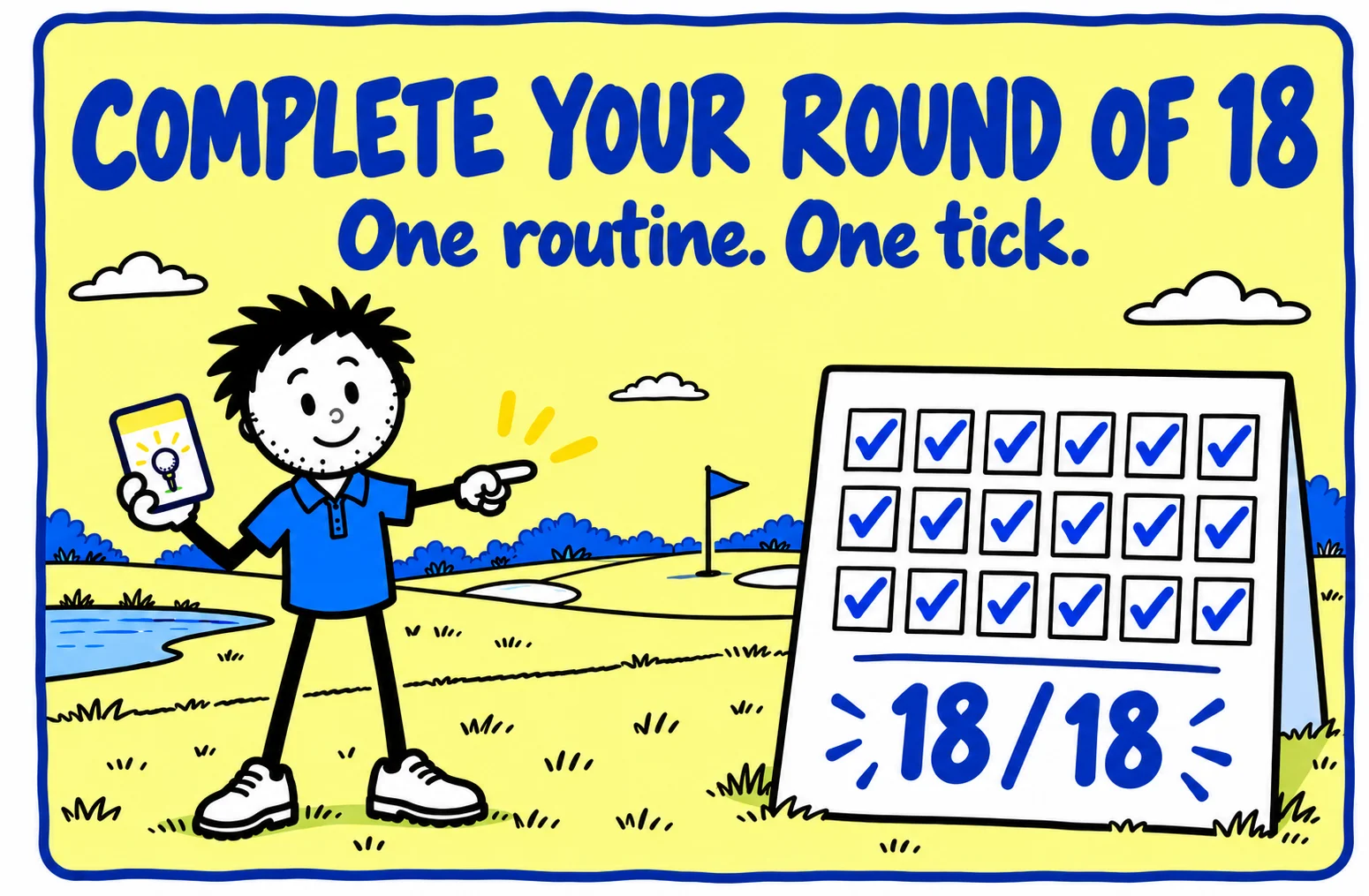
Use one comfortable iron and target. Complete 18 full setup routines: choose your target, place the clubhead, check the face, take your stance and make an easy shot. Reset before each ball.
| Score | When to award it |
|---|---|
| 1 point | You complete the shot, routine or movement described above. |
| 0 points | You do not complete the attempt. |
George’s Conclusion
A tiny setup change deserves a proper test. Check the face, keep the rest of your routine familiar, and let the ball flight earn the change a place in your game. The prettiest address position in the world is no help if the ball keeps visiting the wrong postcode.
Fancy another challenge? Browse the long game drills.
Want to tidy up the rest of your address position? Try the Avoid Common Setup Mistakes Drill or the Stare at the Target, Glance at the Ball Drill.
Browse by category
DRILL OVERVIEW
Club Face Alignment: Check It Before You Swing
Your drill at a glance
This drill is from the Golf Practice Made Fun App.
Checking the clubface gives every shot a clearer starting point. An unnoticed setup change can send you chasing a swing fault when the clubface was already pointing somewhere unexpected. This drill helps you notice that starting position, test one small adjustment and compare the ball flight, so your practice is guided by what the shot actually does.
Step 1. Watch the clubface and shaft work together
In this lesson, Mike Malaska discusses how the clubface and shaft position relate to impact. The video starts at the section used in the original drill. Watch the demonstration, then try the idea at an easy pace.
Treat a slightly open face as an experiment, because there isn’t one address angle that every golfer absolutely must copy. For the ball’s starting direction, the face position at impact matters most.
Step 2. Check the face, then take your stance
| Step | What to do |
|---|---|
| 1. Pick a specific target. | From behind the ball, choose a flag or range marker. Find a small reference point on the ground along that line. |
| 2. Place the clubhead behind the ball. | Notice where the face points in your usual setup before changing it. |
| 3. Rehearse the video’s small adjustment. | Turn the face slightly open, rather than making a large change. For a right-handed golfer, open means pointing to the right of the target line; for a left-handed golfer, it means to the left. |
| 4. Keep the rest familiar. | Take your normal grip and stance. Recheck the face after settling in, then make an easy swing. |
A worked example
“Seven iron to the middle flag. Check the face behind the ball. A small opening for this test. Normal stance. Smooth swing.”
If you use an alignment stick, lay it flat alongside your feet as a reference and outside the club’s path. You’re checking a starting position, not steering the face during the swing.
Watch for these easy mistakes
| Easy mistake | What to do instead |
|---|---|
| Turning the whole body towards the new face direction. | Keep your original target so you can compare the setups. |
| Opening the face much more than you intended. | Make a small change, then check again. |
| Changing your grip, ball position and swing as well. | Change one thing at a time so the result means something. |
Step 3. Complete your round
What to do
Use one comfortable iron and target. Complete 18 full setup routines: choose your target, place the clubhead, check the face, take your stance and make an easy shot. Reset before each ball.
| Score | When to award it |
|---|---|
| 1 point | You complete the shot, routine or movement described above. |
| 0 points | You do not complete the attempt. |
George’s Conclusion
A tiny setup change deserves a proper test. Check the face, keep the rest of your routine familiar, and let the ball flight earn the change a place in your game. The prettiest address position in the world is no help if the ball keeps visiting the wrong postcode.
Fancy another challenge? Browse the long game drills.
Want to tidy up the rest of your address position? Try the Avoid Common Setup Mistakes Drill or the Stare at the Target, Glance at the Ball Drill.
MAKE THE NEXT BUCKET COUNT
Pick a card. Practise with purpose.