Browse by category
DRILL OVERVIEW · LONG GAME CARD 93
Draw-to-target rehearsal
Your drill at a glance
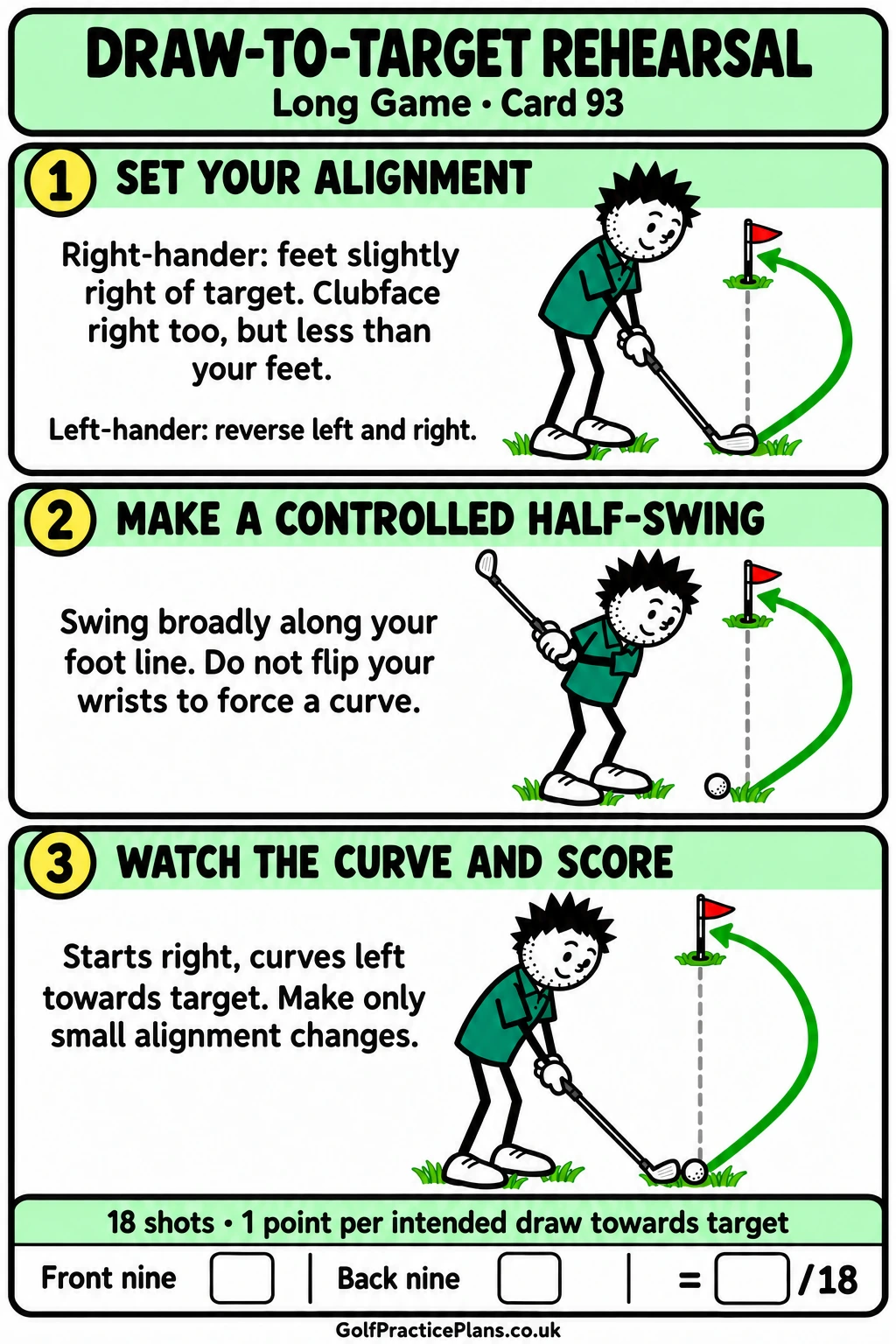
This is Long Game card 93 in the Golf Practice Made Easy App.
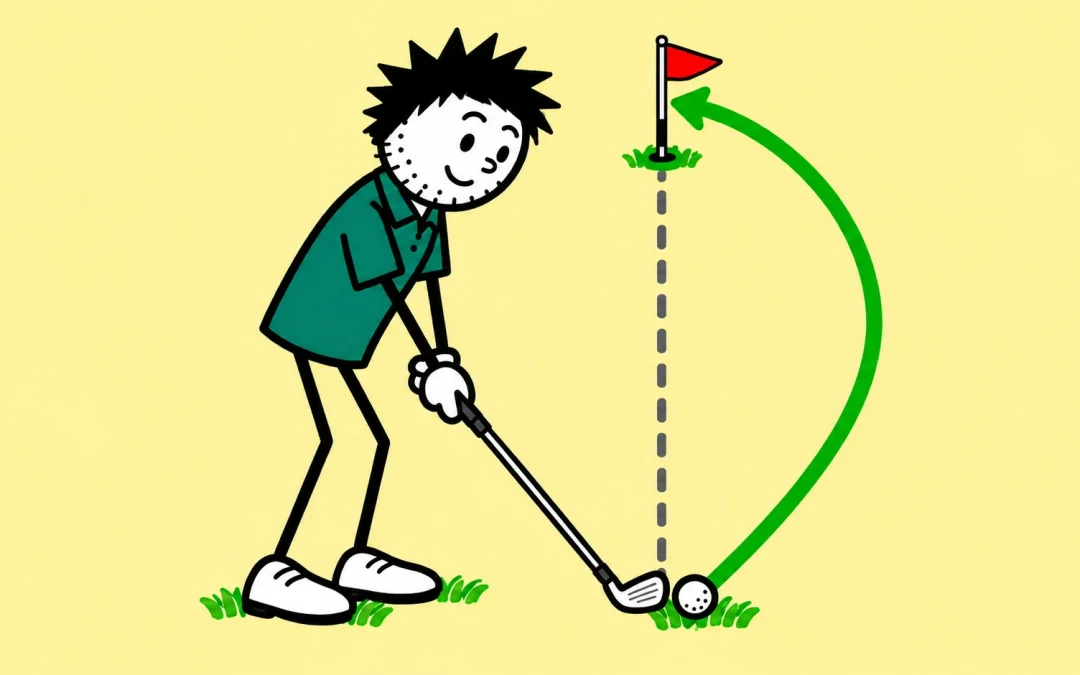
A draw starts to one side of your target and curves back towards it. For a right-handed golfer, that means starting right and curving left. This drill gives you a simple way to rehearse the setup, make a controlled half-swing and learn from the flight.
The aim is a manageable curve towards a chosen target. Start with a club you can control comfortably, keep the changes small and watch the start direction as well as the curve. Left-handed golfers reverse the directions below.
Jump to your alignment, the half-swing or the 18-shot test.
Watch the drill.
Watch the demonstration linked from card 93 in the App, then follow the practice steps below. The 18-shot scoring test is our App’s practice format.
Step 1. Set your alignment.
| Action | What to do |
|---|---|
| Choose a clear target | Use a suitable practice range with room to see the ball’s flight. Choose a target you can reach with a controlled half-swing and keep the same target for the test. |
| Set your feet | For a right-hander, aim your feet slightly right of the target. Avoid an exaggerated change that makes your stance uncomfortable. |
| Set the clubface | Point the clubface a little right of the target too, but not as far right as your feet. Set the face first, then take your grip. |
| Reverse for a left-hander | Aim your feet slightly left of the target, with the clubface a little left too, but not as far left as your feet. |
The clubface should be closed relative to the intended swing path, while still pointing slightly right of the target for a right-hander. Simply shutting the face left of the target can send the ball left from the start. Your address position is a rehearsal cue; the delivered face and path at impact determine the flight.
Step 2. Make a controlled half-swing.
| Action | What to do |
|---|---|
| Rehearse the movement | Make a small practice swing broadly along your foot line. Keep your pace easy and leave enough room for a balanced turn. |
| Hit the half-shot | Use the same comfortable motion with a ball. A smaller swing makes the flight easier to observe without chasing extra distance. |
| Let the curve happen | Avoid flipping your wrists or sharply rolling your hands over to manufacture a draw. Let the setup and controlled motion do the work. |
| Watch before changing | Notice where the ball starts, which way it curves and where it finishes. Make only one small alignment change at a time. |
Quick practice checks
| What happens | What to try |
|---|---|
| Starts right and stays right | You have produced a push rather than a draw. Recheck the clubface’s direction relative to your intended path and make a small adjustment. |
| Starts right and curves further right | The face is open relative to the path at impact. Return to the setup and a comfortable half-swing; avoid aiming your feet farther right to compensate. |
| Starts left or curves too far left | Reduce the setup exaggeration and recheck your face aim. Keep the motion smooth rather than adding a hand flip. |
| Contact becomes inconsistent | Return to your normal comfortable setup and find clean contact with a smaller swing before reintroducing the draw setup. |
These flight checks describe a right-handed golfer. Reverse left and right for a left-hander.
Step 3. Watch the curve and score.
Play 18 shots, split into a front nine and a back nine if helpful. Keep the same club and target so you can compare your attempts. Every shot counts as an attempt.
| Score | When to award it |
|---|---|
| 1 point | You produce the intended draw towards your chosen target: starting right and curving left for a right-hander, or starting left and curving right for a left-hander. |
| 0 points | The shot stays straight, curves the opposite way, curves away from the target or does not produce the intended draw. |
Add the two nines for one total out of 18. Note the start direction, size of curve and finishing position. A draw can still miss the target, so use your notes to judge accuracy alongside the score.
In the Golf Practice Made Easy App, open card 93 from My Cards, choose Score your practice, enter your total and select Save result. Your result opens in My Progress → Your scored results. Compare attempts using the same club and target, and note changes in wind or setup.
George’s Practice Tip.
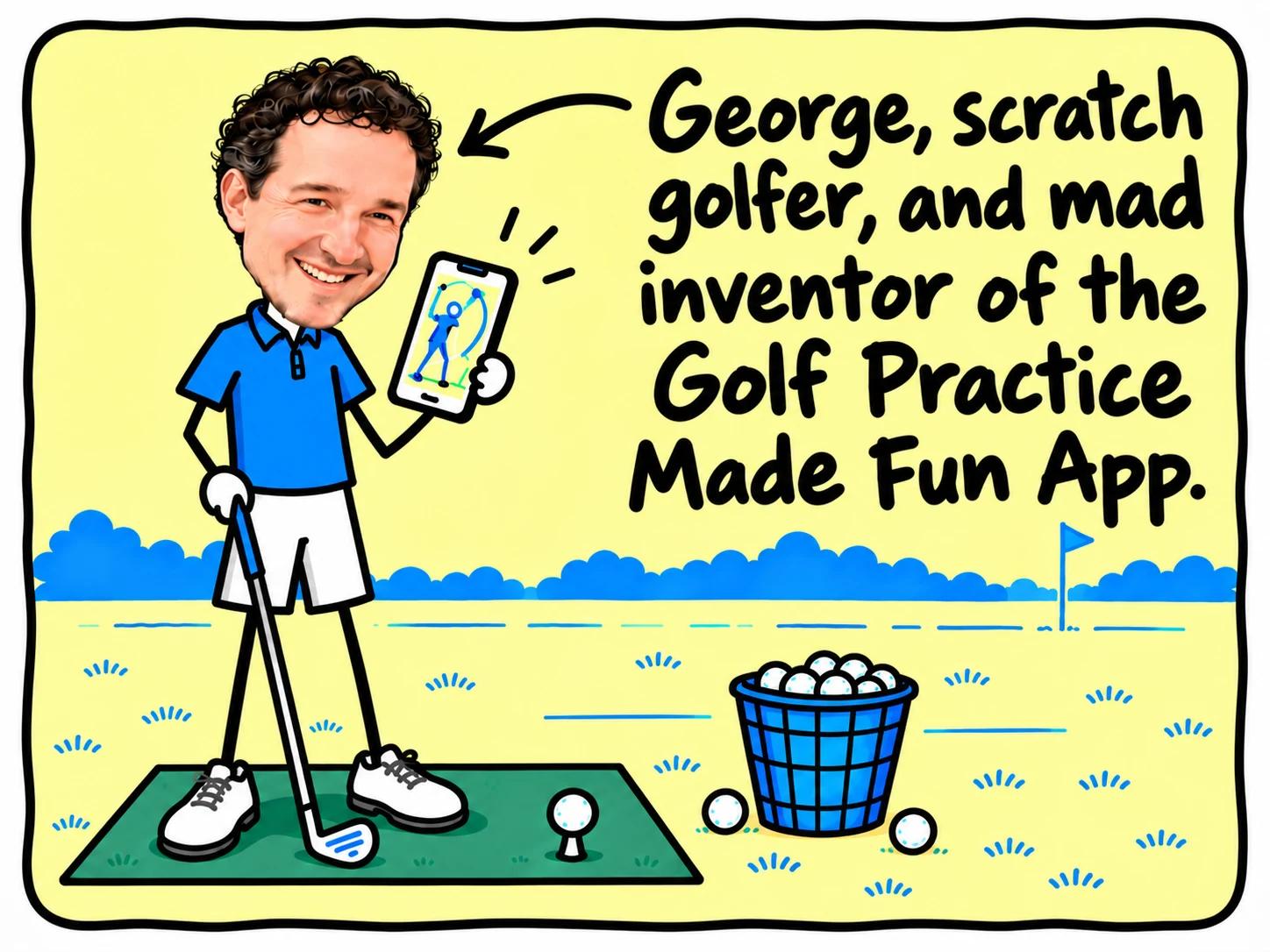
Watch the start before judging the curve. A ball that starts well left and keeps turning left is not the controlled draw you are practising. Use a small swing, change one thing and let the next ball tell you what happened. Once you can repeat a modest curve, learn where it finishes with that club.
For another ball-flight task, try the Knockdown into Wind Drill. If your contact needs attention first, use the Towel-Behind-Ball Drill.
Further reading: Titleist’s How to Draw the Golf Ball explains how a face closed relative to the swing path helps create a right-to-left curve for a right-handed golfer.
MAKE THE NEXT BUCKET COUNT
Pick a card. Practise with purpose.