Browse by category
DRILL OVERVIEW · LONG GAME CARD 7
Ball-First Contact: Marker Behind
Your drill at a glance
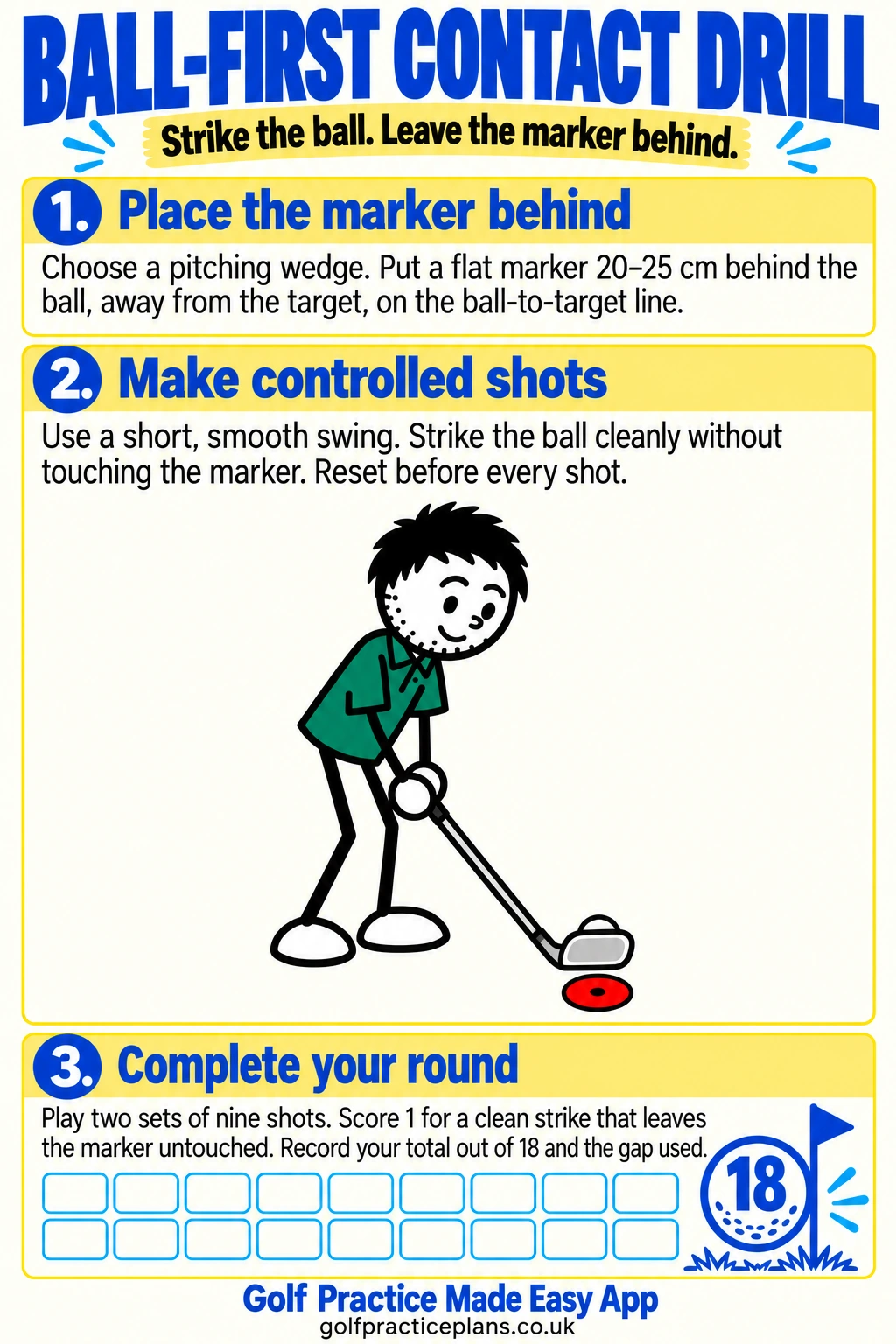
This is Long Game card 7, Ball-First Contact: Marker Behind, in the Golf Practice Made Easy App.
A practice mat can disguise contact that starts too far behind the ball. A flat coin or marker gives you something to check: can you strike the ball cleanly while leaving the marker behind it untouched?
Marcus Edblad demonstrates this simple exercise with a pitching wedge. He starts with a generous gap and gradually moves the ball closer to the coin. The task is to control where the club meets the ground, rather than chase distance or hit harder.
Jump to the marker setup, the controlled shots or the 18-shot test.
Watch Marcus Edblad’s lesson.
The first exercise in Get a tour level impact with these coin drills… begins at 1:53. Marcus puts a coin behind the ball and checks whether it moves during the shot. Around 2:35, he reduces the gap to about two inches.
Watch the relevant drill on YouTube. We use the first exercise only. The later coin-only exercise has a different aim. Marcus’s five-in-a-row target is adapted below into an 18-shot App scoring round.
Step 1. Put the marker behind the ball.
| Action | What to do |
|---|---|
| Pick a simple starting point | Choose a pitching wedge, a suitable practice mat or closely mown practice lie, and one clear target. |
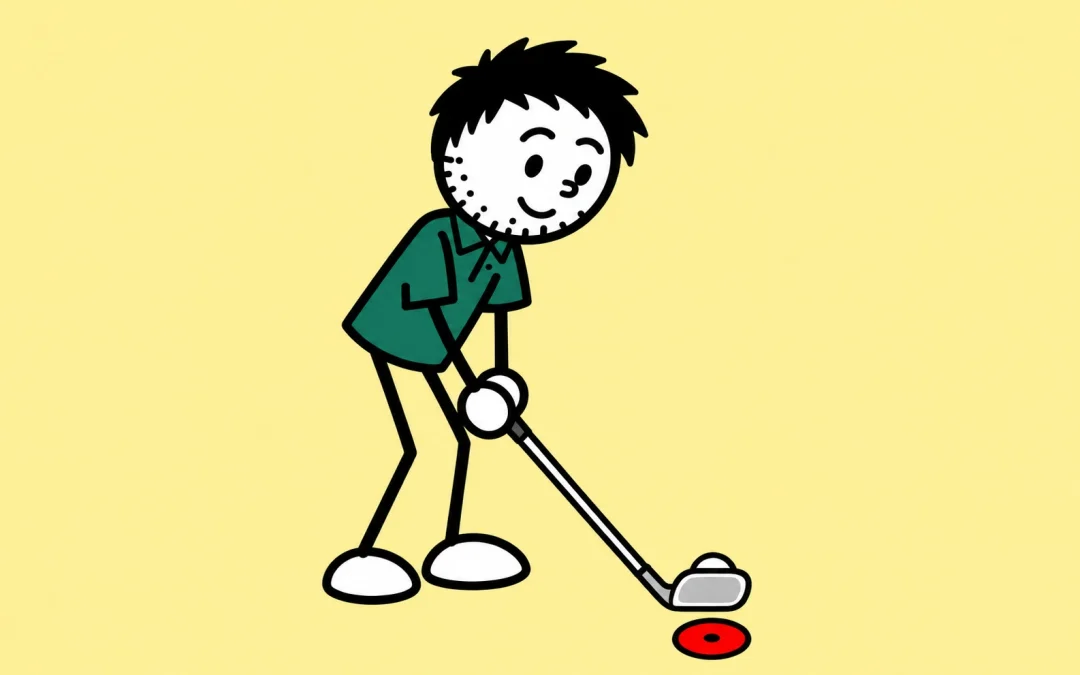
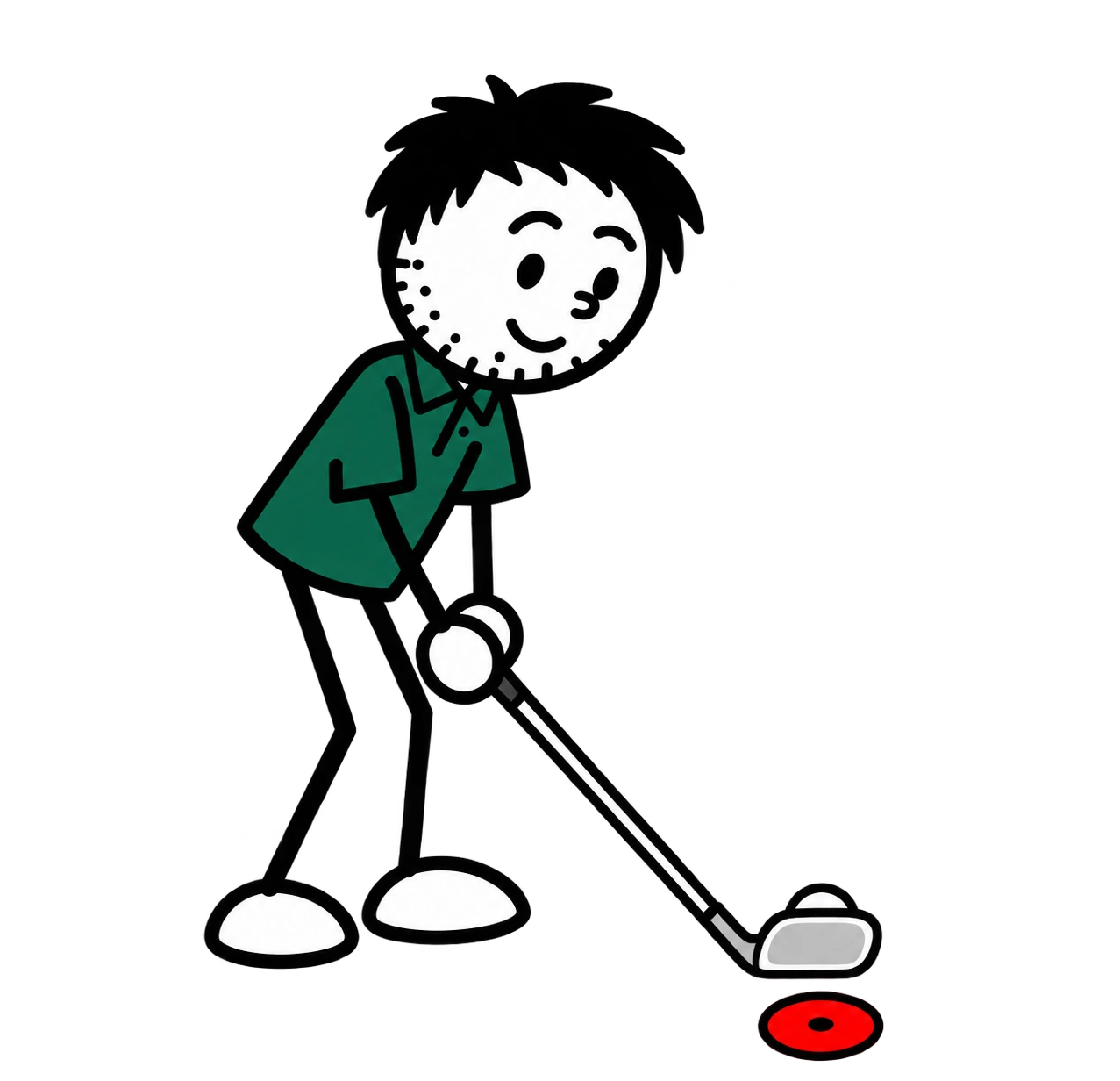
| Set a generous gap | Place a flat coin or marker about 20–25 cm behind the ball, on the side away from your target. Keep your normal ball position. |
| Use the ball-to-target line | The marker belongs on the same line as the ball and target. Do not put it sideways between the ball and your feet. |
| Check the clubhead clearance | Rest the clubhead immediately behind the ball, with the marker farther back. Make a slow rehearsal to check that the setup gives you room to move. |
Step 2. Strike the ball and leave the marker.
| Action | What to do |
|---|---|
| Keep the effort comfortable | Make a short, controlled wedge swing. Marcus emphasises controlling contact rather than hitting hard. |
| Check the strike and marker | Try to strike the ball cleanly while leaving the marker untouched. Look at the marker after each attempt to see whether it moved. |
| Reset before trying again | Put the ball and marker back in their original positions. Keep the same club, target and gap while learning the task. |
| Reduce the gap gradually | Once contact becomes reliable, try a smaller gap in a later practice round. Marcus works towards roughly 5 cm; you do not need to start that close. |
If you keep catching the marker
| Action | What to do |
|---|---|
| The marker moves | Widen the gap and shorten the swing. Return to comfortable contact before making the task harder. |
| The marker stays still but contact is thin | Check the strike as well as the marker. Missing it alone does not prove that contact was good. |
| You start steering around the marker | Make the setup easier and rehearse smoothly. Keep your normal posture instead of reaching or lifting to avoid it. |
| You keep changing the gap | Choose one distance for the scoring round and leave it there. A different gap is a different practice test. |
The marker gives feedback about this task; it does not measure every part of your swing. Judge the quality of the strike alongside whether the marker stays still.
Step 3. Play your round of 18.
| Action | What to do |
|---|---|
| Play two sets of nine | Hit 18 controlled shots with the same club and marker gap. Pause after nine to reset the setup and review contact. |
| Award one point | Score 1 for a clean strike that leaves the marker untouched. Score 0 if the strike is poor or the marker is touched. Maximum: 18. |
| Write down the gap | Record the marker distance with your score. A result at 20 cm is useful progress even if you are not yet ready for a smaller gap. |
| Compare like with like | Repeat with the same setup next time. Reduce the gap only after contact becomes repeatable, and record that change. |
In the Golf Practice Made Easy App, open Long Game card 7, Ball-First Contact: Marker Behind, from My Cards. Follow the drill, record your total out of 18 and note the marker gap and club used. Keep those details with your practice notes so you can make a fair comparison in My Progress.
George’s Practice Tip.
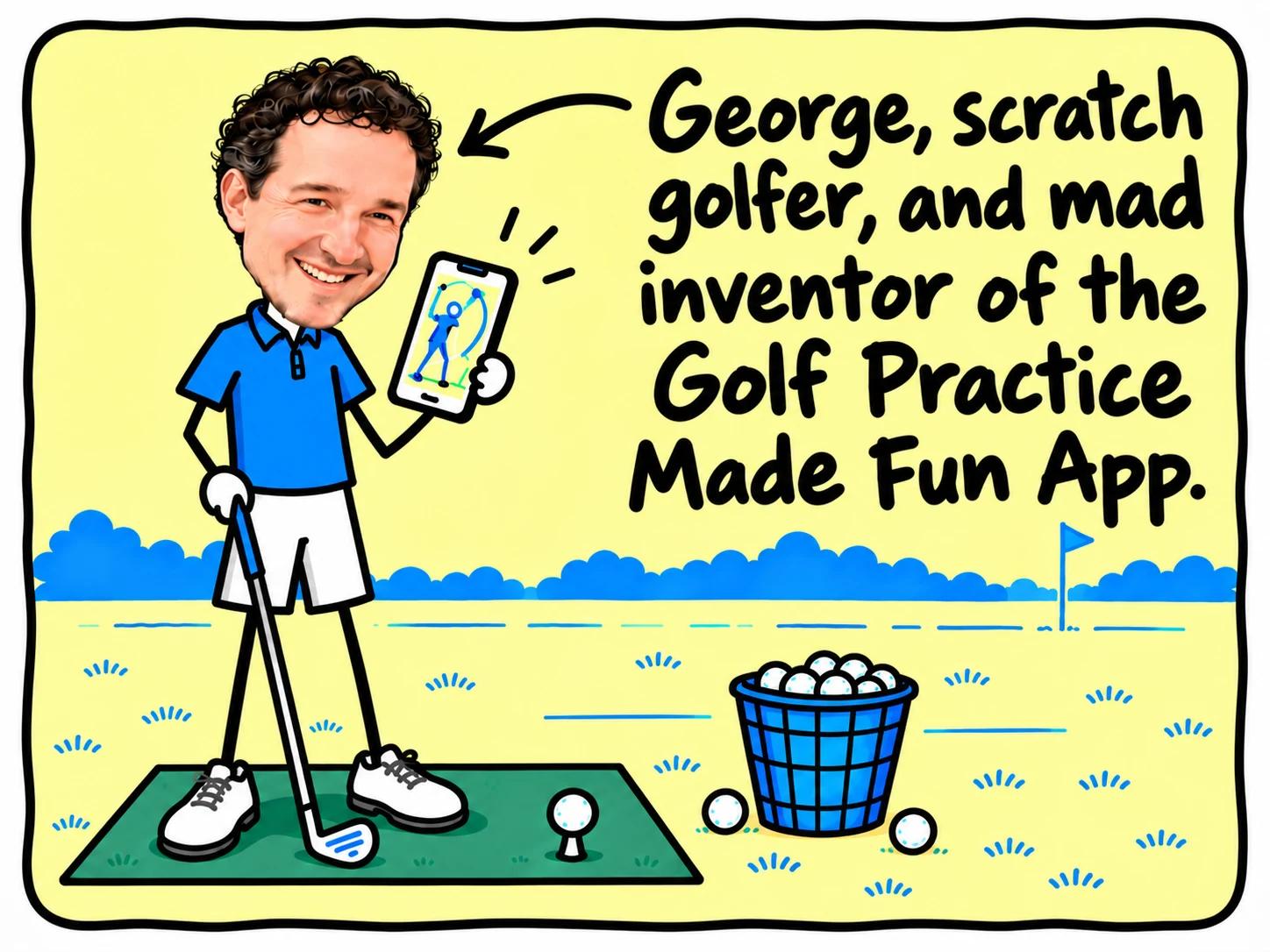
Choose a gap that lets you learn the task. A few clean strikes with generous clearance are more useful than repeatedly catching a marker placed too close. When you finish the round, remove it and hit three more gentle shots. Notice whether you can keep the same contact without the reference.
For another contact reference, try the Towel-Behind-Ball Golf Drill. For a different coin exercise, see the Ball Striking Coin Drill, which places the coin beyond the ball towards the target.
MAKE THE NEXT BUCKET COUNT
Pick a card. Practise with purpose.