Browse by category
DRILL OVERVIEW · LONG GAME CARD 4
Anti-Slice: Two-Tee Swing Path
Your drill at a glance
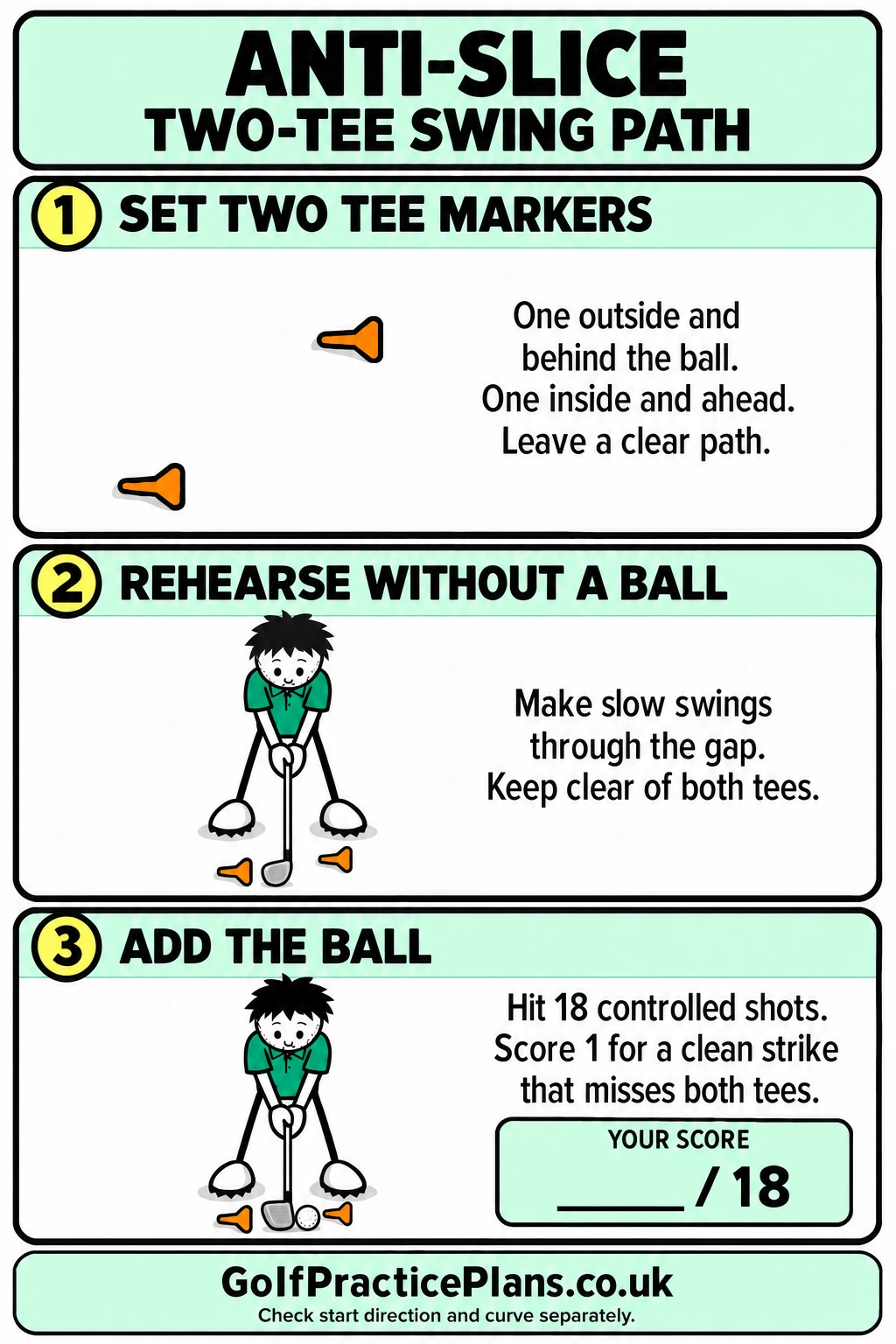
This is Long Game card 4, Anti-Slice: Two-Tee Swing Path, in the Golf Practice Made Easy App.
Two small tees can make a difficult swing feeling much easier to practise. Michael Breed’s lesson uses them as markers for the club’s route through the hitting area. Begin with slow rehearsals, then add a ball when you can move through the gap comfortably.
The tees provide feedback on your path. Keep an eye on where the ball starts and how it curves as well: missing the markers alone does not guarantee a straight shot.
Jump to the tee setup, the rehearsals or the 18-shot test.
Watch Michael Breed’s lesson.
In Grab 2 Tees and Let’s Fix That Slice!, Breed demonstrates the markers, rehearses without a ball and then checks the resulting shots. His setup explanation begins around 1:23; the no-ball rehearsals begin around 2:12.
Watch the full lesson on YouTube. The controlled half-shots and scoring round below are our App practice adaptation.
Step 1. Set two tee markers.
| Action | What to do |
|---|---|
| Choose a simple starting point | Use a short iron and one clear target. Keep the same club and target throughout your first practice round. |
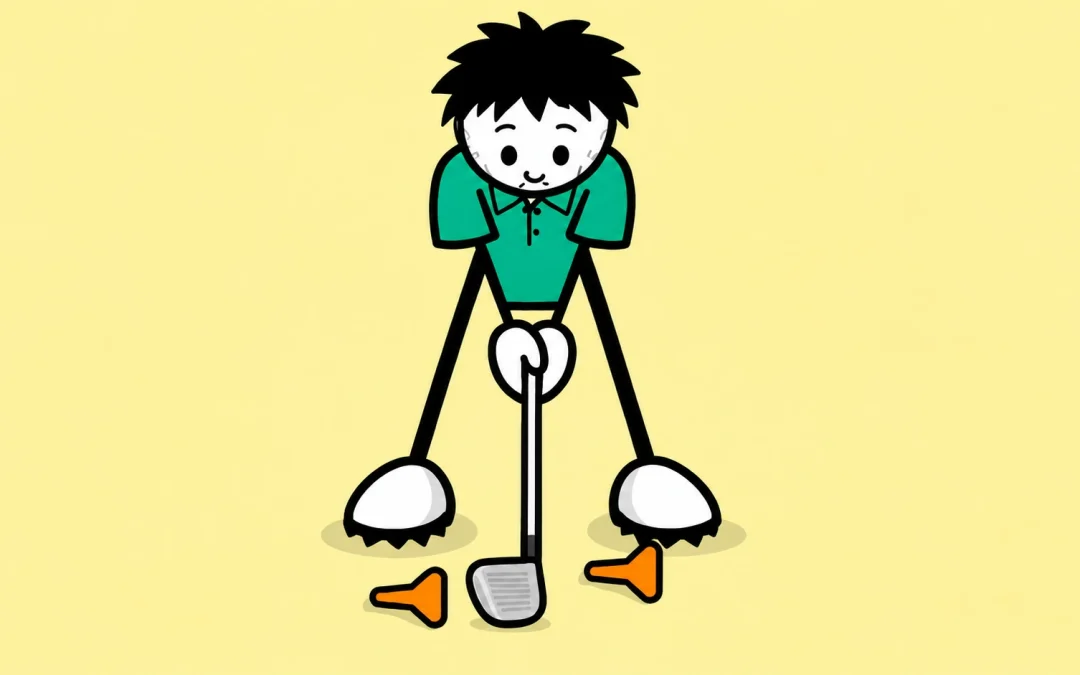
| Set the diagonal markers | For a right-hander, put one tee outside and behind the ball position, and the other inside and ahead. Outside means farther from your feet; inside means nearer your feet. Reverse the layout for a left-hander. |
| Leave enough clearance | The clubhead and shaft both need room to pass. Begin with a generous gap and check it with a slow rehearsal. Use the video’s close-up around 1:55 as your visual reference. |
| Keep the setup practical | Use short tee markers where the practice surface permits. On an artificial mat, use flat tee markers only if the range allows them; keep them clear of the club and neighbouring bays. |
Your cue: “A clear route through the ball.” The markers should guide your practice without making you reach, lift the club or steer around an obstacle.
Step 2. Rehearse without a ball.
| Action | What to do |
|---|---|
| Start slowly | Remove the ball and make comfortable half-swings through the space between the markers. |
| Feel the route | Let the club approach the ball position from your side of the target line and continue through the gap. Keep your normal posture and balance. |
| Check before adding speed | Make several rehearsals without touching either marker. If the clubhead or shaft catches one, move it farther away and slow down. |
| Add a ball | Play a gentle short shot with the same motion. Notice the strike, starting direction and curve before making another adjustment. |
If the ball still curves
Breed also adjusts his grip in the lesson to change the face delivery. A path change can produce a push if the clubface remains too far open. Recheck the face and grip rather than trying to swing farther out to the right. A coach can help you identify which part needs attention.
| Action | What to do |
|---|---|
| You keep clipping a tee | Widen the space, shorten the swing and check clearance for the shaft as well as the clubhead. |
| You miss the tees but strike poorly | Reduce the swing length and return to a comfortable setup. Give the ball strike priority over squeezing through a narrow gap. |
| The ball starts right and stays right | Check the clubface and grip. Keep the path change modest rather than exaggerating it. |
| The ball starts or curves sharply left | Pause the drill and reset the face, grip and aim. Avoid forcing your hands over to manufacture a draw. |
Step 3. Play your round of 18.
| Action | What to do |
|---|---|
| Play two sets of nine | Use controlled shots with the same club, target and marker positions. Pause after nine to check that the markers have not moved. |
| Award one point | Score 1 for a clean strike that misses both tee markers; score 0 for a poor strike or contact with either marker. Maximum: 18. |
| Keep ball flight as a separate note | Record the common starting direction and curve. Your marker score measures this practice task; ball flight shows how it is transferring. |
| Compare like with like | Use the same setup next time. If you change the marker spacing or swing length, note it so the scores remain useful. |
In the Golf Practice Made Easy App, open Long Game card 4, Anti-Slice: Two-Tee Swing Path, from My Cards, choose Score your practice and record your total out of 18. Use My Progress to compare sessions with the same club and setup.
George’s Practice Tip.
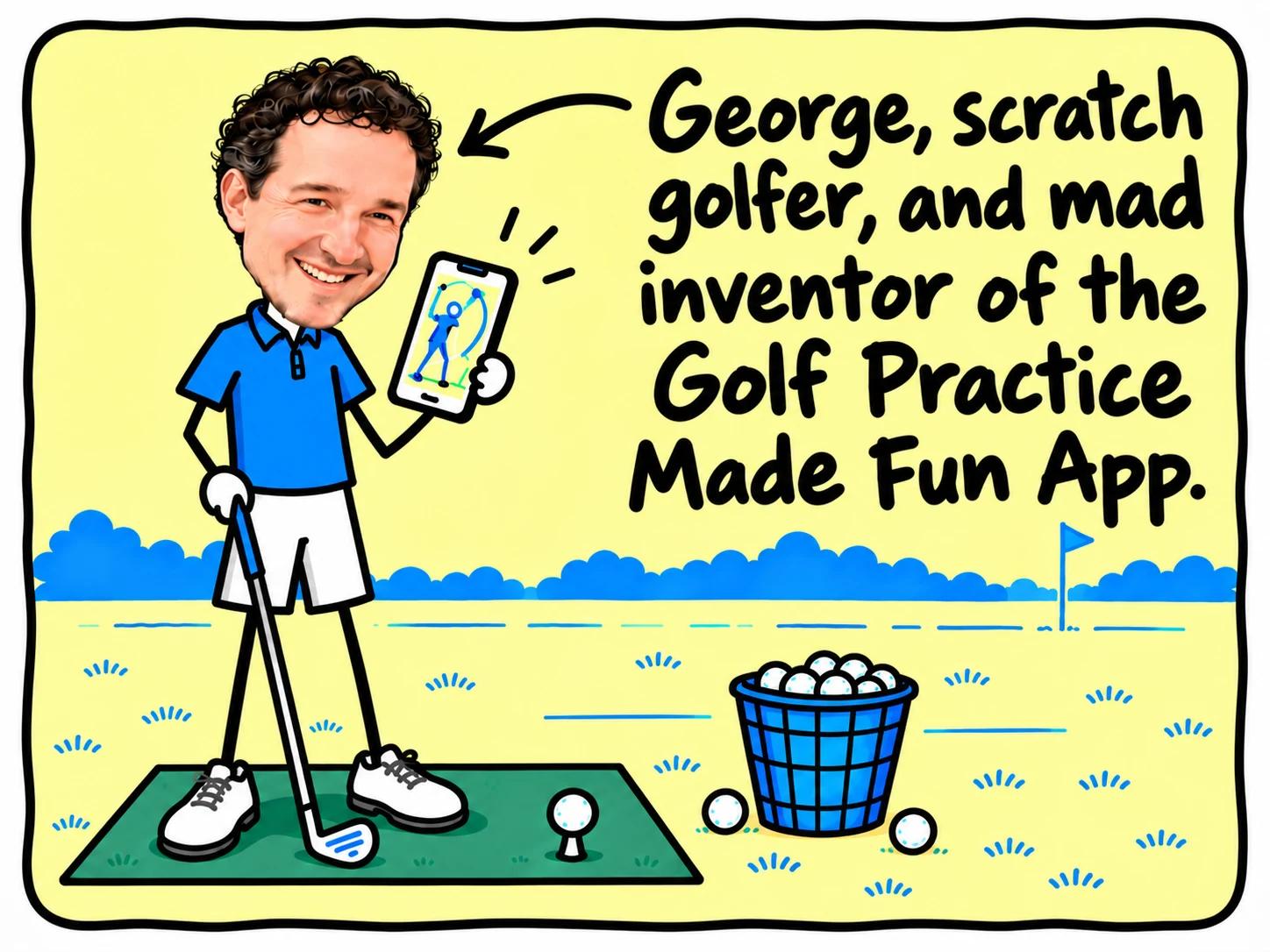
Keep the first session gentle. A wide gap and a short swing let you learn the task without chasing a perfect ball flight on every attempt. After your scoring round, remove the markers and hit three more shots. Notice whether you can keep the same comfortable movement with your usual routine.
For more setup work, try Mark Blackburn’s Two-Stick Alignment Drill. For a different path reference, see the Headcover Anti-Slice Rehearsal.
Lesson source: Michael Breed — Grab 2 Tees and Let’s Fix That Slice! Illustrations, controlled half-shots and the 18-shot scoring format are our practice adaptations.
MAKE THE NEXT BUCKET COUNT
Pick a card. Practise with purpose.