
How to Start Your Golf Swing: 3 Drills for a Smoother Takeaway
Smoother swing start
A comfortable start gives you a clearer way to begin your swing without rushing the takeaway.
These three drills connect a small starting cue with an easy-to-observe takeaway and a halfway checkpoint. Begin with Dustin Johnson’s trigger, use Adam Scott’s reference to explore how your hands and chest move together, then carry one simple rehearsal into Anthony Kim’s shot routine. Complete eighteen repetitions in each of the first two drills, followed by eighteen controlled shots using the checkpoint routine.
↓ Download free infographicSave to your device or print for practice.
Drill 1. Dustin Johnson Swing Trigger: Find a Comfortable Start
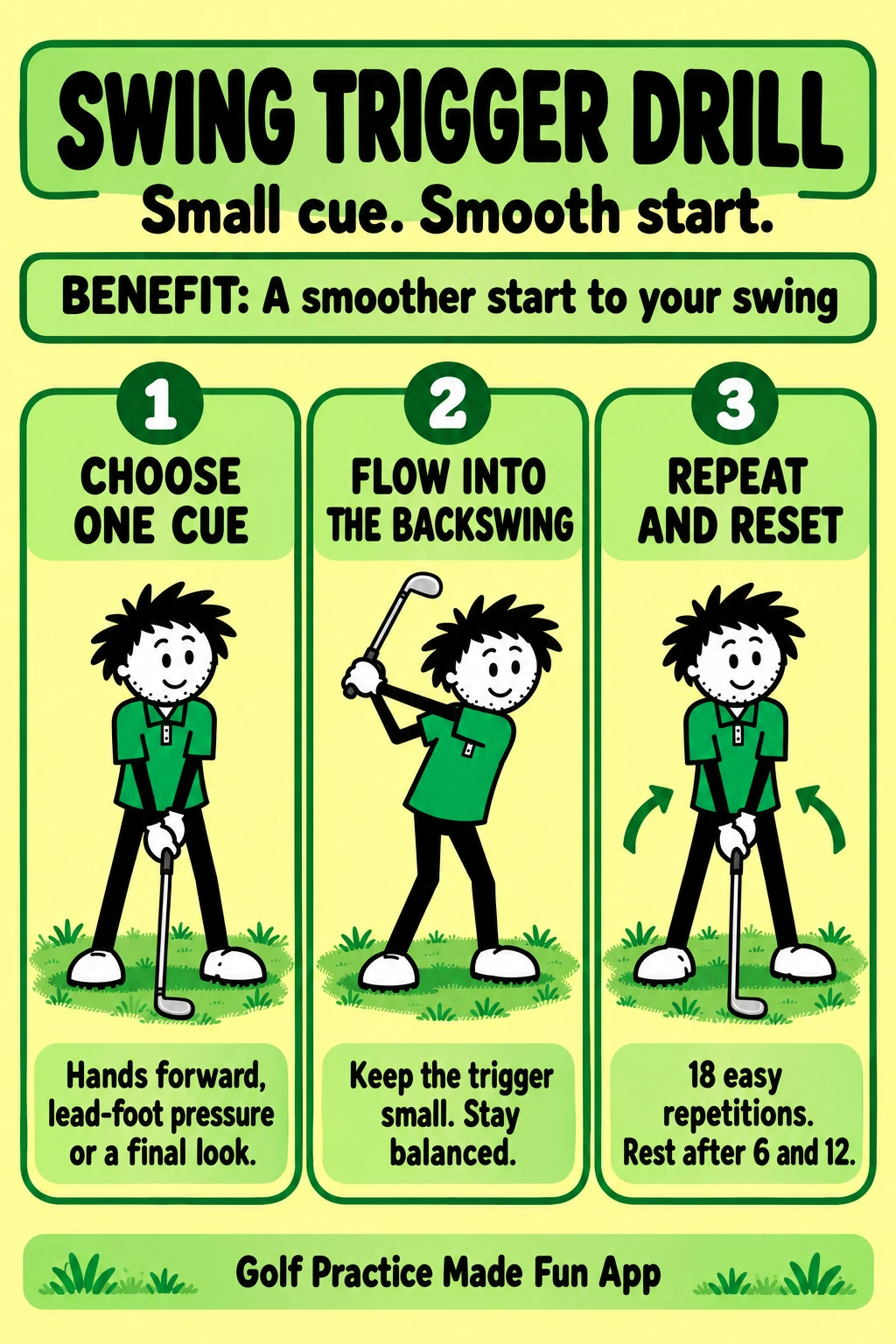
A small, repeatable trigger can give you a clear way to begin instead of hovering over the ball. Choosing one comfortable cue helps you settle into a rhythm and flow into the backswing without adding several movements to your routine.
| Step | What to do |
|---|---|
| 1 | Begin without a ball and try a few easy rehearsals of each option: a small movement of the hands towards the target, a little extra pressure under the lead foot, or a final look at the target before returning your eyes to the ball position. |
| 2 | Choose one cue. From your normal setup, let that small trigger lead straight into a smooth rehearsal swing. Keep your feet planted and stay balanced rather than making a large sideways move. |
| 3 | Complete eighteen setup-trigger-swing-reset repetitions using the same cue, with a short rest after six and twelve. Notice which start feels comfortable and easy to repeat; keep the movement small. |
Explore the Dustin Johnson Swing Trigger Drill and its three trigger options →
Drill 2. Adam Scott Takeaway: Let the Hands Move with the Chest

A slow takeaway makes the relationship between your chest, hands and clubhead easier to notice. The reference gives you feedback on the early movement, helping you explore a connected start without trying to copy one rigid position.
| Step | What to do |
|---|---|
| 1 | Watch the full drill’s setup photographs and video, then identify your toe line. Plant the alignment stick upright in line with the nearer foot and just inside the hands, matching the demonstration’s down-the-line view and keeping it clear of the moving club. Use this reference only for short, slow rehearsals without a ball. |
| 2 | Make a short takeaway and let the hands travel with your chest as it begins to turn. Pause to compare the hands and clubhead with the reference. The clubhead can be anywhere inside the blue takeaway box, rather than outside it. Avoid a sudden wrist roll that pulls the club sharply behind you. |
| 3 | Reset and repeat for eighteen takeaway-pause-reset repetitions, resting after six and twelve. Keep the reference in the same place. Move the raised stick away before making any full swing. |
See the Adam Scott Takeaway Drill, alignment-stick photographs and video →
Watch the demonstration on YouTube.
Your focus: Smoother swing start
Drill 3. Anthony Kim Checkpoint: Check, Reset and Swing Freely
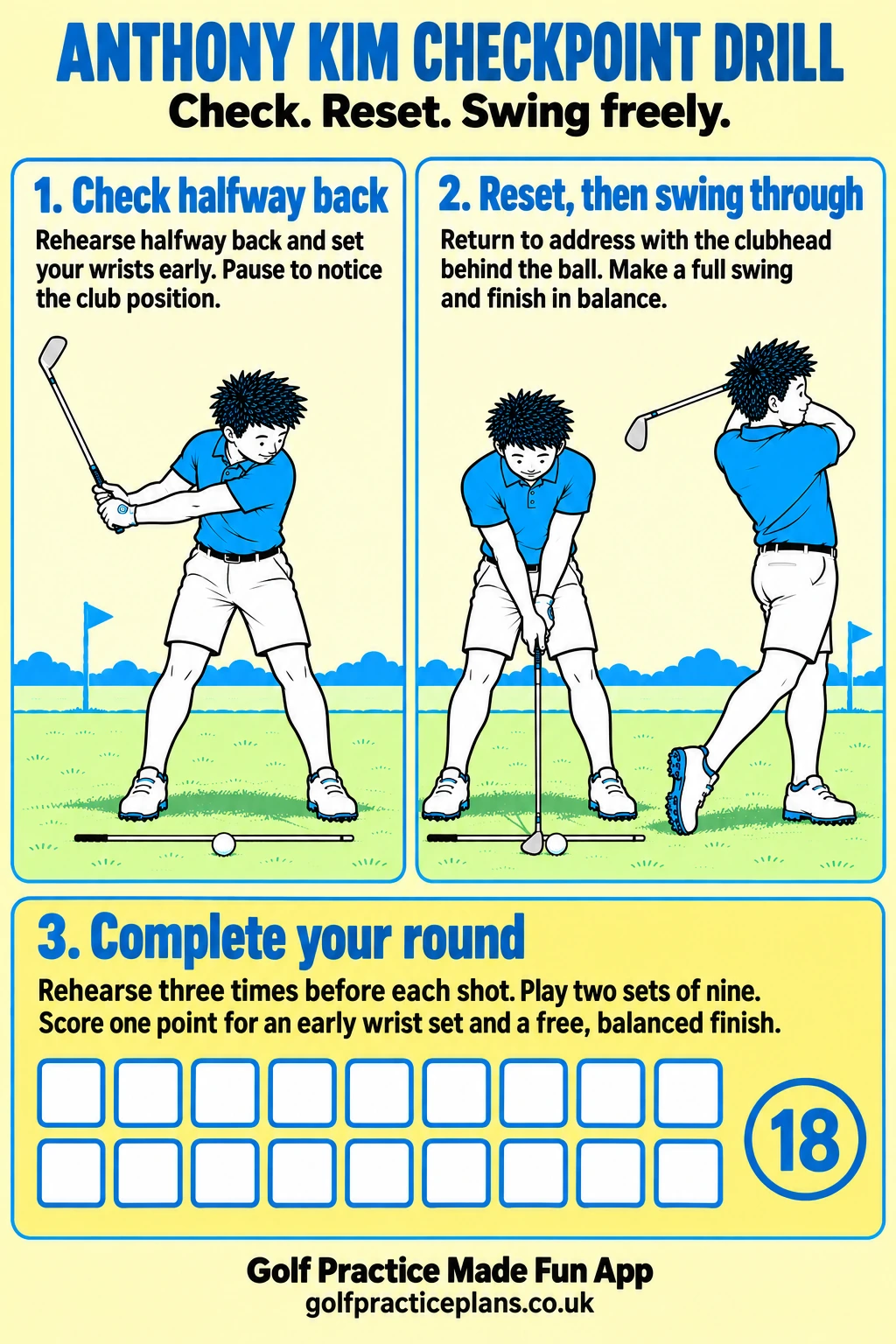
The halfway checkpoint gives you one clear position to recognise before you play. Returning fully to address separates the rehearsal from the shot, so you can use the feeling and then let the swing flow through to a balanced finish.
| Step | What to do |
|---|---|
| 1 | From your normal setup, rehearse halfway back and allow an early, comfortable wrist hinge so the shaft rises. Pause briefly to notice the hands and club, using the demonstration as a reference rather than forcing an angle. |
| 2 | Return fully to address and settle your balance. In clear space away from the ball, rehearse the sequence three times: halfway check, reset, then a free practice swing to the finish. |
| 3 | After the three rehearsals, reset with the clubhead behind the ball and play one controlled shot. Complete eighteen shots with the same routine, allowing the trail heel to rise and finishing comfortably over the lead leg. |
Follow the Anthony Kim Checkpoint Drill and complete rehearsal sequence →
FAQs
What equipment do I need?
Club, stick + balls.
How do I set up Dustin Johnson Swing Trigger?
A small, repeatable trigger can give you a clear way to begin instead of hovering over the ball. Choosing one comfortable cue helps you settle into a rhythm and flow into the backswing without adding several movements to your routine.
How do I practise Adam Scott Takeaway?
A slow takeaway makes the relationship between your chest, hands and clubhead easier to notice. The reference gives you feedback on the early movement, helping you explore a connected start without trying to copy one rigid position.
How does Anthony Kim Checkpoint work?
The halfway checkpoint gives you one clear position to recognise before you play. Returning fully to address separates the rehearsal from the shot, so you can use the feeling and then let the swing flow through to a balanced finish.
Do I need to practise every drill in one session?
Choose one drill that matches what you want to work on. Follow its setup and practice task, then use what you notice to decide what to repeat next time.
Should I use the same score for every drill?
Follow the practice record given for each drill. Keep its distance, target and equipment consistent when you compare sessions.
What drill do you recommend I do next?
Try How to Improve Golf Swing Rhythm next to explore a smoother pace with three rhythm drills.
You could also use Connected Backswing Drill to practise turning your chest and arms together. For another focused practice task, try Backswing Posture Drill to check your shoulder turn with a club across your chest.
Give your next practice a purpose.
Find illustrated drills, save your favourites and record your practice in the Golf Practice Made Fun App.
Try the App Free ↗14 days free · No card required