Browse by category
DRILL OVERVIEW
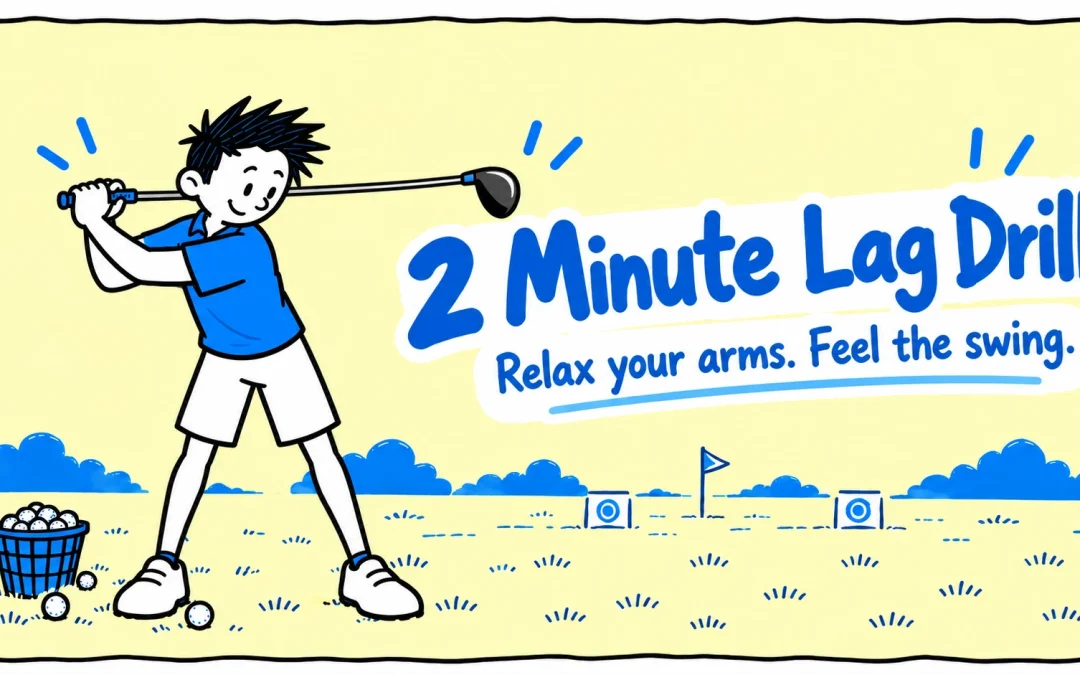
2 Minute Lag Drill: Relax Your Arms and Feel the Swing
Your drill at a glance
This drill is from the Golf Practice Made Fun App.
Relaxing your arms at the top can help the club move more freely into the downswing. The bent-arm rehearsal makes it easier to feel the difference between a rigid position and a softer swing. Carrying that feeling into your normal backswing gives you a simple way to explore release timing without trying to force or hold a particular wrist angle.
Step 1. Watch the shaft-on-neck rehearsal
Watch the original demonstration. Notice the deliberately bent lead arm, the shaft resting lightly behind the neck, and the relaxed movement into the downswing.
Step 2. Soften your arms at the top

For a right-handed golfer, the lead arm is the left arm. For a left-handed golfer, it is the right arm. Hold the driver with both hands and make a slow backswing without a ball.
Let your lead elbow bend on purpose. Bring the shaft gently behind your neck, roughly parallel to the ground, as shown in the demonstration. Make only light contact; keep your neck comfortable and stop short if the position does not suit you.
Notice how the bent arm feels less rigid. From there, rehearse an easy downswing and finish in balance. Let the movement flow instead of trying to lock your wrists into an angle.
Carry the feeling into a normal swing
Make your next backswing with the same soft arms, but stop short of touching your neck. Use a comfortable swing length. At the range, try a gentle shot from this normal backswing.
| Rehearsal | What to notice |
|---|---|
| Bend the lead arm | A softer feeling at the top. |
| Rest the shaft lightly behind the neck | The position shown in the video, without pressing or forcing it. |
| Return to a normal backswing | Keep the relaxed feeling while stopping short of contact. |
Look at the four original lag positions
Compare the relationship between the lead arm and club shaft during the downswing. They are visual examples, rather than four positions you must copy exactly. Phil Mickelson’s left-handed swing is mirrored relative to a right-handed golfer.

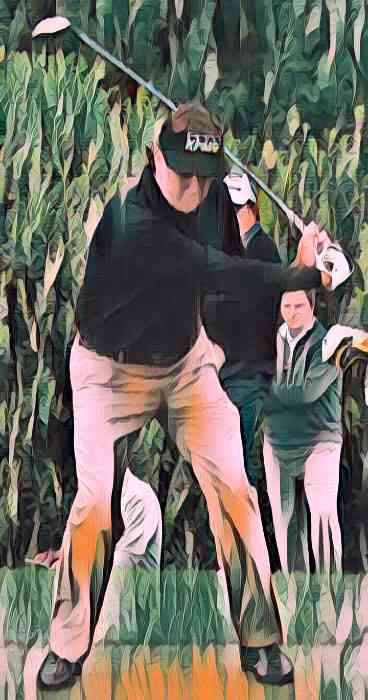

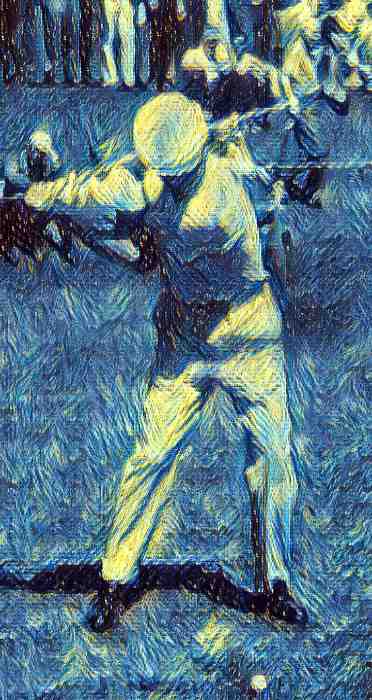
The cue is “Soft arms, easy swing.” At home, use a mirror for a slow rehearsal if you have room for the driver.
Step 3. Complete your round

Complete 18 controlled repetitions. Each repetition consists of one slow shaft-on-neck rehearsal, followed by one easy, normal swing that stops short of touching your neck. Reset before the next repetition.
If you’re using the Golf Practice Made Fun App, tick one box in your Practice Round after each completed repetition. Your target is 18 repetitions completed; count the rehearsal-and-normal-swing pair as one repetition.
You can complete the round without a ball. At the range, make the normal swing a gentle shot. Add a short note about whether the softer feeling carried into your normal swing.
| Round | What to do |
|---|---|
| First nine | Complete nine repetitions, each pairing the slow shaft-on-neck rehearsal with a normal swing that stops short of touching the neck. |
| Second nine | Pause, then repeat nine pairs at the same controlled pace. Count each pair once. |
| Record | Record repetitions completed out of 18 and one note about whether the softer feel carried over. |
George’s Conclusion
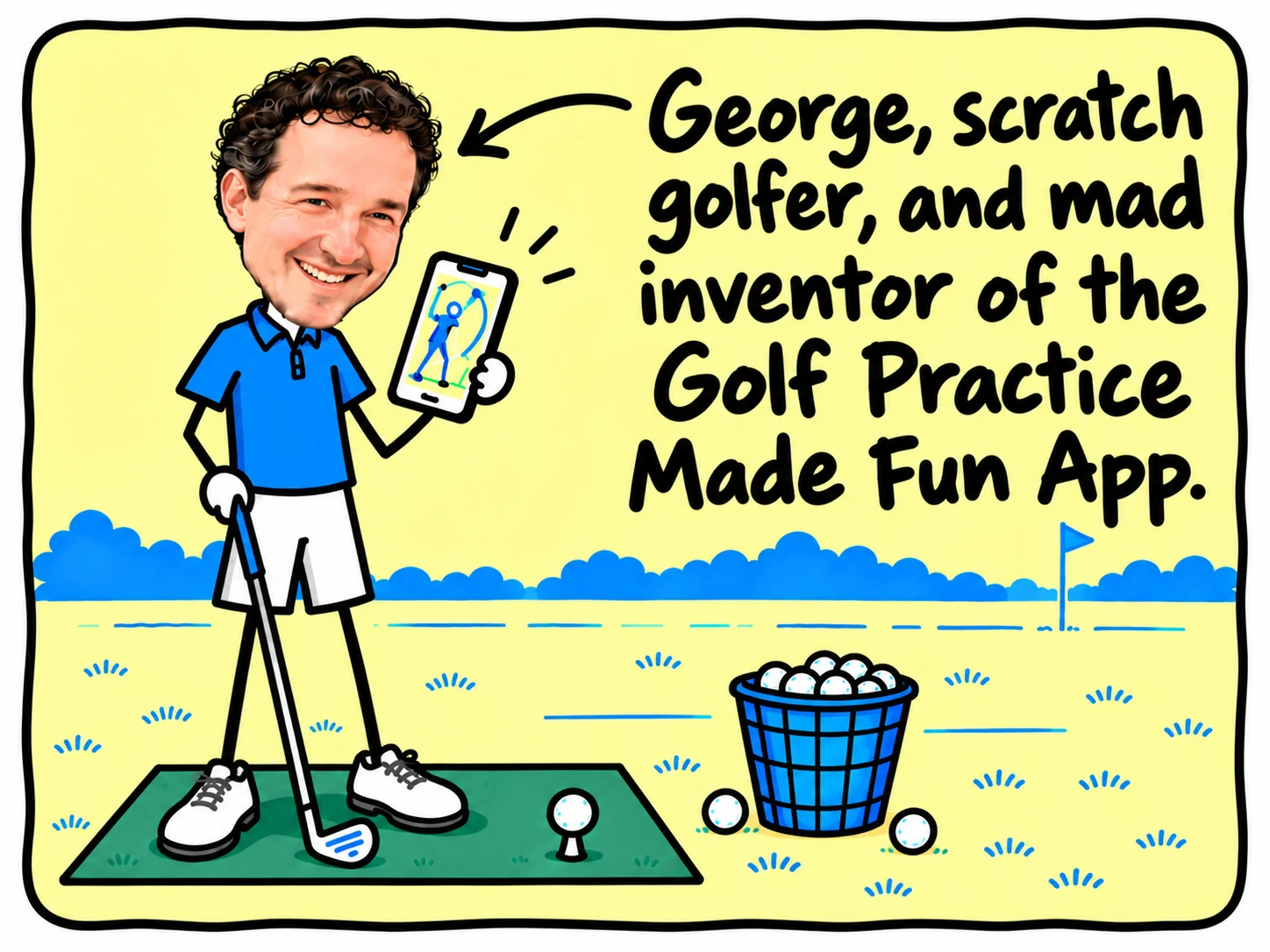
Use the bent-arm rehearsal to find a softer feeling, then bring that feeling back to your normal swing. Keep the contact light and the motion comfortable. A round of 18 gives you a simple practice task without turning every repetition into a test of how much lag you can create.
Try another feel with the Triple Lag Drill or Create Lag Drill.
MAKE THE NEXT BUCKET COUNT
Pick a card. Practise with purpose.

Browse by category
DRILL OVERVIEW
2 Minute Lag Drill: Relax Your Arms and Feel the Swing
Your drill at a glance
This drill is from the Golf Practice Made Fun App.
Relaxing your arms at the top can help the club move more freely into the downswing. The bent-arm rehearsal makes it easier to feel the difference between a rigid position and a softer swing. Carrying that feeling into your normal backswing gives you a simple way to explore release timing without trying to force or hold a particular wrist angle.
Step 1. Watch the shaft-on-neck rehearsal
Watch the original demonstration. Notice the deliberately bent lead arm, the shaft resting lightly behind the neck, and the relaxed movement into the downswing.
Step 2. Soften your arms at the top
For a right-handed golfer, the lead arm is the left arm. For a left-handed golfer, it is the right arm. Hold the driver with both hands and make a slow backswing without a ball.
Let your lead elbow bend on purpose. Bring the shaft gently behind your neck, roughly parallel to the ground, as shown in the demonstration. Make only light contact; keep your neck comfortable and stop short if the position does not suit you.
Notice how the bent arm feels less rigid. From there, rehearse an easy downswing and finish in balance. Let the movement flow instead of trying to lock your wrists into an angle.
Carry the feeling into a normal swing
Make your next backswing with the same soft arms, but stop short of touching your neck. Use a comfortable swing length. At the range, try a gentle shot from this normal backswing.
| Rehearsal | What to notice |
|---|---|
| Bend the lead arm | A softer feeling at the top. |
| Rest the shaft lightly behind the neck | The position shown in the video, without pressing or forcing it. |
| Return to a normal backswing | Keep the relaxed feeling while stopping short of contact. |
Look at the four original lag positions
Compare the relationship between the lead arm and club shaft during the downswing. They are visual examples, rather than four positions you must copy exactly. Phil Mickelson’s left-handed swing is mirrored relative to a right-handed golfer.
The cue is “Soft arms, easy swing.” At home, use a mirror for a slow rehearsal if you have room for the driver.
Step 3. Complete your round
Complete 18 controlled repetitions. Each repetition consists of one slow shaft-on-neck rehearsal, followed by one easy, normal swing that stops short of touching your neck. Reset before the next repetition.
If you’re using the Golf Practice Made Fun App, tick one box in your Practice Round after each completed repetition. Your target is 18 repetitions completed; count the rehearsal-and-normal-swing pair as one repetition.
You can complete the round without a ball. At the range, make the normal swing a gentle shot. Add a short note about whether the softer feeling carried into your normal swing.
| Round | What to do |
|---|---|
| First nine | Complete nine repetitions, each pairing the slow shaft-on-neck rehearsal with a normal swing that stops short of touching the neck. |
| Second nine | Pause, then repeat nine pairs at the same controlled pace. Count each pair once. |
| Record | Record repetitions completed out of 18 and one note about whether the softer feel carried over. |
George’s Conclusion
Use the bent-arm rehearsal to find a softer feeling, then bring that feeling back to your normal swing. Keep the contact light and the motion comfortable. A round of 18 gives you a simple practice task without turning every repetition into a test of how much lag you can create.
Try another feel with the Triple Lag Drill or Create Lag Drill.
MAKE THE NEXT BUCKET COUNT
Pick a card. Practise with purpose.