
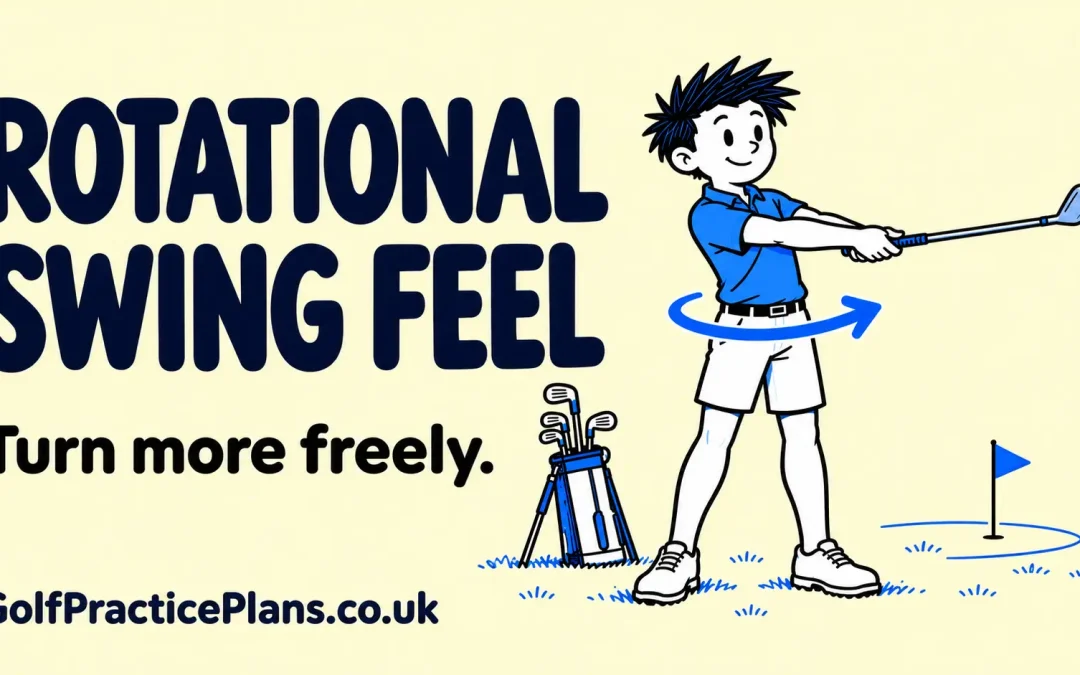
Rotational Golf Swing Feel Drill: 3 Steps to a Freer Turn
Freer rotational swing
Feeling the turn can make the swing simpler than thinking about separate arm positions. The upright rehearsal makes the rotational movement easy to notice before you lower the club into your normal golf posture. It gives you a clear feeling to return to if your swing becomes a forced lifting-and-chopping action, helping you practise a more continuous movement.
↓ Download free infographicSave to your device or print for practice.
Watch the rotational movement
Step 1. Stand tall and rotate


Stand upright and raise the club in front of you, as shown above. Make a small backswing by turning your shoulders, then turn through to a balanced finish. Let your head move naturally with your body rather than trying to hold it rigidly in place.
Repeat the turn while gradually lowering the club. Keep the same relaxed rotational feeling as you move towards your usual golf posture. If the swing starts to feel like a forced up-and-down movement, raise the club again and rediscover the easy turn.
Step 2. Carry the feeling into a gentle shot
At the range, begin with easy shots of around 50 yards, or shorter if that suits your club and ability. Use the cue “Stand tall and rotate.” Keep your normal posture when hitting the ball; the upright position is a rehearsal to help you find the feeling.
Increase the distance gradually when the strike and balance feel comfortable. Keep the turn within a comfortable range and stop if it hurts.
Your focus: Freer rotational swing
Step 3. Complete your round of 18

What to do
Complete 18 controlled repetitions. For each repetition, rehearse the upright turn, lower the club towards your normal posture, then make one easy swing. Reset before starting the next.
| Score | When to award it |
|---|---|
| 1 point | You complete the shot, routine or movement described above. |
| 0 points | You do not complete the attempt. |
FAQs
What equipment do I need?
One golf club.
How do I set up this drill?
Stand upright and raise the club in front of you, as shown above. Make a small backswing by turning your shoulders, then turn through to a balanced finish. Let your head move naturally with your body rather than trying to hold it rigidly in place.
Repeat the turn while gradually lowering the club. Keep the same relaxed rotational feeling as you move towards your usual golf posture. If the swing starts to feel like a forced up-and-down movement, raise the club again and rediscover the easy turn.
What should I focus on during practice?
At the range, begin with easy shots of around 50 yards, or shorter if that suits your club and ability. Use the cue “Stand tall and rotate.” Keep your normal posture when hitting the ball; the upright position is a rehearsal to help you find the feeling.
Increase the distance gradually when the strike and balance feel comfortable. Keep the turn within a comfortable range and stop if it hurts.
How should I record my practice?
Complete 18 controlled repetitions. For each repetition, rehearse the upright turn, lower the club towards your normal posture, then make one easy swing. Reset before starting the next.
What should I keep in mind when practising?
Start tall, feel the turn, then lower the club gradually. Keep the movement easy and finish in balance. A round of 18 gives you a clear practice task without turning every swing into a distance test.
What drill do you recommend I do next?
Try Connected Backswing Drill next to practise turning your chest and arms together.
You could also use Backswing Posture Drill to check your shoulder turn with a club across your chest. For another focused practice task, try Anti Hip Sway Drill to use a stick to check for sideways hip movement.
Give your next practice a purpose.
Find illustrated drills, save your favourites and record your practice in the Golf Practice Made Fun App.
Try the App Free ↗14 days free · No card required