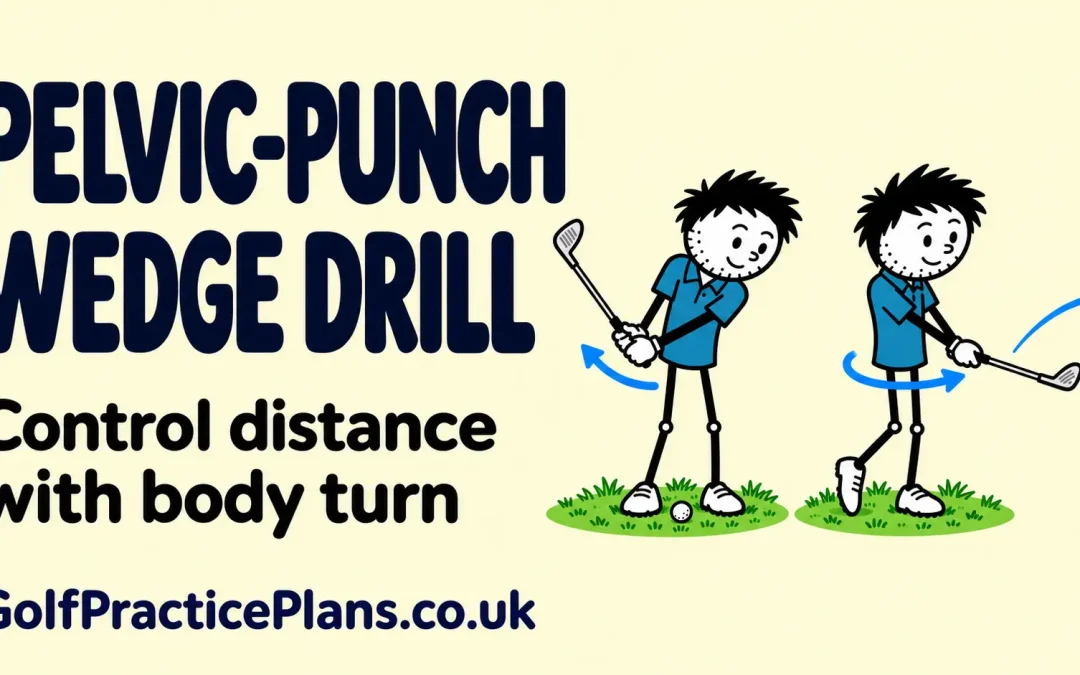
Pelvic-Punch Wedge Drill: Control Distance with Your Body Turn
This drill is from the
The pelvic-punch wedge drill helps you explore a controlled distance shot with a compact swing and coordinated body turn.
A distance wedge does not always need a full swing. This James Sieckmann drill pairs a less-lofted wedge with a shorter motion, using the pelvis and chest to carry the hands through the strike. Choose a comfortable partial-wedge target, keep your arms relaxed and see how the carry compares with your usual full wedge.
↓ Download free infographicSave to your device or print for practice.
Start with a narrow setup, practise a short swing and body turn, then finish compact and balanced.
Watch James Sieckmann’s wedge demonstration
Step 1. Set Up Narrow
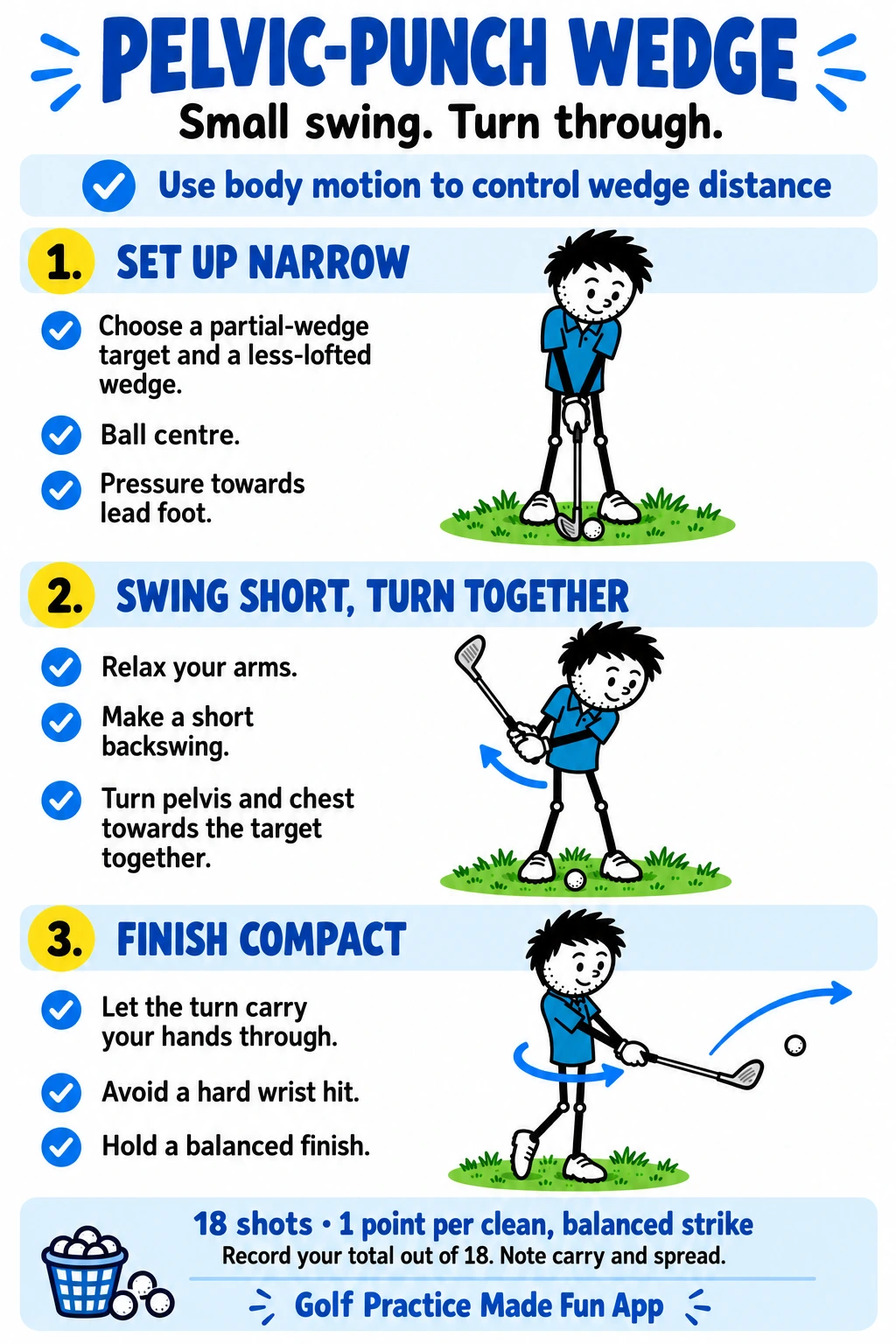
What to do
| Action | What to do |
|---|---|
| Choose the shot | Pick a comfortable partial-wedge target with a clear landing area. Use a less-lofted wedge than you would choose for a full shot to that distance. |
| Set your stance | Take a narrow, comfortable stance with the ball in the centre. |
| Set your pressure | Feel your pressure towards the lead foot. Keep your arms relaxed and settle into a balanced address position. |
Choose a target that suits a controlled swing. The aim is to explore how club choice and body motion affect distance.
Step 2. Swing Short and Turn Together
What to do
| Action | What to do |
|---|---|
| Make a short backswing | Let your relaxed arms and club move into a compact backswing. |
| Turn towards the target | Turn your pelvis and chest towards the target together as you swing through the ball. |
| Let the turn guide the hands | Allow the body motion to carry your hands through. Keep the movement smooth rather than adding a sudden wrist hit. |
Your cue: “Short swing. Turn together. Let the hands follow.”
Your focus: This drill is from the
Step 3. Finish Compact and Balanced
What to do
| Action | What to do |
|---|---|
| Keep the finish compact | Allow the club to continue into a short follow-through as your body turns towards the target. |
| Hold your balance | Finish under control. Notice whether the strike feels clean and the turn carries you through without a hard wrist hit. |
| Play eighteen shots | Reset before every ball. Watch the carry and how tightly the shots group, comparing the result with your usual full wedge. |
Keep the scoring simple
Play eighteen shots and count the clean, balanced strikes. A shot earns one point only when it meets both checks.
| Score | When to award it |
|---|---|
| 1 point | You make a clean strike and finish balanced. |
| 0 points | The strike is not clean, or you lose your balance. |
Record one total out of 18. Add a short note about the carry distance and spread of the shots.
FAQs
What equipment do I need?
Wedge + balls.
How do I set up this drill?
Choose a target that suits a controlled swing. The aim is to explore how club choice and body motion affect distance.
What should I focus on during practice?
Your cue: “Short swing. Turn together. Let the hands follow.”
How should I record my practice?
Play eighteen shots and count the clean, balanced strikes. A shot earns one point only when it meets both checks.
Record one total out of 18. Add a short note about the carry distance and spread of the shots.
What should I keep in mind when practising?
Keep this shot compact and let the turn do its job. Start with a distance that feels comfortable, use relaxed arms and notice what happens when your pelvis and chest carry the hands through together.
What drill do you recommend I do next?
Try Goldilocks Wedge Drill next to build distance feel with short, long and on-target wedge shots.
You could also use Distance Wedge Control Drill to record useful wedge carry benchmarks. For another focused practice task, try Towel Pitch Body Turn Drill to connect your chest turn to a short pitch using a towel.
Give your next practice a purpose.
Find illustrated drills, save your favourites and record your practice in the Golf Practice Made Fun App.
Try the App Free ↗14 days free · No card required