Browse by category
Small Swing. Comfortable Posture. Cleaner Contact.
Your practice at a glance
These golf drills are from the Golf Practice Made Fun App.
Cleaner contact starts with a manageable swing that lets you reach the ball and continue through the strike.
To work on topping the golf ball, start with the L-to-L drill for a smaller, smoother motion, explore your posture with the Lee Trevino posture drill, then loosen your release with the Collarbone to Collarbone drill. Follow each drill’s eighteen-attempt routine at an easy pace. These exercises help you explore contact; topped shots can have different causes, so use what your shots tell you rather than assuming every miss comes from the same fault.
Drill 1. L-to-L: Make a Smaller, Smoother Swing
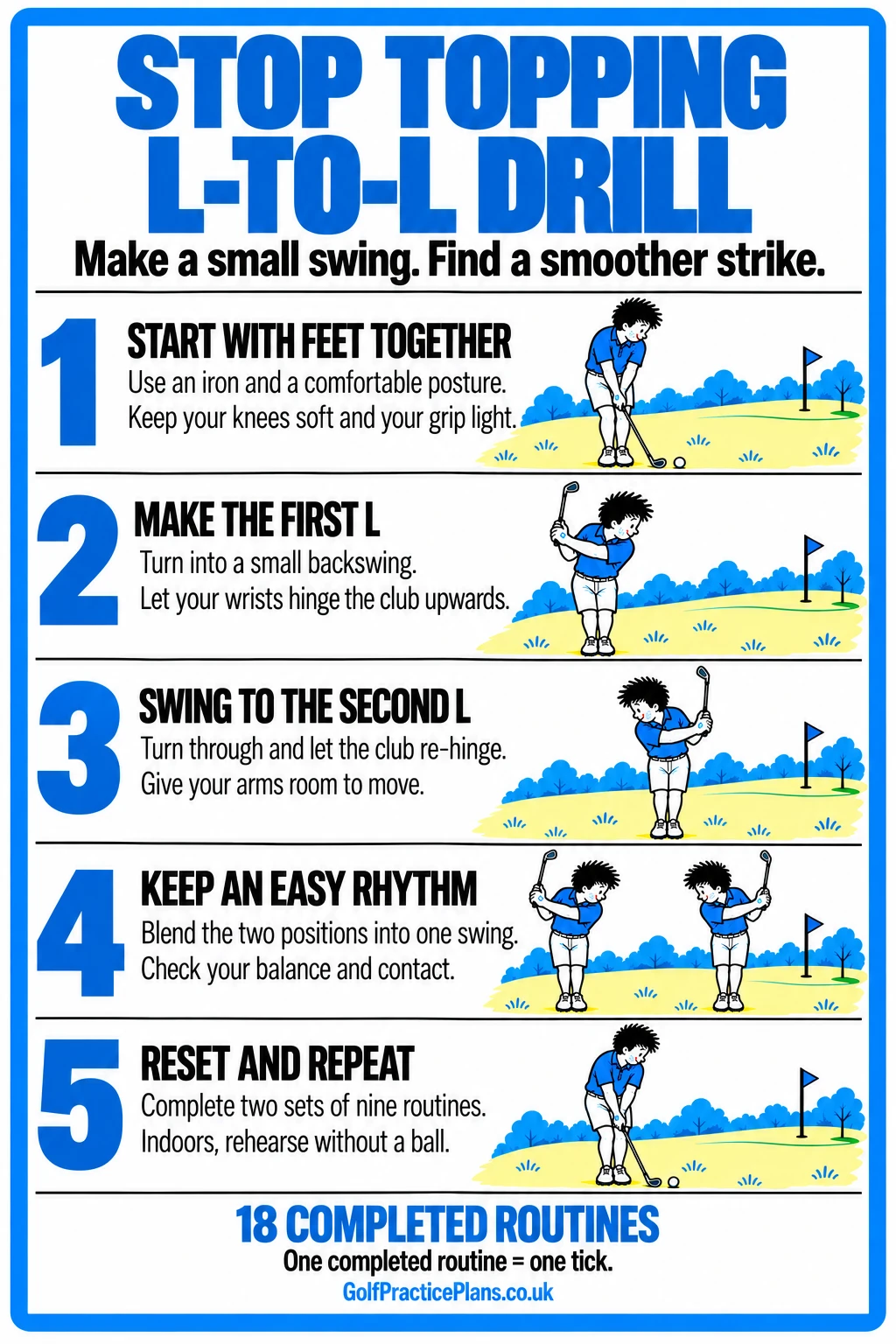
A smaller swing makes it easier to notice where the club meets the ball and ground. The close-footed setup encourages an easy rhythm, while the two L positions give you simple checkpoints without asking you to hold a rigid pose. Start with balance, then see how the same motion affects your contact.
| Step | What to do |
|---|---|
| 1 | Take your usual iron grip and place your feet close together. Hinge comfortably from your hips and soften your knees. Begin without a ball, using a movement small enough to stay balanced. |
| 2 | Turn into a half-backswing and let your wrists hinge so your lead arm and the shaft form an approximate L. Turn through, allowing your arms to extend comfortably and the club to re-hinge into the second L. Keep your elbows soft and blend the checkpoints into one easy swing. |
| 3 | Complete nine slow rehearsals, then nine more rehearsals or easy short iron shots at the range. Reset before each attempt. If you wobble, reduce the swing size or widen your feet slightly. Notice contact and balance rather than trying to hit the ball hard. |
Drill 2. Lee Trevino Posture Drill: Turn Through the Strike
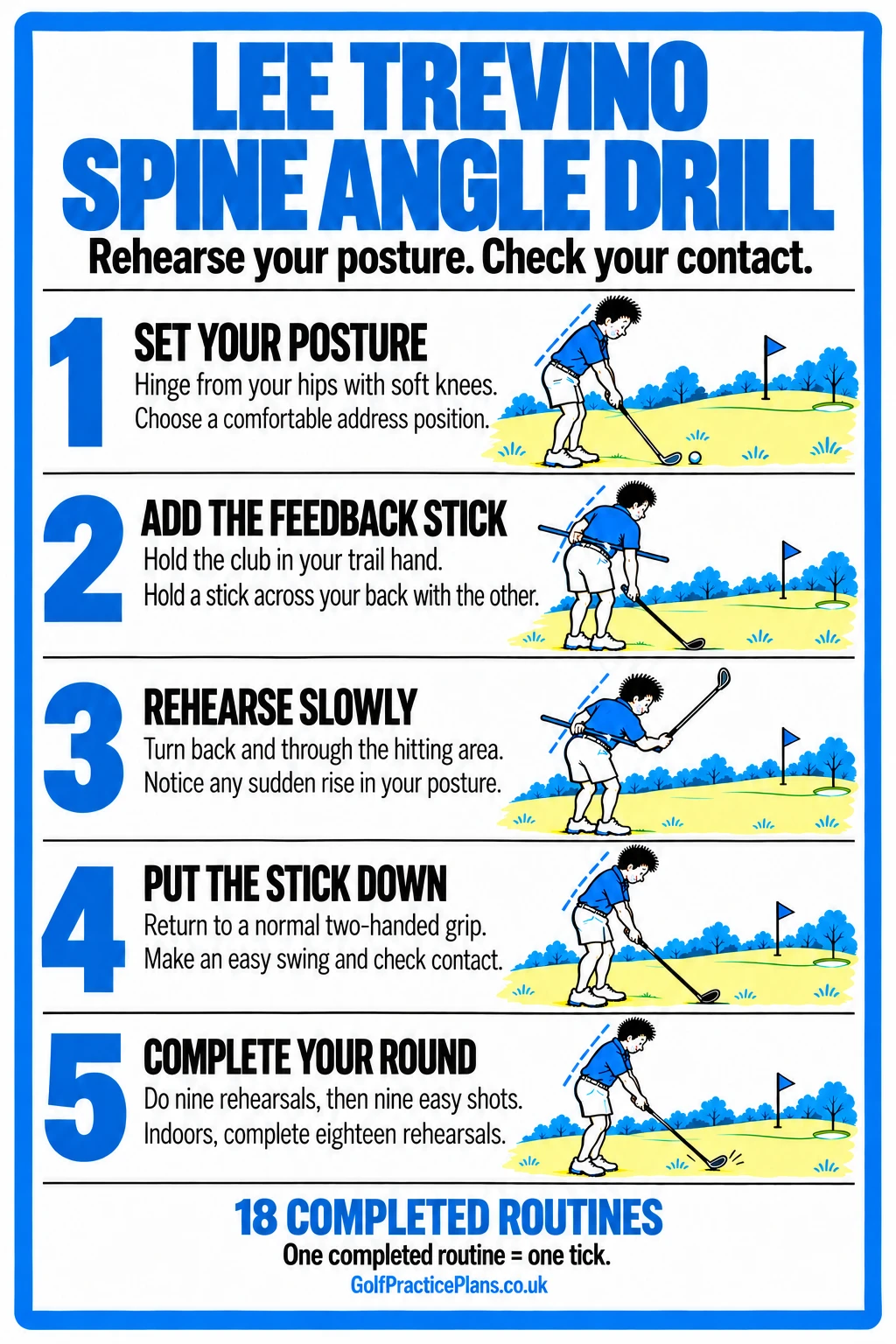
The alignment stick gives you feedback about a sudden rise in your torso before the strike. Slow rehearsals let you explore a comfortable turn through the hitting area, then the normal shots help you check whether that feeling improves your contact. Allow your body to rise naturally into the finish.
| Step | What to do |
|---|---|
| 1 | Set up in your normal iron posture with a comfortable hip hinge and soft knees. Hold the club in your trail hand and use your other hand to hold an alignment stick across your back, as demonstrated in the original drill video. |
| 2 | Without a ball, make small, slow one-handed swings through the imaginary hitting area. Notice any abrupt rise in your torso before the club reaches the imaginary ball. Keep turning rather than trying to freeze your body angle, and keep the stick clear of the club. |
| 3 | Complete nine stick rehearsals. Put the stick safely aside, take your normal two-handed grip and play nine easy iron shots. Check contact and balance. Indoors, use eighteen no-ball rehearsals instead, with enough clear space. |
Drill 3. Collarbone to Collarbone: Feel a Flowing Release
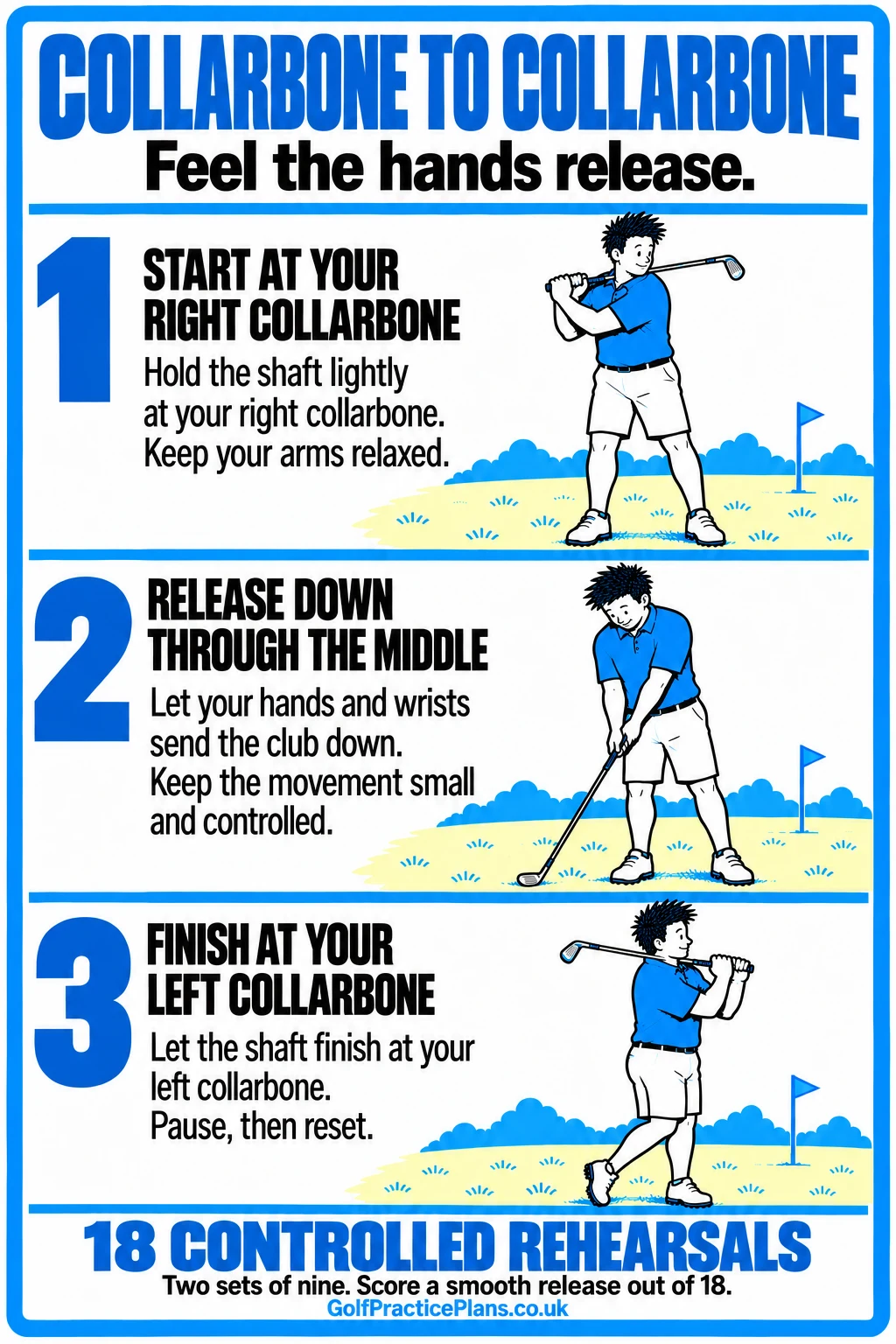
This compact rehearsal puts your attention on relaxed hands and wrists rather than a big arm swing. Moving smoothly between two clear endpoints helps you notice tension and explore a freer release. Use that feeling in your next small swing without forcing the club into a particular impact position.
| Step | What to do |
|---|---|
| 1 | For a right-handed golfer, take a comfortable stance and bring the shaft lightly to your right collarbone, keeping both hands on the grip. Let your arms relax. Left-handed golfers reverse the sides. |
| 2 | Let your hands and wrists send the club down through the middle, keeping the movement small and controlled. Continue until the shaft finishes lightly at your left collarbone, allowing a comfortable turn towards the target. |
| 3 | Pause in balance, then reset. Complete eighteen slow rehearsals in two sets of nine. Keep the grip relaxed and the arm movement small enough to feel the club release smoothly. Rehearse only where the club has plenty of clearance. |