
Browse by category
DRILL OVERVIEW
Simon Dyson Cack-Handed Drill: Swap the Grip, Feel the Turn
Your drill at a glance
This drill is from the Golf Practice Made Fun App.
Reversing your hands on the grip can help you explore a more compact swing and a body-led turn through the shot. The unfamiliar grip changes how the arms and wrists can move, making it easier to notice when you rely on a large arm swing or stop turning. Start with tiny chips and observe how the hands, arms and chest move together. Then take a useful feel back to your normal grip. This is a rehearsal tool, rather than a promise that it automatically fixes impact or prevents overswinging.
Step 1. Watch Simon’s reversed-grip drill
Watch Simon Dyson’s demonstration from 6:10. Notice the reversed order of the hands and how he uses the grip to explore a shorter backswing and a turning finish.
Step 2. Reverse the hands and start with chips
What does cack-handed mean?
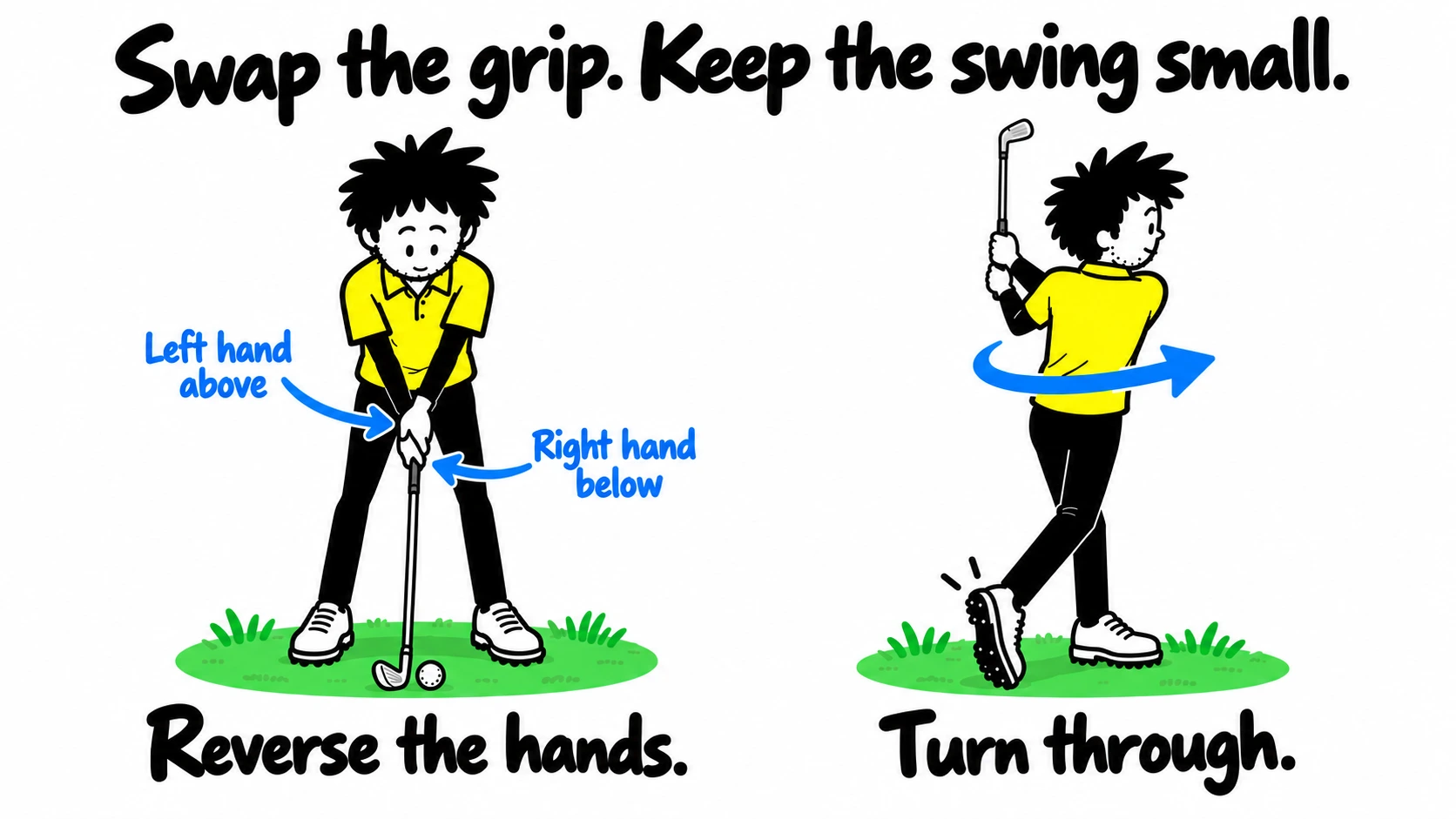
It means swapping the usual order of your hands on the grip while keeping your normal playing stance and club. Put the left hand above the right, as shown in the illustration. The left hand is nearer the top end of the grip; the right is nearer the shaft and clubhead. You are not changing to a club of the opposite handedness.
Choose a short iron or wedge. Let the hands sit comfortably on the grip without forcing your usual overlap or interlock. Make a few tiny no-ball rehearsals before adding a ball.
Build a compact backswing

Begin with short chips. Keep the movement slow and let the chest turn with the arms. The grip may make the backswing feel shorter and the trail elbow more tucked in. Avoid trying to lock the lead arm or force a three-quarter swing length.
Let the body turn through

Allow the chest to continue towards the target as the club moves through. Notice whether the hands stay in a manageable position and you finish steadily. The altered grip changes the movement, but it does not guarantee a particular impact position.
| Progression | What to do |
|---|---|
| Swap the hands | Use your normal stance and club, with the usual lower hand now above the other. |
| Rehearse first | Make tiny, slow swings and check that the grip feels comfortable. |
| Start with chips | Play very short shots with a small backswing and gentle body turn. |
| Build gradually | If the chips are manageable, try a slightly longer half swing at easy speed. Longer swings are optional. |
| Return to your normal grip | Explore whether the compact-swing or turning feel helps when you put your hands back in their usual order. |
This is an unfamiliar, relatively difficult drill. Keep the swing small while you learn the movement. There is no need to hit full-speed shots with the reversed grip.
What to watch for
| What you notice | What to try |
|---|---|
| The grip feels awkward | Use tiny rehearsals and hold the club gently. Avoid forcing the wrists into position. |
| Trying full swings immediately | Return to short chips until contact and balance are manageable. |
| Locked lead elbow | Keep the arm soft rather than forcing it straight. |
| The body stops while the arms swing | Make a smaller shot and let the chest continue turning through. |
| Poor contact or unusual ball flight | Lower the speed and shorten the swing. The changed grip alters the clubface feel. |
| Wrist, elbow or shoulder discomfort | Stop the reversed-grip movement rather than pushing through it. |
Step 3. Complete your round
What to do
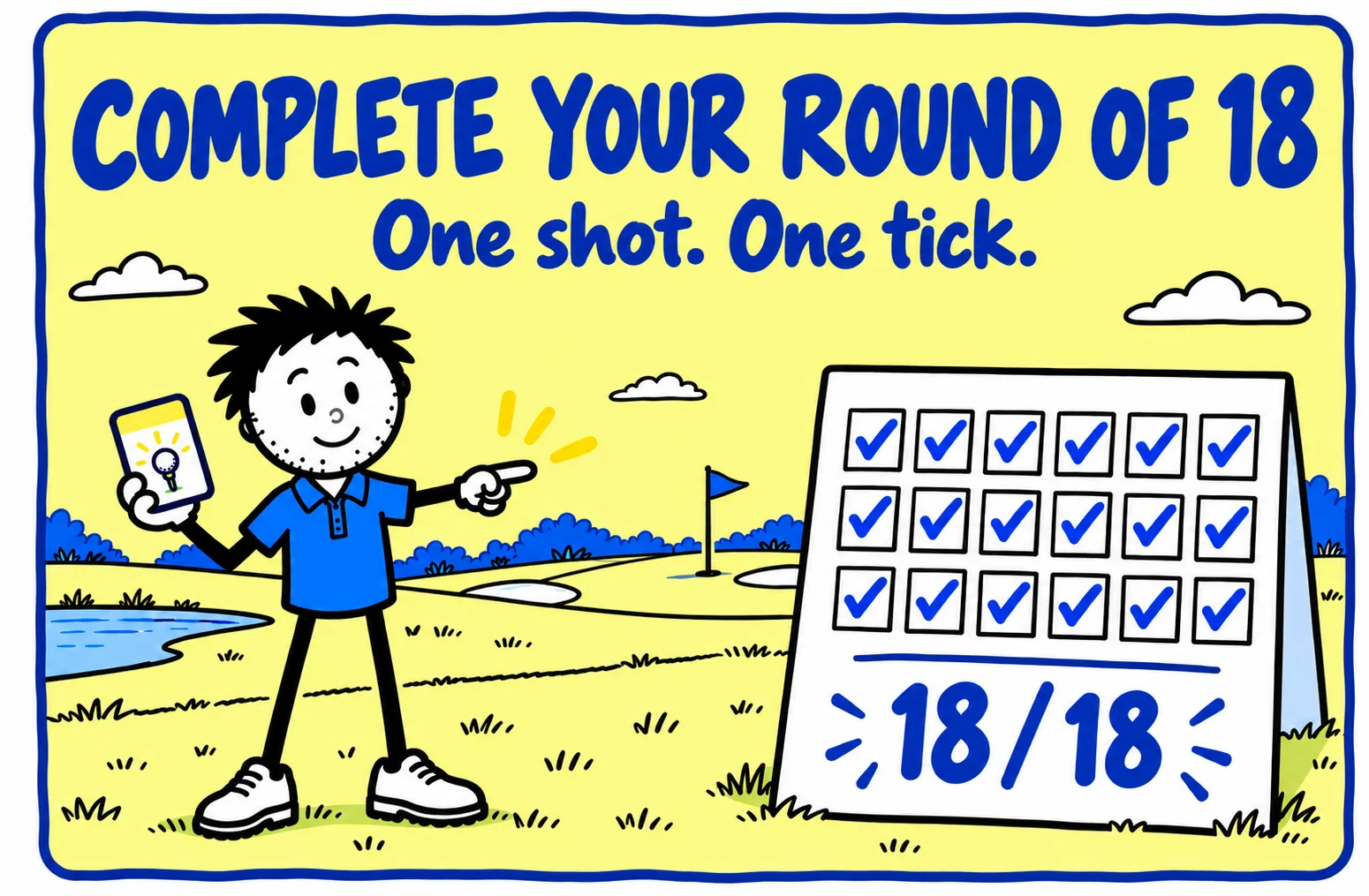
Play 18 controlled reversed-grip shots in two sets of nine. Begin with tiny chips and stay with them if that is the most manageable version. Make a gentle rehearsal before each shot, then notice the contact and how the body turns through.
No-ball option: complete 18 tiny reversed-grip swing rehearsals in two sets of nine. One full rehearsal, moving back and through and returning to rest, is one tick. Choose either shots or rehearsals for your round so the counting stays clear.
| Score | When to award it |
|---|---|
| 1 point | You complete the shot, routine or movement described above. |
| 0 points | You do not complete the attempt. |
George’s Conclusion
I like drills that change the feel enough to make you notice something new. Keep this one small and patient: swap the hands, play a few tiny chips and let the chest turn through. Afterwards, see whether a useful part of the feel carries over to your normal grip.
Explore the Early Extension Fix Drill, try the Holy Grail Follow-Through Drill, or browse more long game drills.
MAKE THE NEXT BUCKET COUNT
Pick a card. Practise with purpose.