

Browse by category
DRILL OVERVIEW
Justin Thomas Jumping for Power Drill: Feel the Push from the Ground
Your drill at a glance
This drill is from the Golf Practice Made Easy App.
A small dip-and-rise rehearsal can help you explore how your legs contribute to swing rhythm. Start without a club, feel a gentle push from the ground, then blend that feeling into an easy practice swing. Justin Thomas’s movement is the inspiration; you do not need to copy his speed or lift your feet off the ground.
Step 1. Watch the Justin Thomas demonstration
Watch the explanation of Thomas’s movement through impact. Notice the leg action, turning body and lifted heels. Use the video to understand the feeling before trying the small rehearsal below.
Step 2. Feel a small dip, then a gentle rise

Begin without a club
Stand with your feet about shoulder-width apart on a firm, level surface. Take a comfortable golf posture and rest your hands across your chest. Soften the knees slightly, then gently extend your legs and rise onto the balls of your feet. Lower the heels and settle back into a balanced stance.
Keep the movement small and smooth. The aim is to feel the sequence of soften, push and settle. You can keep both feet fully grounded and simply feel a little pressure into the floor if that version suits you better.
Look at Thomas’s position

Notice how the leg action accompanies the turn. Avoid treating the photograph as an instruction to jump vertically while stopping the body’s rotation.
Add an easy swing
Outdoors, with plenty of space, take a club and make a slow no-ball swing. Let a small softening of the knees blend into the change of direction, then feel the legs extending as the body turns through. Keep the swing easy enough to finish in balance.
Let your head move naturally with the body. You do not need to hold it rigidly level, exaggerate a deep squat or try to time a large jump at impact. If the dip interrupts your rhythm, make it smaller or return to the no-club version.
| Progression | What to do |
|---|---|
| No club | Soften the knees, gently rise and return to a settled stance. |
| Grounded option | Keep the heels down and feel a small push into the floor. |
| Easy practice swing | Blend the small leg action into a slow turn without a ball. |
| Balanced finish | Settle comfortably after each movement before starting again. |
What to watch for
| What you notice | What to try |
|---|---|
| A deep squat or big leap | Reduce the movement to a small dip and gentle rise. |
| Losing balance | Keep the heels grounded and slow down. |
| Turning stops as you rise | Return to an easy swing and let the push accompany the turn. |
| Too many timing thoughts | Use the no-club rhythm first, then try one simple cue. |
| Knee, ankle or back discomfort | Stop the rehearsal rather than forcing the movement. |
Step 3. Complete your round
What to do
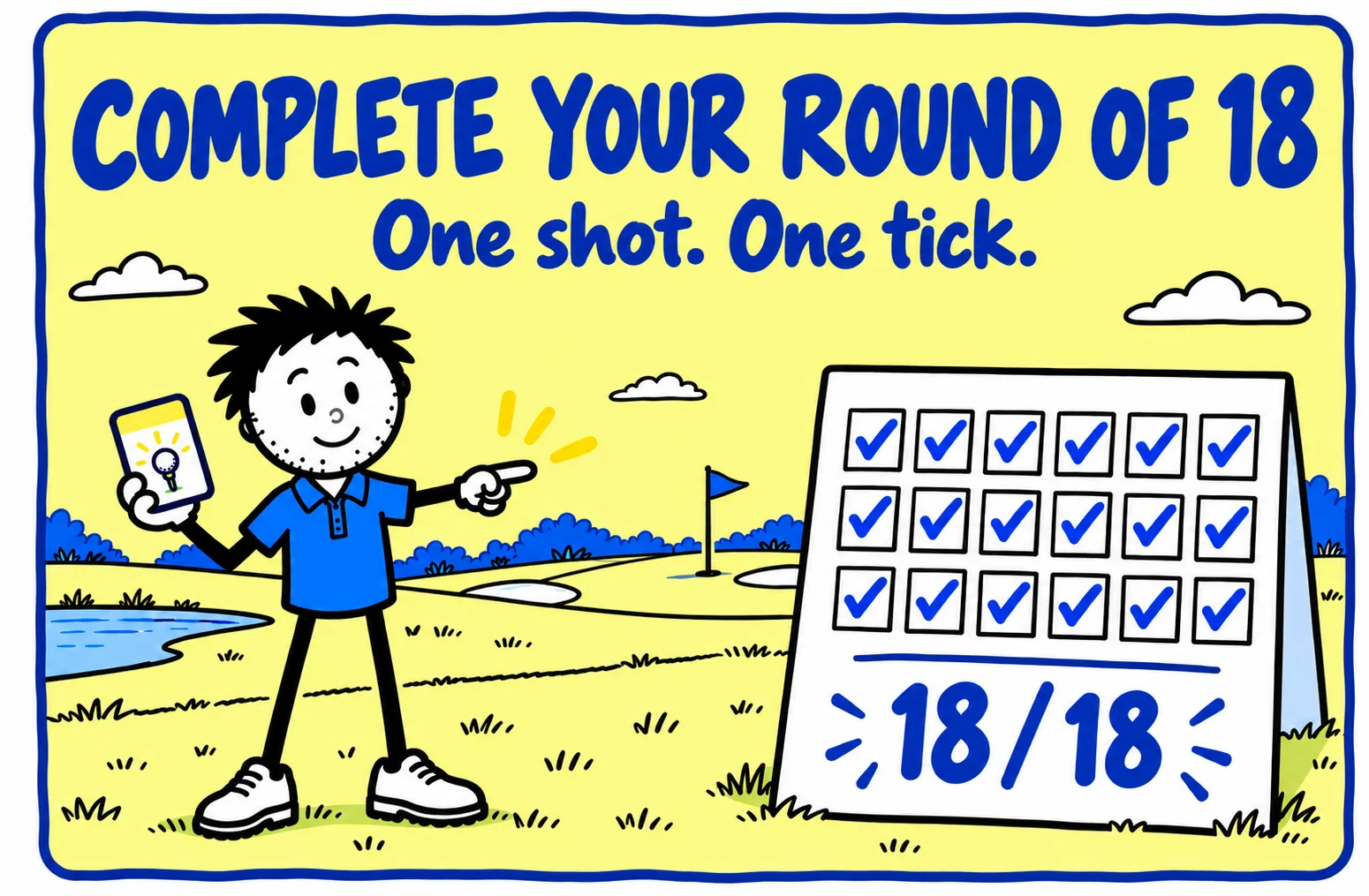
Complete 18 controlled repetitions in two sets of nine. Choose the no-club dip-and-rise rehearsal or the easy no-ball practice swing for this round.
| Score | When to award it |
|---|---|
| 1 point | You complete the shot, routine or movement described above. |
| 0 points | You do not complete the attempt. |
George’s Conclusion
I’d start with the little no-club rehearsal and see whether it gives you a smoother sense of rhythm. Keep the movement comfortable, then blend the feeling into a gentle swing. The useful part is the coordinated push and turn; a bigger jump is not the goal.
Try the Xander Schauffele Step Drill, explore the Simon Dyson Feet Together Drill, or browse more long game drills.
MAKE THE NEXT BUCKET COUNT
Pick a card. Practise with purpose.