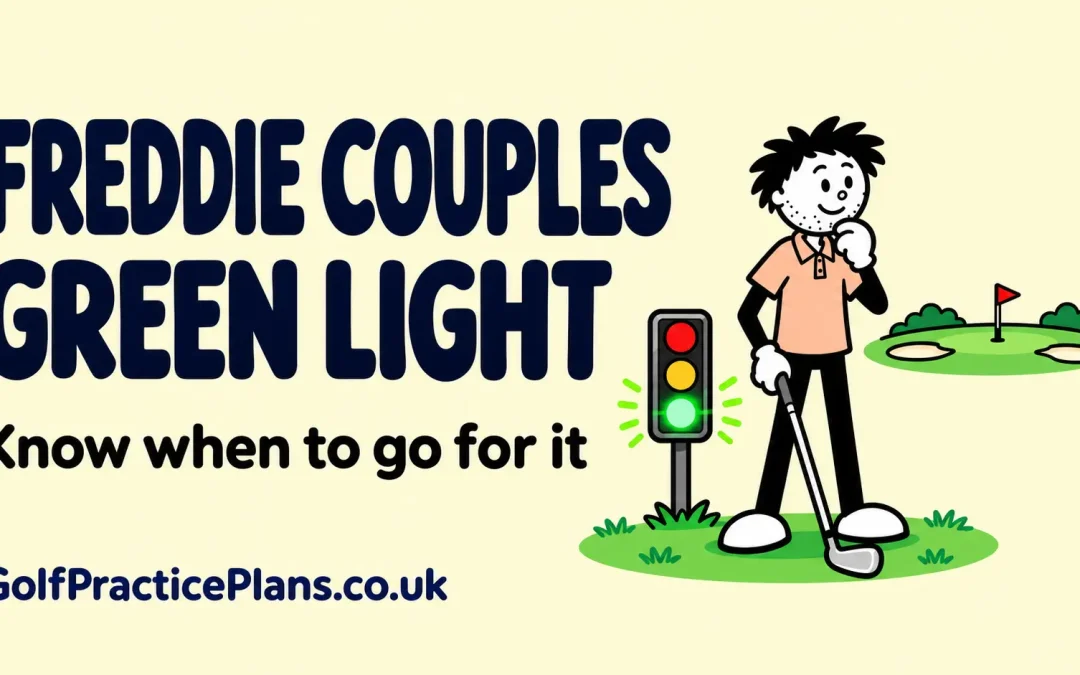
Freddie Couples Green Light Drill: Know When to Go for it
Shot decisions
The Freddie Couples Green Light drill helps you decide when to attack, when to be cautious and when to get the ball back into play. Before each shot, give the situation a green, amber or red light. Then choose a shot that fits the risk.
A green light might let you hit a committed full iron. An amber light could mean aiming at the middle of the green. A red light might call for a sideways chip back to the fairway. The colour comes from the situation and your own reliable shots.
↓ Download free infographicSave to your device or print for practice.
Watch Freddie Couples explain his decision
Step 1. Assess the lie, target and trouble

What to do
| Action | What to do |
|---|---|
| Read the lie | Check whether the ball is sitting cleanly, in rough, on a slope or behind an obstacle. Judge what shot the lie allows. |
| Choose the target | Look at the distance and the space around the target. Include the route the ball needs to take. |
| Consider the miss | Ask what happens if the shot finishes short, long, left or right. Notice hazards and difficult recovery areas. |
| Use your own game | Base the decision on shots you can reliably play today. A shot you have seen a professional hit may carry a different risk for you. |
Step 2. Choose green, amber or red
What to do
| Your light | What to do |
|---|---|
| Green — attack | The lie, target and likely miss make the attacking shot a sensible option. Commit to the chosen shot; a green light does not automatically mean swinging as hard as possible. |
| Amber — use caution | Choose a wider margin: for example, aim at the middle of the green or take trouble out of play with a different target. |
| Red — recover | Accept the situation and choose a simple route back into play. A sideways chip to the fairway can be the right decision. |
Quick decision checks
| Watch for | Try this |
|---|---|
| Giving every shot a green light | Check the lie and the cost of a miss before attacking. |
| Confusing confidence with a good risk | Ask whether the shot is a reliable part of your game and whether the miss leaves a manageable next shot. |
| Trying to win back a lost stroke | Choose the best next shot from the position you actually have. |
| Ignoring the system on the green | Consider the slope, speed and leave. A cautious putt may prioritise a manageable next putt. |
| Judging the decision only by the result | Review the information you had before the shot. A poor strike can follow a sensible decision. |
Your focus: Shot decisions
Step 3. Score 18 traffic-light decisions
What to do
| Score | When to award it |
|---|---|
| 1 point | Before the shot, you assessed the risk, chose green, amber or red, and selected a shot to match. |
| 0 points | You played without using the traffic-light process first. |
Review the choices afterwards
FAQs
What equipment do I need?
Clubs, balls + scorecard.
How do I set up this drill?
Check whether the ball is sitting cleanly, in rough, on a slope or behind an obstacle. Judge what shot the lie allows. Look at the distance and the space around the target. Include the route the ball needs to take. Ask what happens if the shot finishes short, long, left or right. Notice hazards and difficult recovery areas.
What should I focus on during practice?
How should I record my practice?
What should I keep in mind when practising?
What drill do you recommend I do next?
Try The Perfect Golf Pre-Shot Routine next to build a clear pre-shot routine with three linked drills.
You could also use Breathing Technique Drill to practise a comfortable breathing cue during golf practice. For another focused practice task, try Jack Nicklaus Visualisation Drill to picture the finish, flight and landing before swinging.
Give your next practice a purpose.
Find illustrated drills, save your favourites and record your practice in the Golf Practice Made Fun App.
Explore the app ↗