Browse by category
DRILL OVERVIEW
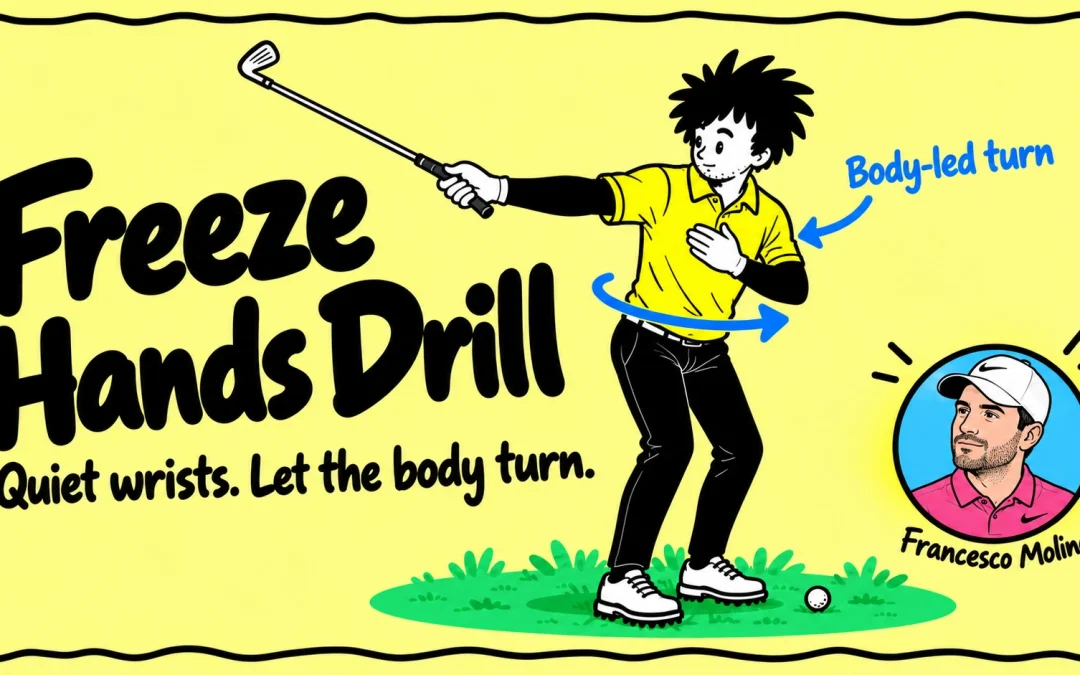
Francesco Molinari Freeze Hands Drill: Quiet Wrists, Body-Led Turn
Your drill at a glance
This drill is from the Golf Practice Made Fun App.
Quieter wrists in the backswing can help you coordinate the club with your body turn and make the strike more repeatable. If you tend to pick the club up with a sudden wrist movement, this rehearsal gives you a different feel: let the chest turn carry the arm and club back. Then use both hands and play small shots with that same connected movement. “Freeze” is a cue for reducing unnecessary wrist action, rather than a demand to remove all natural wrist movement.
Step 1. Watch Molinari’s quieter-wrist rehearsal
Watch Francesco Molinari’s demonstration from 1:45. Notice his one-arm rehearsal, the other hand near his chest and how he uses the body turn to move the club.
Step 2. Rehearse with one arm, then use both hands
Feel the turn with your trail arm

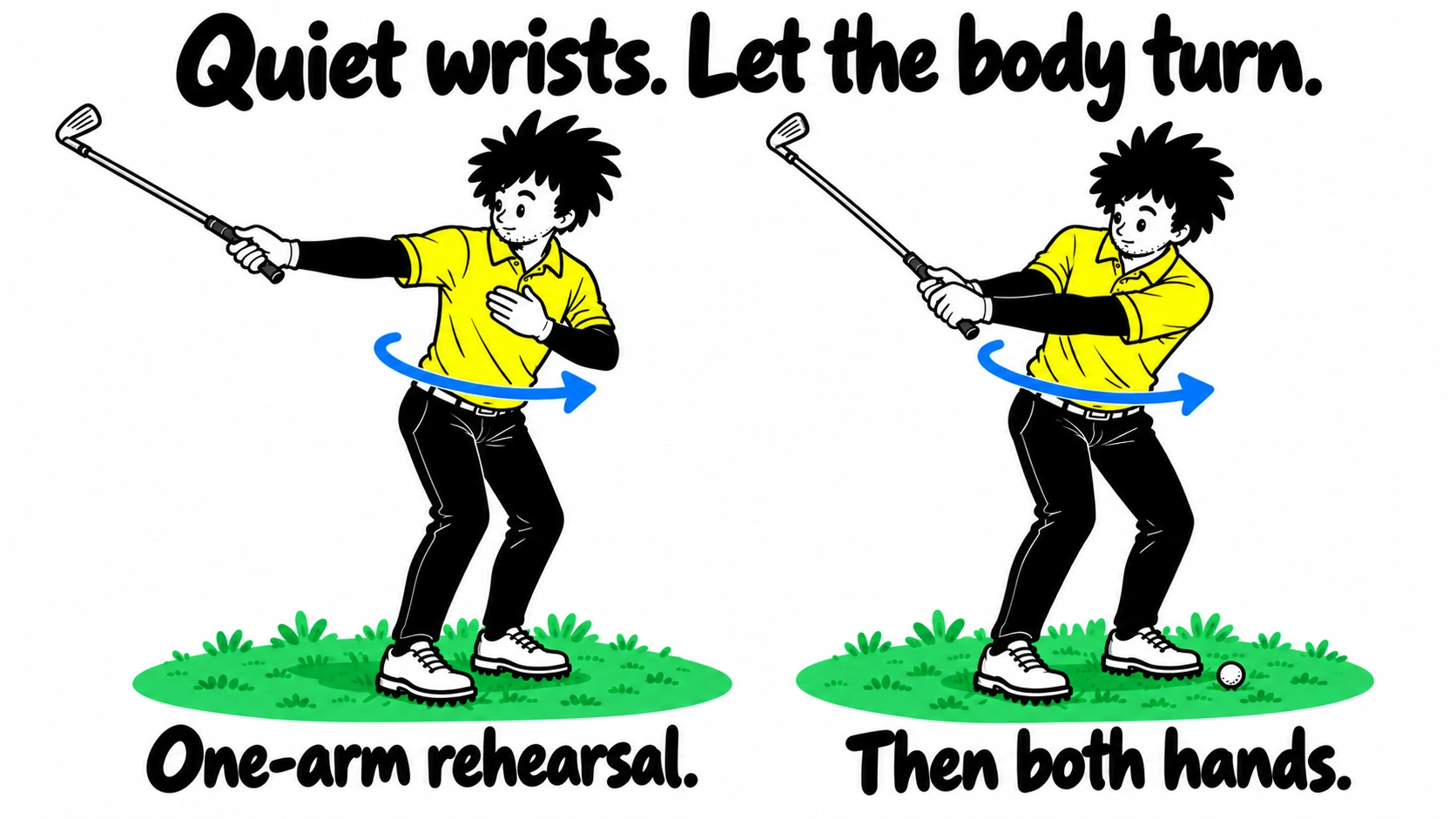
For a right-handed golfer, hold a short iron in the right hand and rest the left hand lightly on the middle of your chest. Reverse the arms if you play left-handed. Make a small, slow backswing and feel the chest turn carrying the arm and club.
Keep the wrist relatively quiet instead of deliberately cocking it early. Stay relaxed and avoid forcing the elbow straight or squeezing the grip. This one-arm part is a no-ball rehearsal; keep it small enough to control the club comfortably.
Put both hands back on the club
Use your normal grip and stance. Make a few gentle two-handed swings with the same feel of the arms and chest moving together. Natural wrist hinge is allowed: do not try to hold the wrists rigid throughout the swing.
When the rehearsal feels comfortable, add a ball and play short, easy iron shots. Keep the cue mainly in the backswing, then let the club move through naturally. Notice the contact without trying to force a particular impact position.
| Progression | What to do |
|---|---|
| One-arm rehearsal | Hold the club in the trail hand, rest the other hand on the chest and make a small no-ball backswing. |
| Let the chest turn | Feel the body carrying the arm back instead of abruptly lifting the club with the wrist. |
| Quieter wrist feel | Reduce unnecessary wrist action without locking the joint or gripping harder. |
| Both hands | Return to your normal grip and rehearse a small, connected swing. |
| Add a ball | Play short two-handed shots and let the club release naturally through the strike. |
This is a feel to experiment with. Different swings use different amounts of wrist hinge, so the goal is a manageable movement and useful feedback from contact, rather than an identical wrist position for everyone.
What to watch for
| What you notice | What to try |
|---|---|
| Rigid wrists or tight grip | Soften the grip and use “quiet” as the cue instead of forcing a complete freeze. |
| Snatching the club upwards | Shorten the backswing and let the chest turn move the arm. |
| Forcing the arm straight | Keep a comfortable bend and make a smaller rehearsal. |
| The club feels heavy with one hand | Use a short iron, reduce the movement or move straight to gentle two-handed rehearsals. |
| Poor contact | Return to short shots and an easy speed rather than trying to hit harder. |
| Wrist, elbow or shoulder discomfort | Stop the movement rather than pushing through it. |
Step 3. Complete your round
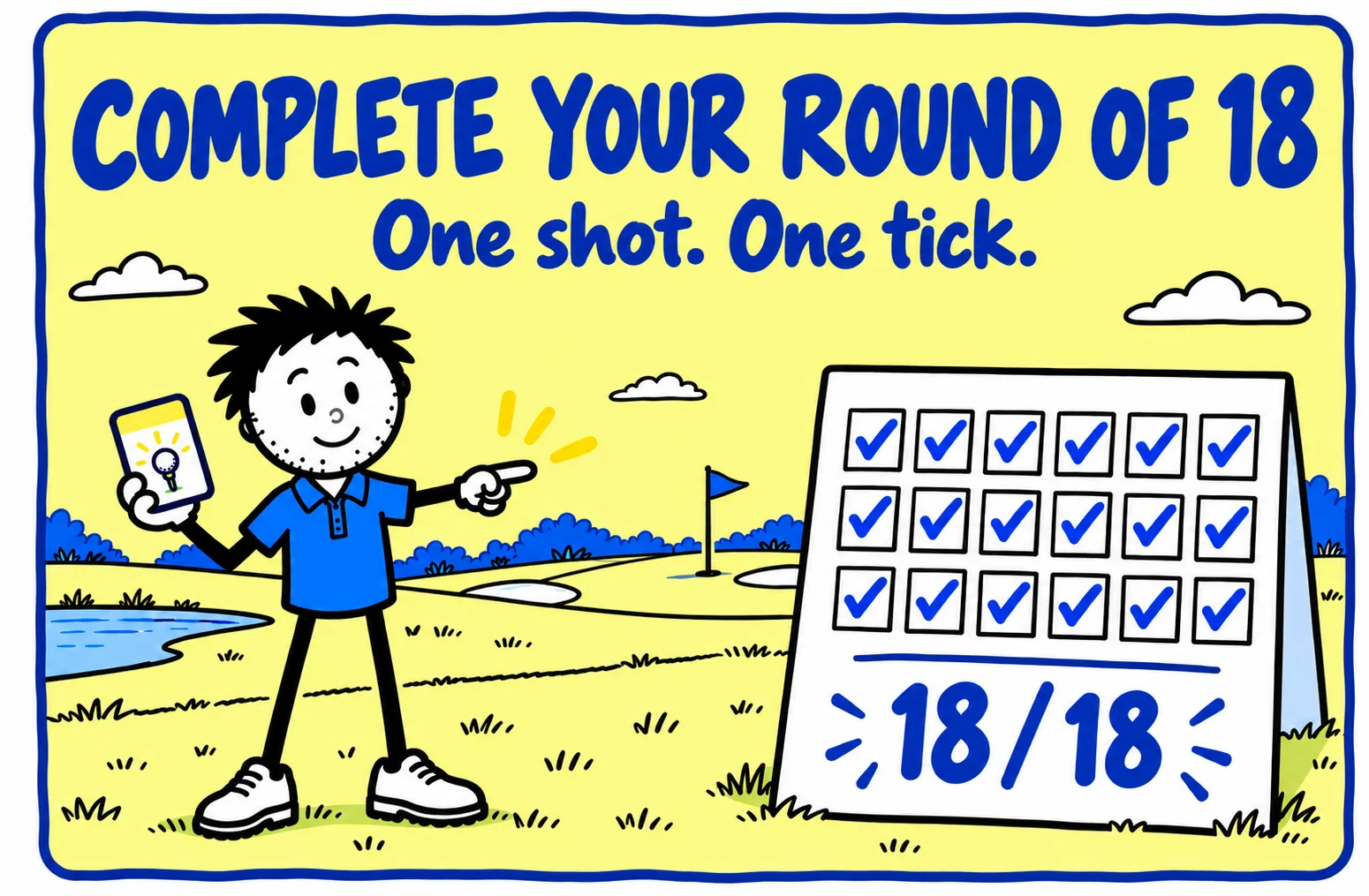
Play 18 controlled two-handed shots in two sets of nine. Use the quieter-wrist feel in the backswing and let the body turn. A small one-arm or two-handed rehearsal can help you settle before each ball.
If you’re using the Golf Practice Made Fun App, tick one box in your Practice Round after each shot. One shot is one tick, whatever its result. Preparation rehearsals do not earn separate ticks.
| Round | What to do |
|---|---|
| First nine | Play short iron shots and explore a quieter wrist action in the backswing. |
| Second nine | Pause, then repeat with the arms and chest moving together. Keep the speed easy. |
| Record | Record shots completed out of 18 and one note about contact, tension or the turning feel. |
A worked example: nine shots fill nine boxes. Nine more complete your round of 18. A mishit still counts as one shot. If you stop after twelve, record twelve and leave six boxes unticked.
No-ball option: complete 18 gentle two-handed swing rehearsals in two sets of nine. One full movement back and through, returning to rest, is one tick. Choose either shots or rehearsals for the round so the counting stays clear.
George’s Conclusion
I prefer to think “quiet wrists” rather than “locked wrists”. Start with the little one-arm rehearsal, feel the chest carry the club back, then put both hands on and play a few easy shots. Let the quality of the contact help you decide whether this feel is useful for your swing.
Try the Simon Dyson Feet Together Drill, explore the Holy Grail Follow-Through Drill, or browse more long game drills.
MAKE THE NEXT BUCKET COUNT
Pick a card. Practise with purpose.