
How to Stop Flicking Your Chip Shots: 3 Drills for Better Control
Steadier contact
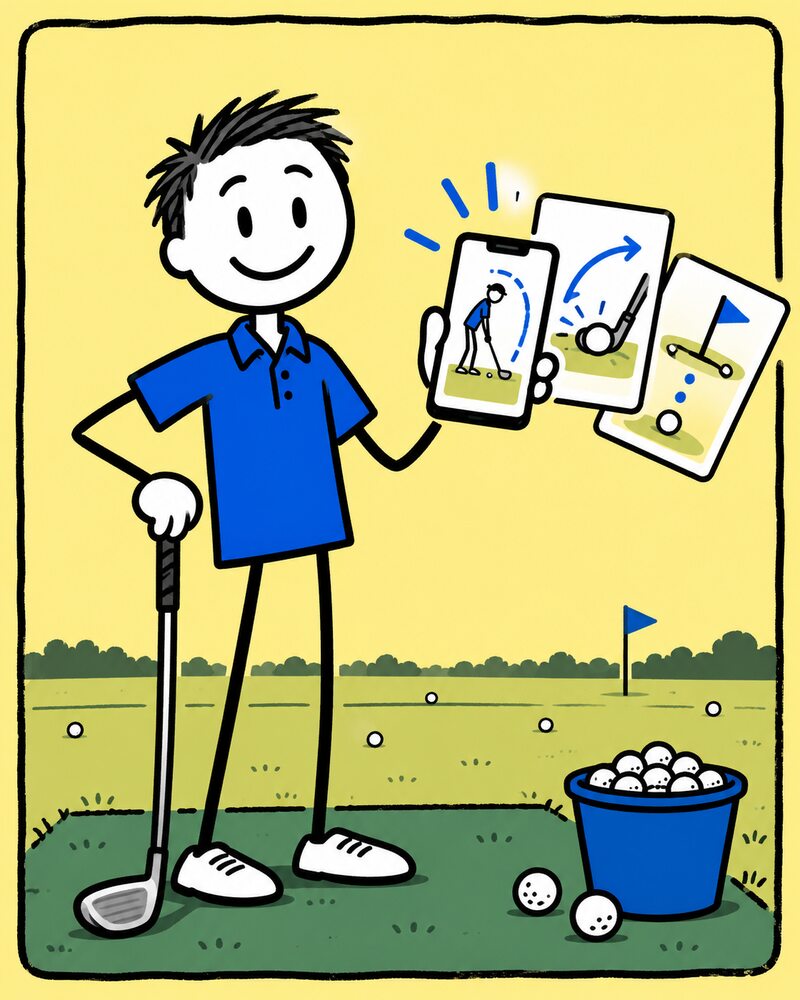
A smaller wrist flick and a continuing body turn can help you make cleaner, more predictable chip shots.
Use the Chipstick Drill to notice scooping through impact, Simon Dyson’s Cack-Handed Drill to explore a compact swing, and the Tummy Button Up Drill to keep turning through the finish. Play eighteen short chips in each drill, using the small reversed-grip version for the second and six chips at each grip position for the third. Keep the movement gentle and let the wedge loft lift the ball.
↓ Download free infographicSave to your device or print for practice.
Drill 1. Chipstick: Notice the Wrist Flip

The stick gives you immediate feedback if a scooping movement brings its upper end into your side. Keeping the chip small and the chest turning helps you explore a steadier lead wrist, then recognise the same feeling when you practise without the stick.
| Step | What to do |
|---|---|
| 1 | Hold an alignment stick alongside your wedge shaft, gripping both with the stick extending above your hands outside your lead side. Take a narrow stance, put the ball back in your stance and favour the lead foot. Check that the upper end begins clear of your body, then rehearse slowly. |
| 2 | Make a short backswing and turn your chest gently towards the target through the strike. Let the wedge loft lift the ball. Finish low with the clubhead below your hands and the stick clear of your body. If it touches your side, shorten and slow the movement. |
| 3 | Choose one spot just off the green and mark a target area three feet from the hole with tees. Play eighteen short chips, resetting before each. Use the target to observe the result while keeping your main attention on contact, the turning finish and the stick staying clear. |
Drill 2. Simon Dyson Cack-Handed: Swap the Grip, Feel the Turn

Changing the order of your hands makes the movement feel unfamiliar enough to notice a large arm swing or a body that stops turning. Tiny chips let you explore a compact motion at an easy pace, then test whether a useful feel carries back to your normal grip.
| Step | What to do |
|---|---|
| 1 | Keep your normal playing stance and wedge, but reverse the usual order of your hands on the grip: your usual lower hand goes above the other. Hold gently without forcing your normal overlap or interlock. Begin with a few tiny no-ball rehearsals. |
| 2 | Make tiny chips with a small backswing and let the chest turn with the arms. Continue turning gently through the shot and finish steadily. Keep the arms soft and avoid full-speed swings. If the grip feels uncomfortable, stop the reversed-grip movement. |
| 3 | Play eighteen tiny reversed-grip chips in two sets of nine, making a gentle rehearsal before each. Alternatively, choose eighteen tiny no-ball rehearsals. Afterwards, return to your normal grip and explore the same compact, turning feel. |
Explore the full Simon Dyson Cack-Handed Drill and demonstration →
Watch the demonstration on YouTube from 6:10.
Your focus: Steadier contact
Drill 3. Tummy Button Up: Keep Turning Through the Chip

A gently rising, turning finish helps the handle travel with your body instead of being pushed down and forwards after the strike. Comparing three grip positions also shows how a shorter effective club length changes contact and landing distance with the same wedge.
| Step | What to do |
|---|---|
| 1 | Set up for a short chip with your chest roughly over the ball or slightly towards the target. Keep a little more pressure on the lead foot and choose a comfortable, small swing. |
| 2 | Let your chest and tummy button turn towards the target and gently rise as the club swings through. Allow the handle to travel with the turn, rather than pushing it down and forwards. Stay balanced without leaning back or forcing your spine into an arch. |
| 3 | Play eighteen chips to the same target: six with your full-length hold, six farther down the grip and six at your lowest comfortable hold. Keep both hands securely on the grip, and keep swing size and pace similar. Rehearse the small rising, turning finish before each chip and compare contact and landing distance. |
Explore the full Tummy Button Up Chipping Drill and demonstration →
FAQs
What equipment do I need?
Wedge, stick, balls, tees.
How do I get started?
The stick gives you immediate feedback if a scooping movement brings its upper end into your side. Keeping the chip small and the chest turning helps you explore a steadier lead wrist, then recognise the same feeling when you practise without the stick.
What should I focus on during practice?
Changing the order of your hands makes the movement feel unfamiliar enough to notice a large arm swing or a body that stops turning. Tiny chips let you explore a compact motion at an easy pace, then test whether a useful feel carries back to your normal grip.
How should I record my practice?
A gently rising, turning finish helps the handle travel with your body instead of being pushed down and forwards after the strike. Comparing three grip positions also shows how a shorter effective club length changes contact and landing distance with the same wedge.
Do I need to practise every drill in one session?
Choose one drill that matches what you want to work on. Follow its setup and practice task, then use what you notice to decide what to repeat next time.
Should I use the same score for every drill?
Follow the practice record given for each drill. Keep its distance, target and equipment consistent when you compare sessions.
What drill do you recommend I do next?
Try Chip to a Landing Spot next to give each chip a clear landing target.
You could also use Soft Shot to explore a gentle hinge and a natural clubhead release. For another focused practice task, try Chipstick Drill to practise steadier wrists and cleaner chip contact.
Give your next practice a purpose.
Find illustrated drills, save your favourites and record your practice in the Golf Practice Made Fun App.
Try the App Free ↗14 days free · No card required