

Browse by category
10 mistakes · Practical alternatives · Drills to try
Make Your Practice Count
A good practice session starts with a clear job for the ball. These ten common golf practice mistakes can leave you hitting plenty of shots without learning much from them. Use the alternatives below to give your next session a clearer purpose.
The linked drills are from the Golf Drills Made Fun App. Choose one practice habit to improve, try a relevant drill and keep a simple record of what happens.
Begin with a clear goal and a reset between shots. Keep one swing cue, judge the whole group and give attention to neglected clubs. Add fresh decisions, make time for the short game, test shots without training aids, introduce a scored challenge and take a break when focus fades.
The Top 10 at a Glance
Select a mistake in the table to jump to its explanation and a drill to try.
| No. | The practice mistake | What to do instead |
|---|---|---|
| 1 | Choose one problem, a clear task and a way to judge it. | |
| 2 | Give each ball a target and your normal preparation. | |
| 3 | Choose one relevant cue and give it a fair test. | |
| 4 | Judge the whole group and record the usual result. | |
| 5 | Give a recurring weakness a planned practice slot. | |
| 6 | Add a separate task that asks for a fresh decision. | |
| 7 | Book a specific putting or chipping task into the session. | |
| 8 | Remove the aid and check whether the feeling carries over. | |
| 9 | Add a realistic challenge with a fixed scoring rule. | |
| 10 | Use short blocks, take a break and stop with a useful note. |
Mistake 1
Practising Without a Clear Goal

Finishing a bucket tells you how many balls you have hit. It does not tell you what you have learned. If the target, club and swing thought change whenever a shot disappoints you, it becomes difficult to work out which change helped.
What to Do Instead
Before starting, name one recurring problem and choose a task that addresses it. Define success in plain language: a clean strike, a ball landing inside a chosen area, or completing your full routine. Keep that rule unchanged while you test it. Use the result to plan the next session rather than trying to fix your whole game in one visit.
Try this: Choose a reachable range target and a clear success area. In the competitive-practice drill, play eighteen attempts and record one point whenever the shot meets your chosen rule.
Mistake 2
Hitting the Next Ball Without a Reset

A rapid stream of balls can turn practice into a rhythm you never use on the course. You may keep your feet planted, lose your original alignment and hit the next shot before noticing the last one. Speeding up after a miss also gives the next attempt less preparation.
What to Do Instead
Step away, notice the result, then begin again behind the ball. Choose the target, assess the shot and settle into your normal setup. The routine can be brief; the aim is a fresh intention, not a long speech before every ball. Keep the same preparation after a good shot and a poor one.
Try this: Use the Chew the Fat Behind the Ball Drill to rehearse one short sentence such as “Seven iron towards the middle flag, smooth swing.” Finish the planning before you step in, then play the shot and reset.
Mistake 3
Working on Too Many Swing Thoughts

Grip, takeaway, hips, wrists and finish are a lot to organise during one swing. If you change them all, a better shot will not tell you which adjustment mattered. A poor shot can then send you searching for yet another tip.
What to Do Instead
Choose one cue that suits the problem you are working on, ideally from a lesson or a clear drill. Use its rehearsal, reset and let the swing flow. Keep the cue consistent for the planned set before reviewing the pattern. If you are unsure which movement needs attention, a teaching professional can help you choose a useful starting point.
Try this: Rory’s Club in Front Drill uses one slow backswing rehearsal, a reset and one easy swing. Borrow that simple structure when the cue is relevant to your swing; you do not need to collect five other thoughts to go with it.
Mistake 4
Judging Practice by Your Best Shot

The one flushed iron is memorable. The scattered shots around it are often more useful when deciding what to practise next. A session can feel successful because of one lovely strike even when most attempts show the same old problem.
What to Do Instead
Choose a measure that fits the task and assess every attempt, including the misses. That might be clean contacts, finishes inside a target area, or a simple comparison of two groups. Record the typical result and the common miss, then repeat the same test another day. Keep the club, target and conditions comparable enough for the result to mean something.
Try this: The Grip-Pressure Drill compares nine controlled half-shots with your usual pressure and nine with a lighter, secure hold. Compare the contact and tension across both groups, rather than choosing whichever group contains the longest shot.
Mistake 5
Practising Only Your Favourite Clubs

A familiar driver or seven iron can become your default every time you visit the range. There is value in maintaining a dependable shot, but the clubs and distances you avoid will keep receiving very little attention.
What to Do Instead
Use notes from recent rounds to choose a gap in your practice. Perhaps it is a partial wedge, a long putt or a short chip. Give that task a manageable session, while keeping some time for the shots you already trust. You do not have to work through every club in the bag during one visit.
Try this: Instead of automatically reaching for the driver, use the Distance Wedge Control Drill and one wedge to learn your controlled full, nine-o’clock and seven-thirty carry distances. Record the first landing point, not just where the ball finishes after rolling.
Mistake 6
Repeating the Same Comfortable Shot All Session

Repeated shots from one spot can help you explore a movement or establish a distance. The missing part is testing whether you can choose and play a shot when the target changes. On the course, the previous ball rarely gives you a free rehearsal from the same place.
What to Do Instead
Keep a clear distinction between a repeatable drill and a varied-shot challenge. Finish the drill’s planned set, then choose a separate task that asks you to reassess the distance or target. Make the choice before swinging and judge the shot against that intention. You do not need to attempt every trajectory or make each shot more complicated.
Try this: The Wedge Bank game uses a fresh distance for each attempt. Its ten-shot round asks you to choose the shot, observe the miss and keep a score, rather than groove one comfortable yardage.
Mistake 7
Leaving Putting and Chipping Until Last

“I’ll practise putting afterwards” can become “I’ll do it next time.” If the range takes all the available time, the shots around the green receive only a hurried few minutes, even when they are causing problems during rounds.
What to Do Instead
Choose the short-game task before you arrive and give it an actual place in your plan. Sometimes that means starting on the practice green; sometimes it means having a separate short-game session. Use your own round notes to decide the priority rather than copying a fixed percentage of someone else’s practice time.
Try this: If long putts keep leaving difficult return putts, choose the lag-putting task from our three-putting routine. If your chipping preparation is rushed, use the Short Game Routine to practise assessing the lie, choosing the landing spot and rehearsing the shot.
Mistake 8
Never Testing the Swing Without the Training Aid

A training aid gives feedback during a particular exercise. Keeping a glove tucked in place or avoiding a marker is useful only in the context of that task. Completing it successfully does not automatically show that your ordinary shots have improved.
What to Do Instead
Follow the drill’s setup and practice format, then remove the aid completely before making normal shots. Keep one useful feeling and compare contact, direction and balance. If it disappears, return to a small rehearsal before testing again. Avoid adding a second compensation simply to keep an aid in place.
Try this: Annika’s Glove Drill uses a spare glove lightly beneath the lead armpit during small swings. The lesson also asks you to remove the glove and compare the connected feeling; clamping it tightly throughout a full swing is not the objective.
Mistake 9
Avoiding Practice That Has a Score

Casual practice gives you another ball immediately after a miss. A scored task asks you to prepare when the current attempt counts. It also gives you something more useful to compare next time than “I think I hit it fairly well.”
What to Do Instead
Choose a familiar task and a target that gives you a realistic challenge. Decide the success rule before starting, use your full routine and record each result honestly. Keep the rule the same until the round is complete. Adjust the next challenge if needed, rather than making the current one easier halfway through.
Try this: Use the Jack Nicklaus Competitive Practice Drill. Play eighteen attempts with one point for each shot that meets your target rule. Your challenge is to beat a comparable previous score while giving every ball the same preparation, including the first one after a miss.
Mistake 10
Carrying On After Your Focus Has Gone

The last balls in the basket can become a task to finish rather than shots worth practising. If you stop choosing a target, skip the routine or swing simply because a ball is there, more attempts may give you very little useful feedback.
What to Do Instead
Give the practice block a clear beginning and end. Set a short interval, keep one task and pause when the interval finishes—or earlier if your attention or comfort drops. Put the club down before deciding whether to continue. Record what worked, what still needs attention and the first task for your next visit.
Try this: The Short-Interval Practice Drill uses blocks of fifteen minutes or less, with breaks built in. A shorter rehearsal block can also fit the task. You do not need to stay until the timer sounds when you are no longer practising with attention.
George’s Practice Tip
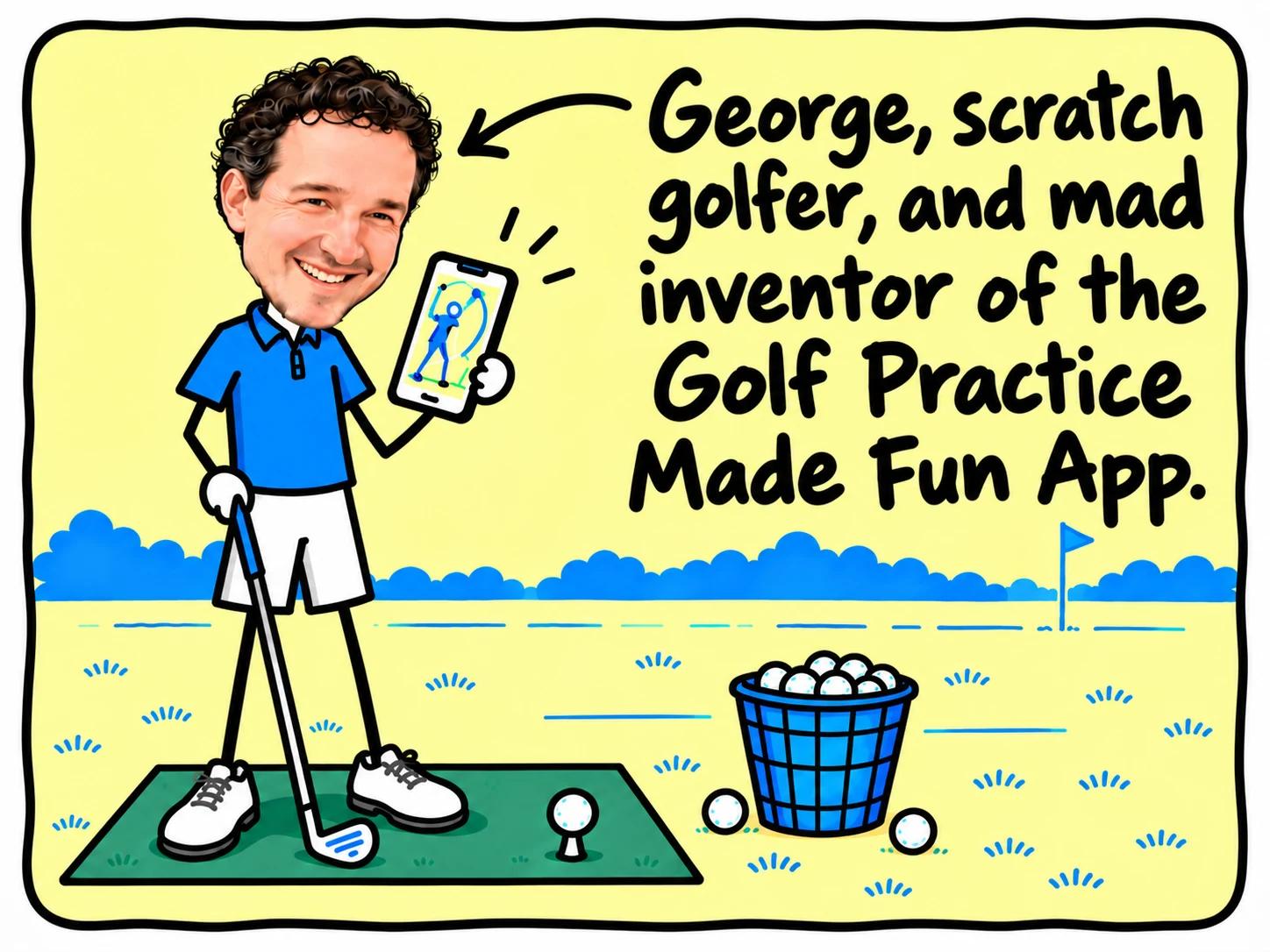
Choose one mistake from this list before your next session. Choose a drill. Decide what you will notice or score, use the same preparation for each attempt and finish with one useful note.
If you are changing technique, make time afterwards for ordinary shots without the training aid. Keep the useful feeling, choose a target and see what carries over. At the next session, repeat a comparable test before deciding whether to keep or adjust your approach.
Your final note can be short: “What I practised. What happened. What I will do next.” That gives the next bucket a purpose before you even buy it.
Need help choosing a task? Browse 100 Golf Problems — Find Your Drill. To rethink familiar swing tips, explore 100 Worst Golf Swing Tips Ever Given — And What to Do Instead.
