
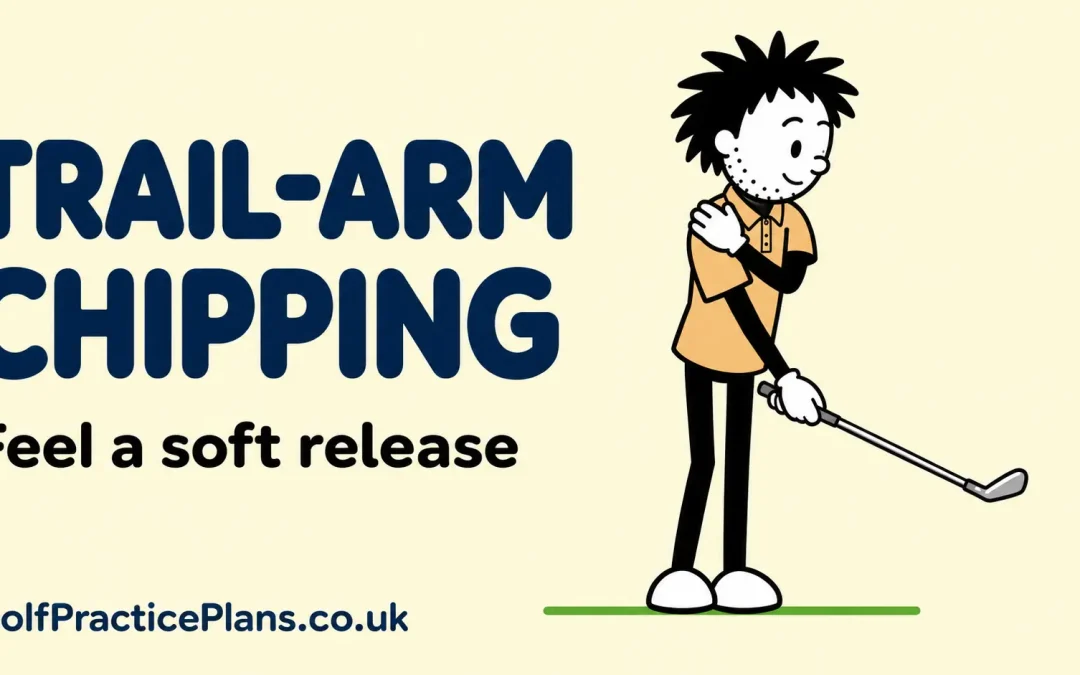
Trail-Arm Chipping: Feel a Soft Release
One hand works. One hand supervises.
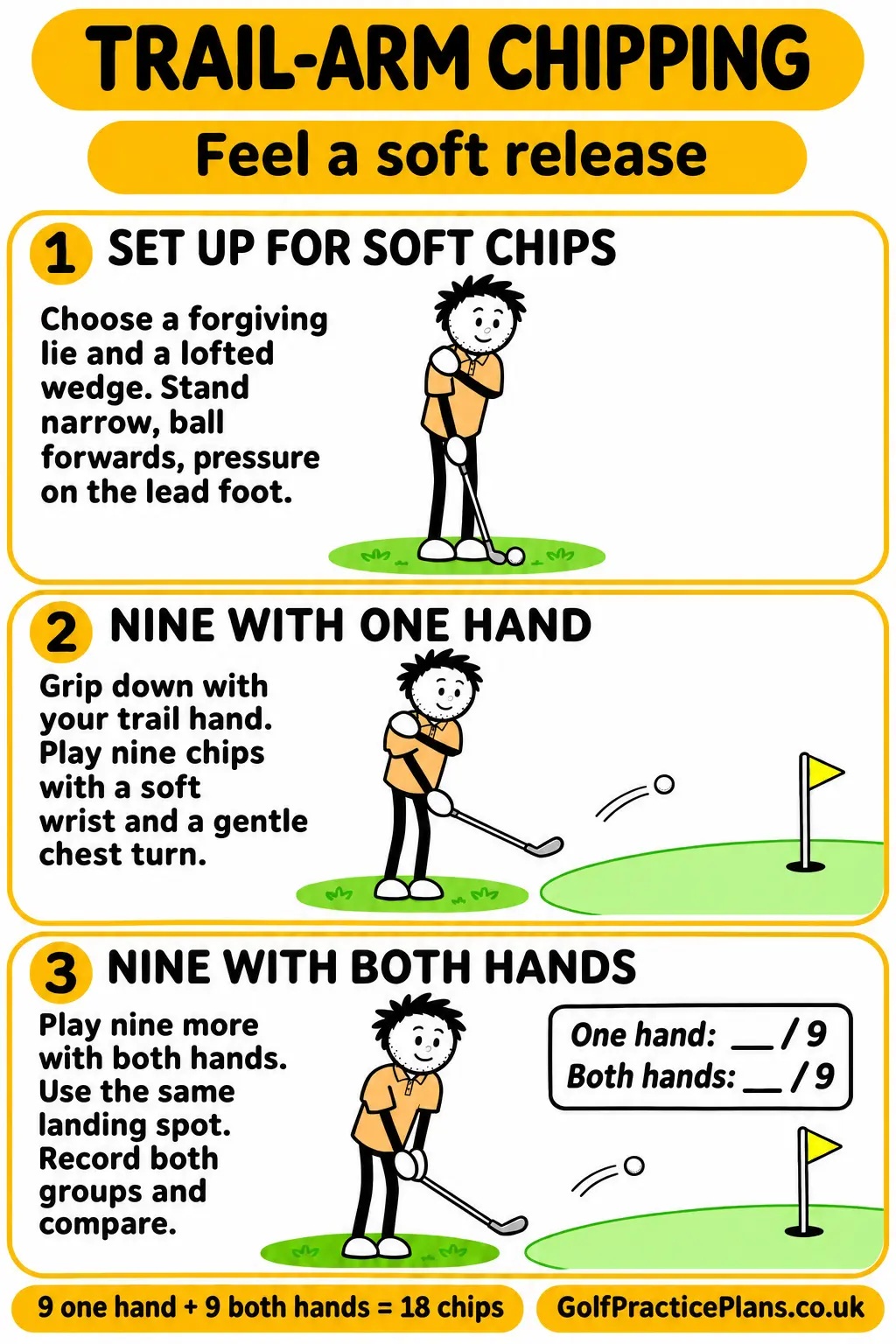
Place your lead hand on your trail shoulder and chip using only your trail hand. Start with chips from a forgiving lie, then bring both hands back together. The aim is to carry that same soft, flowing feel into your normal chip.
↓ Download free infographicSave to your device or print for practice.
Watch the trail-arm lesson
Watch Dan Grieve’s lesson on YouTube · Dan Grieve’s lesson notes at Golf Monthly
Step 1. Set up for soft chips
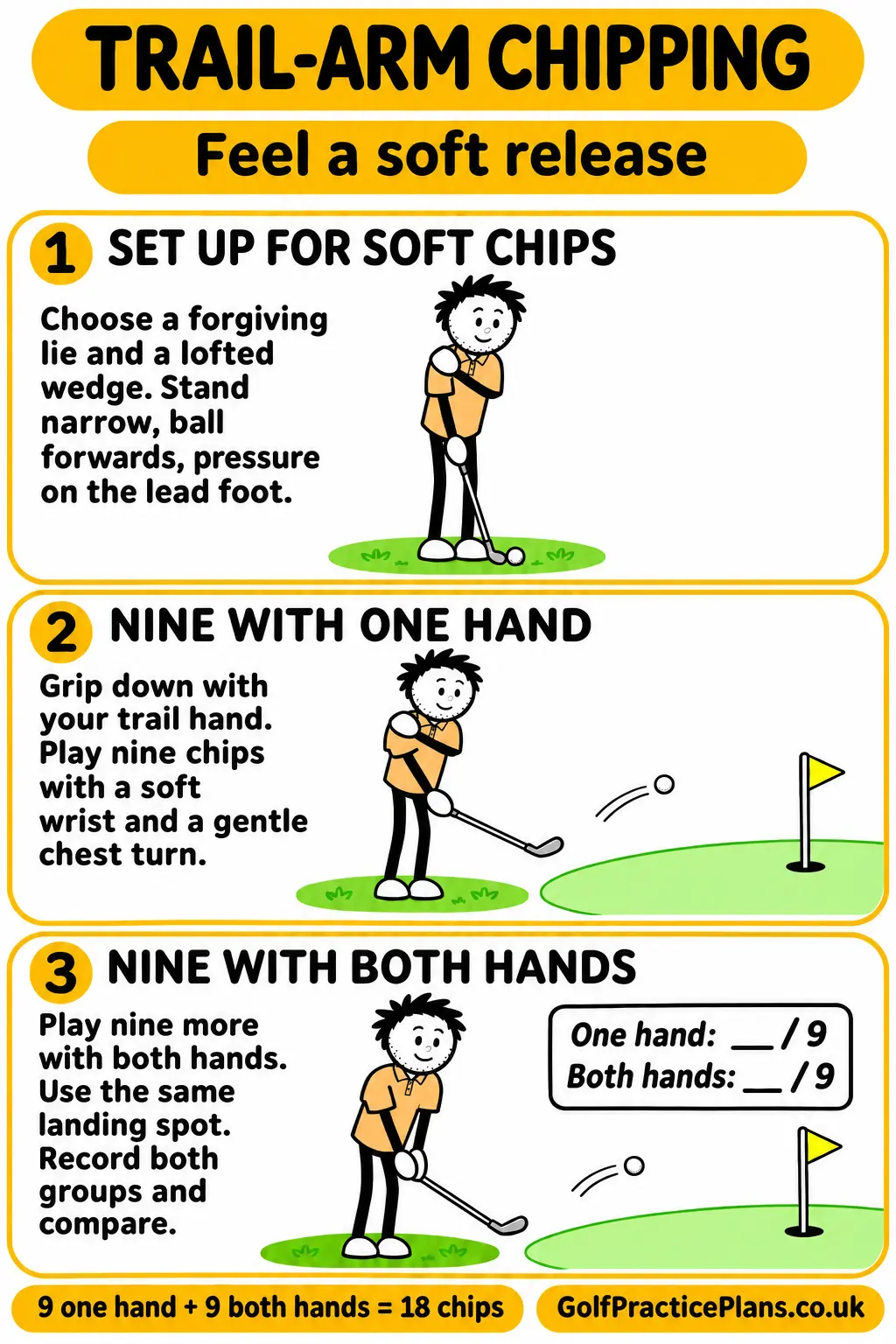
Choose a lie that lets the wedge slide under the ball and settle into a narrow stance.
In Dan’s demonstration, the ball is near the lead heel. His free lead hand rests on the trail shoulder to help keep that shoulder connected to the turn.
Use a lofted wedge from a forgiving lie with a little grass beneath the ball. For a right-handed golfer the trail hand is the right hand; reverse that for a left-handed golfer. Choose a nearby landing spot.
Step 2. Play nine with one hand
Grip down with your trail hand and feel the clubhead release.
Watch how the grip end moves back towards Dan’s belt buckle as he releases the club. This is the softer, higher-shot feel he is demonstrating.
Pause between balls and reset your grip before the next attempt.
Play nine chips with a soft wrist and a gentle chest turn. Keep the same landing spot and notice contact, first bounce and rollout.
Your cue: “Let the release flow. Keep the same landing spot.”
| Watch for | Try this |
|---|---|
| Choosing a bare, tightly cut lie while learning | Start from a forgiving lie with a little grass beneath the ball. |
| Trying to make each chip fly farther | Keep the shot short and recreate the easiest one-handed tempo. |
| Changing the target for the two-handed group | Keep the wedge, lie and landing spot the same for a fair comparison. |
Step 3. Finish with both hands
Play nine more chips with both hands and complete your 18-chip practice session.
After the practice session, compare the two groups. Which felt easier to control, and what happened to the landing and rollout when you put both hands back on?
| Practice group | Attempts completed |
|---|---|
| Trail hand only | ___ / 9 |
| Both hands | ___ / 9 |
| Total chips | ___ / 18 |
Count completed attempts rather than awarding points for the result. After the practice session, compare the contact, landing, rollout and feel of the two groups.
“I wasn’t just hitting balls around … I always liked to keep a score.”
Jack Nicklaus, describing his practice sessions
FAQs
Which hand is the trail hand?
For a right-handed golfer it is the right hand; for a left-handed golfer it is the left. Hold the club in that hand only, gripping a little farther down the handle.
Where should my free hand go?
Rest your lead hand on your trail shoulder, as in Dan’s demonstration. The working hand is the trail hand. Use a narrow stance and a gentle chest turn through a short chip.
Which lie should I use for this drill?
Choose a forgiving greenside lie with a little grass beneath the ball so the wedge can slide under it. Avoid a bare, tightly cut patch while learning this softer release. Use a lofted wedge and a nearby landing spot.
Does each chip need to land close to count?
The practice record counts completed attempts. Play nine trail-hand-only chips and nine with both hands for 18 chips in total. Note the quality of contact, landing and rollout separately.
What should I keep when I put both hands back on?
Recall the tempo and flowing release of your easiest one-handed chip. Use the same club, lie and landing spot, then compare how the contact, first bounce and rollout change with both hands on the club.
What drill do you recommend I do next?
Try Soft Shot next to explore a gentle hinge and a natural clubhead release.
You could also use Lob Shot to practise a higher shot with less rollout. For another focused practice task, try Chip to a Landing Spot to give each chip a clear landing target.
Give your next practice a purpose.
This is Chipping Card 9 in the Golf Practice Made Fun App. Find illustrated drills, save your favourites and record your practice.
Try the App Free ↗14 days free · No card required