
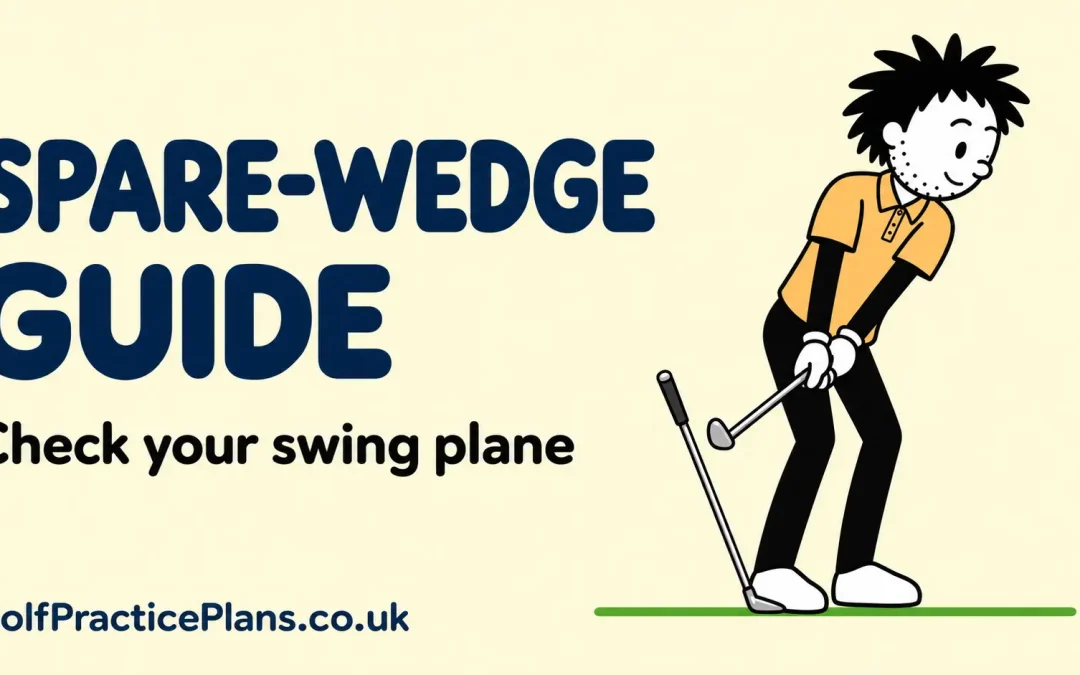
Spare-Wedge Guide: Check Your Swing Plane
A spare wedge. A clearer takeaway.
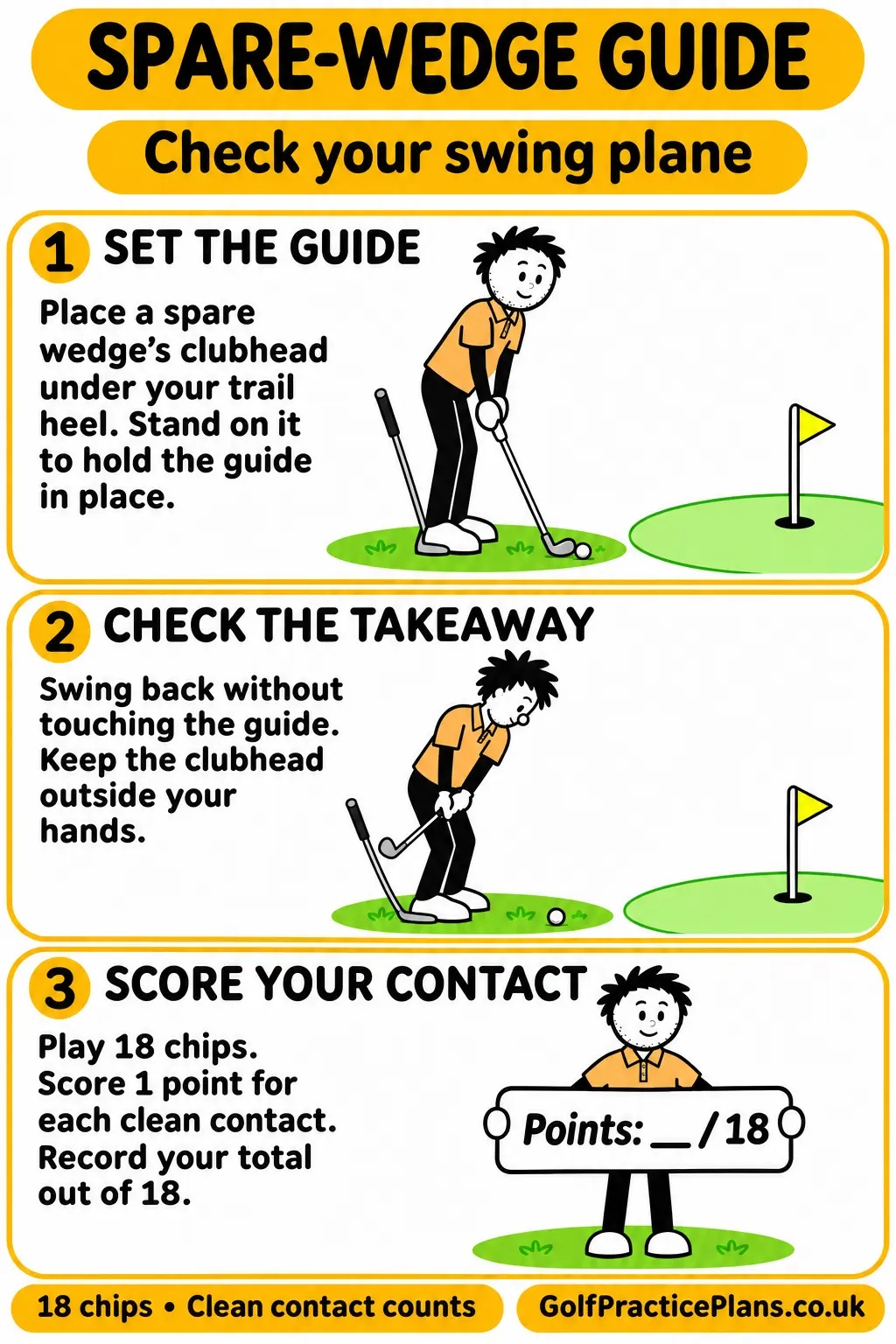
Use a spare wedge under your trail heel as a guide for your takeaway. It gives you feedback if the club you’re swinging rolls too far inside.
↓ Download free infographicSave to your device or print for practice.
Watch the spare-wedge lesson
Watch Dan Grieve’s lesson on YouTube · Dan Grieve’s lesson notes at Golf Monthly
Step 1. Set the guide
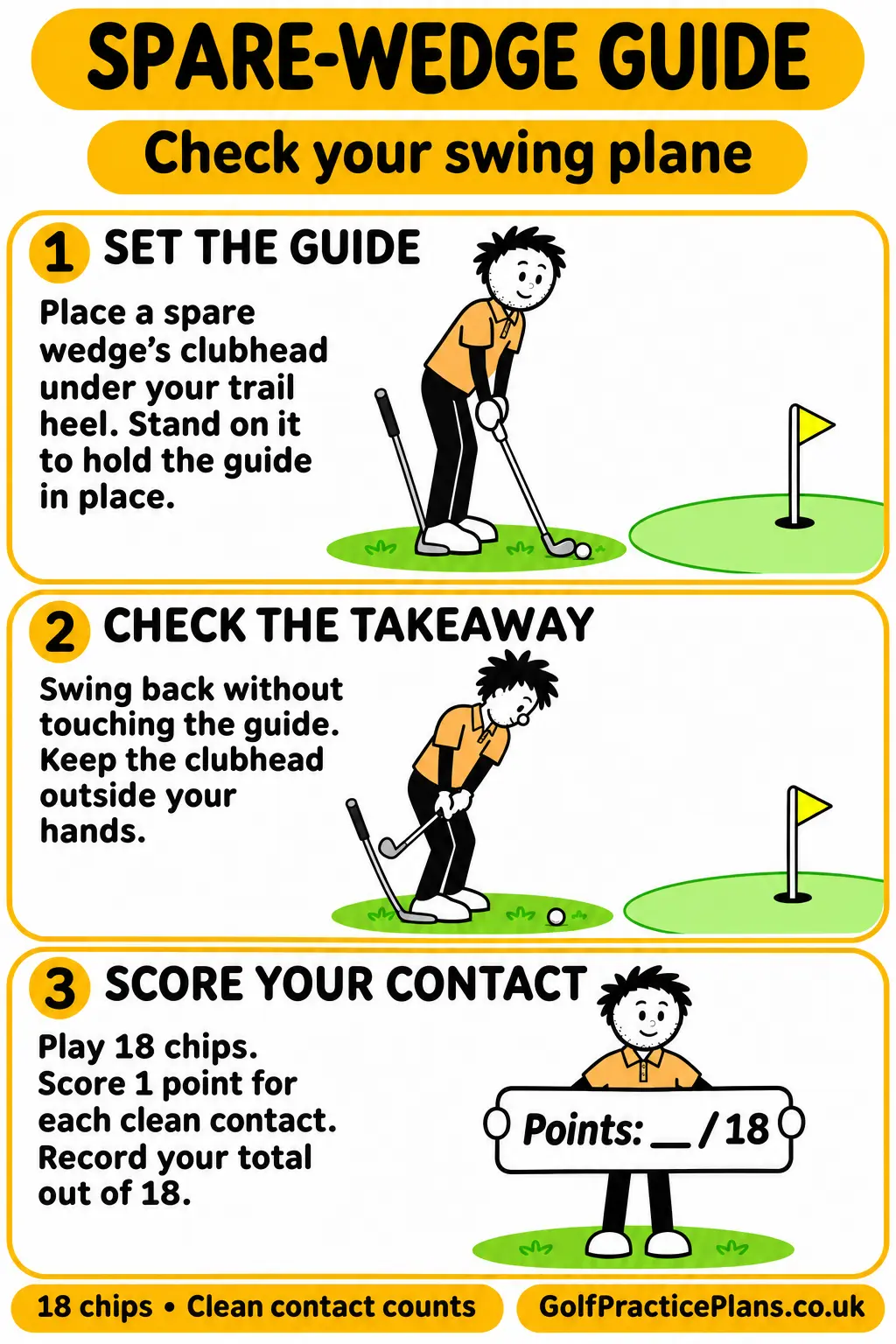
Hold the spare wedge’s clubhead beneath your trail heel so its shaft becomes the guide.
Use one wedge to chip and the other as the guide. For a right-handed golfer, the trail heel is the right heel; for a left-handed golfer it is the left. Leave the spare club’s shaft raised beside the trail leg, as shown in Dan’s demonstration, and choose your landing spot.
Step 2. Check the takeaway
Take the working club back without touching the guide.
Start with a rehearsal without a ball. Keep the working clubhead outside your hands, with the shaft following the line of your arm. If you touch the guide, reset and check the takeaway again.
Keep the landing spot and starting lie consistent. That gives the practice a clear task while you get used to the feedback.
Your cue: “Keep the clubhead outside your hands.”
| Watch for | Try this |
|---|---|
| Swinging before the guide is settled | Check the spare wedge under your trail heel and begin with a slow rehearsal. |
| Touching the guide on the takeaway | Reset and check that the working clubhead stays outside your hands. |
| Rushing through the balls | Pause between chips, reset and watch the first landing. |
Step 3. Score your contact
Play 18 chips and score one point for each clean contact.
Count every attempt and stop after 18. Add your points and record the total.
After the practice session, use this score as your starting point for the next time you repeat the drill.
| Score | When to award it |
|---|---|
| 1 point | You make clean contact with the ball. |
| 0 points | You do not make clean contact. |
Record clean contacts: ___ / 18. Count every attempt and use the result as your starting point next time.
“I wasn’t just hitting balls around … I always liked to keep a score.”
Jack Nicklaus, describing his practice sessions
FAQs
Which foot holds the spare wedge?
Use your trail heel: the right heel for a right-handed golfer, or the left heel for a left-handed golfer. The spare club’s head sits beneath that heel, leaving its shaft raised beside the trail leg. Watch Dan’s demonstration before setting it up.
Do I need two wedges?
Yes. One wedge is the guide beneath your trail heel; use the other to play the chip. Choose a landing spot and keep the starting lie and target consistent while you learn the feedback.
What does touching the guide tell me?
In this setup, contact with the guide tells you the working club has moved too far inside on the takeaway. Reset and rehearse slowly, checking that the clubhead stays outside your hands with the shaft following the line of your arm.
Can I start without hitting a ball?
Yes. Begin by rehearsing the takeaway without a ball. Make sure the guide is settled and use a small, controlled movement before moving into chips.
How do I score this drill?
Play 18 chips. Award 1 point for clean contact with the ball, or 0 when contact is not clean. Count every attempt and record your clean contacts out of 18. Watch the landing as well as the score.
What drill do you recommend I do next?
Try Chipstick Drill next to practise steadier wrists and cleaner chip contact.
You could also use Chip to a Landing Spot to give each chip a clear landing target. For another focused practice task, try Soft Shot to explore a gentle hinge and a natural clubhead release.
Give your next practice a purpose.
This is Chipping Card 10 in the Golf Practice Made Fun App. Find illustrated drills, save your favourites and record your practice.
Try the App Free ↗14 days free · No card required