
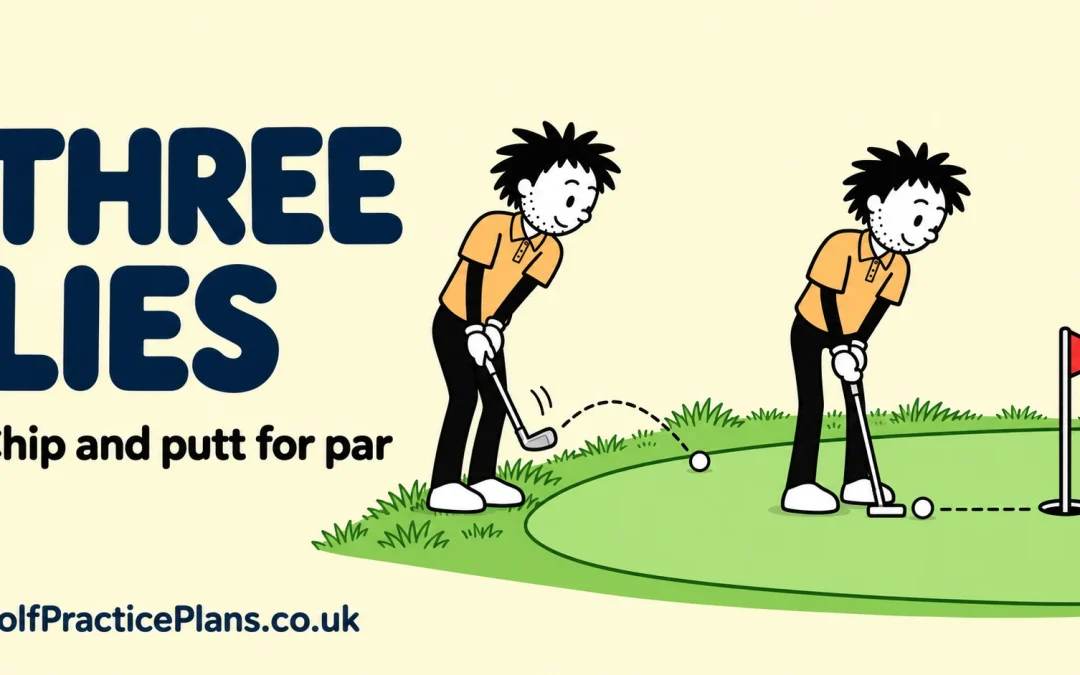
Three Lies: Chip and Putt for Par
Choose the lie. Play the shot. Finish the hole.
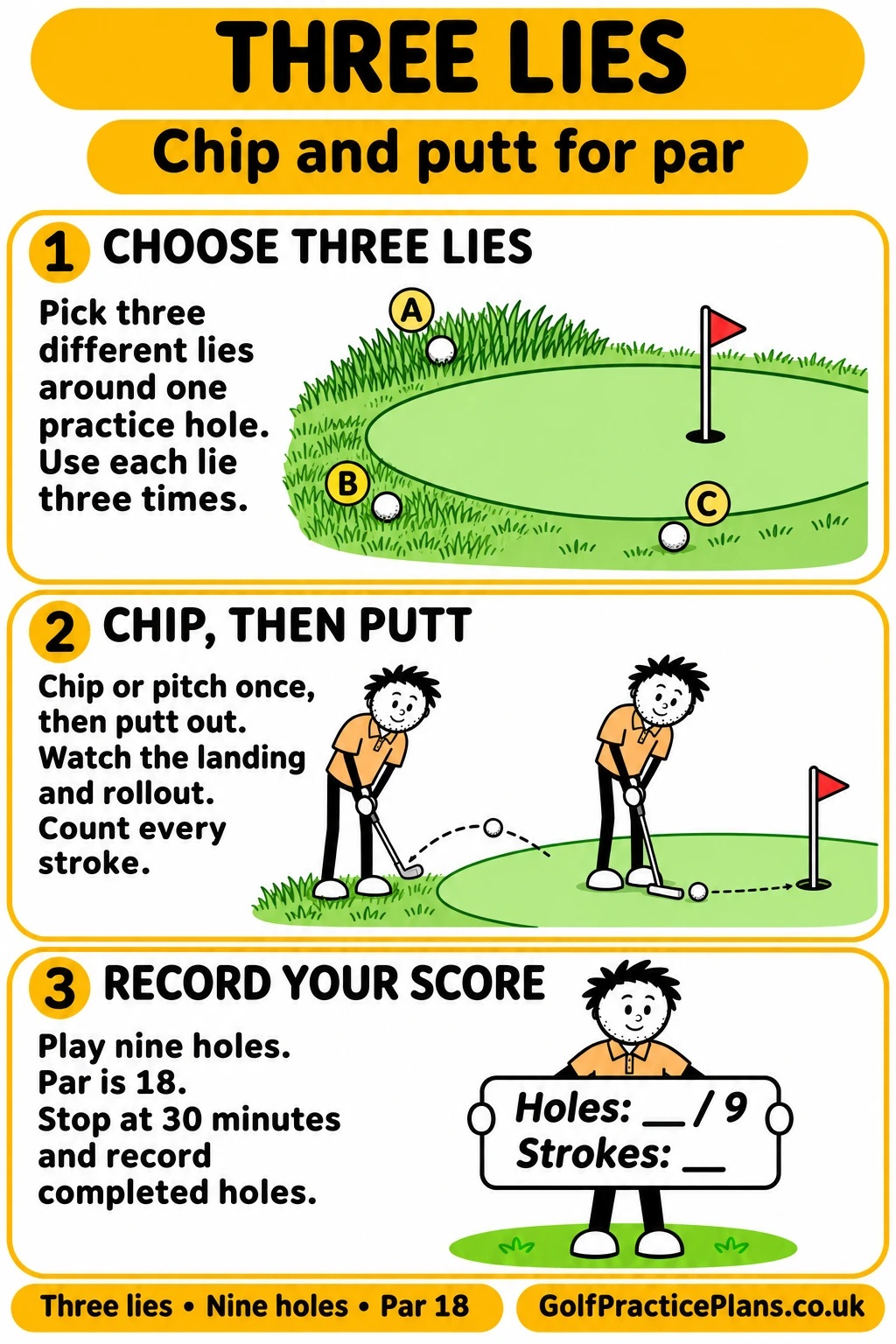
Choose three lies around one practice hole and play each one three times. Every chip or pitch is followed by putting out, so the practice continues until the ball is in the hole.
↓ Download free infographicSave to your device or print for practice.
Watch the chipping lesson
Watch Jason Baile’s lesson on YouTube · Jason Baile’s lesson at Titleist
Step 1. Choose three lies
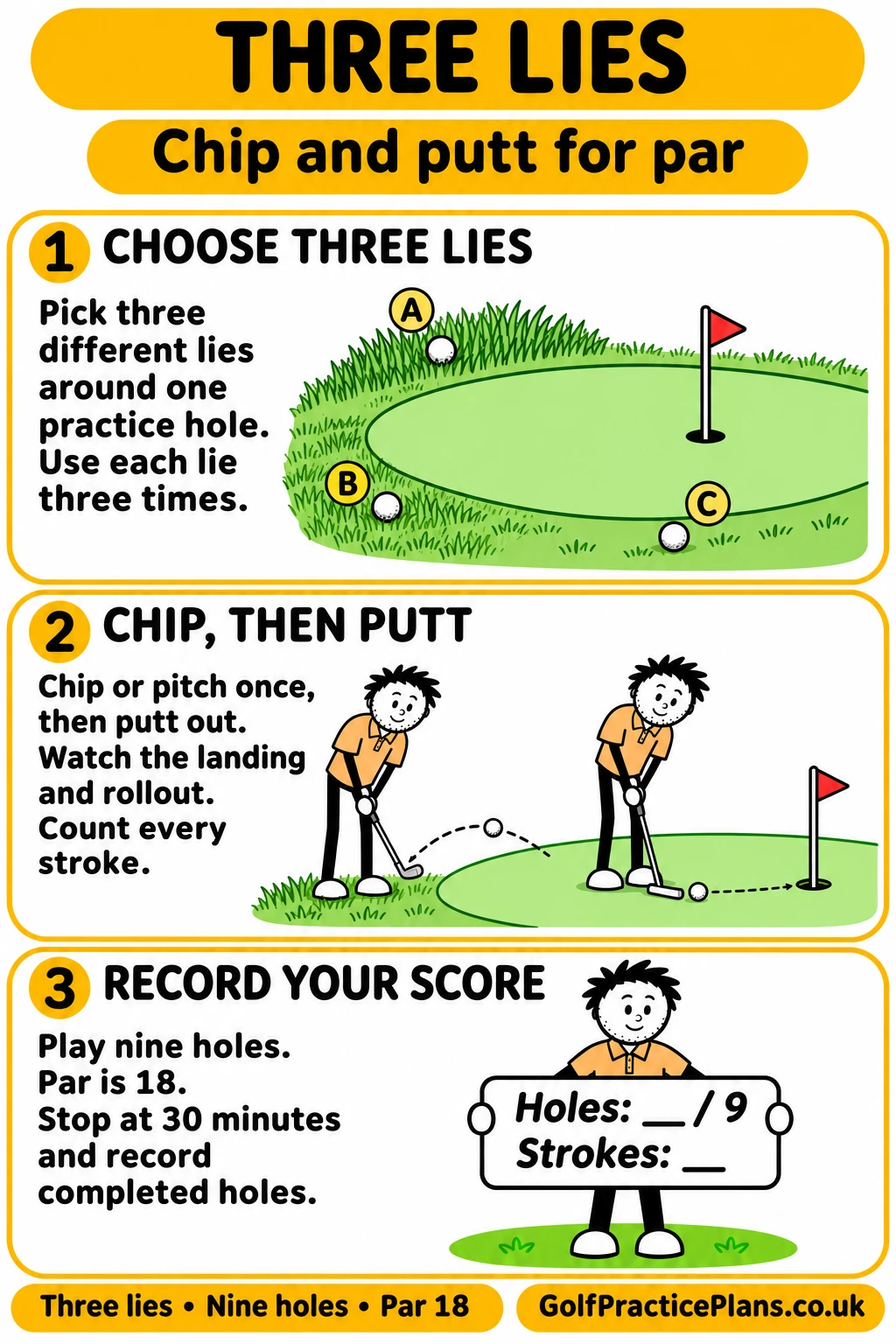
Pick three different starting lies around one practice hole.
Name the starting spots A, B and C. Play A, B and C, then repeat the sequence twice, using each lie three times. Choose different conditions such as short grass, fringe and light rough.
Bring a suitable chipping club, your putter and a ball. Choose the landing spot afresh before each chip or pitch.
Step 2. Chip, then putt out
Play the opening chip or pitch, then finish the hole and count every stroke.
Give the putt the same attention as the chip. A good first shot still needs finishing, and a missed landing spot still gives you a putt to practise.
Your cue: “Choose a landing spot. Finish every hole.”
| Watch for | Try this |
|---|---|
| Choosing the same shot for every lie | Look at the lie, landing area and distance before deciding how to play. |
| Moving on after the chip | Putt out and record every stroke before changing starting spots. |
| Comparing an unfinished round with par 18 | Record the holes completed and compare full nine-hole rounds on the same basis. |
Step 3. Record your score
Add your strokes for the nine holes and compare the total with par 18.
After the practice session, keep the total as your target for next time. For a completed nine-hole round, a lower stroke total is better.
| Record | What to write |
|---|---|
| Each hole | Count every chip, pitch and putt until the ball is holed. |
| Holes completed | ___ / 9 |
| Total strokes | ___ strokes; compare a completed nine-hole round with par 18. |
Each hole is par 2. Stop at 30 minutes if needed, record the holes completed, and compare completed holes only. After the practice session, keep the total as your target for next time.
“I wasn’t just hitting balls around … I always liked to keep a score.”
Jack Nicklaus, describing his practice sessions
FAQs
Which three lies should I choose?
Use different conditions around one practice hole, such as short grass, fringe and light rough. Label the starting spots A, B and C so you can return to them. Choose places where you can practise without interrupting other golfers.
How do the three lies become nine holes?
Play A, B and C, then repeat that sequence twice. Each starting lie is used three times. Every hole begins with a chip or pitch and continues until the ball is holed.
How do I score the game?
Count every chip, pitch and putt. Each short-game hole is par 2, so nine completed holes have a total par of 18. Add your strokes; a lower total is better.
Do I have to use the same club from each lie?
No. Bring a suitable chipping club and your putter, and choose the opening shot to suit the lie, landing area and distance. Pick the landing spot afresh before each chip or pitch.
What if I reach 30 minutes before finishing?
Stop and record how many holes you completed and how many strokes you took. Compare completed holes only; an unfinished round should not be compared directly with the full nine-hole par of 18.
What drill do you recommend I do next?
Try Chip to a Landing Spot next to give each chip a clear landing target.
You could also use Soft Shot to explore a gentle hinge and a natural clubhead release. For another focused practice task, try Chipstick Drill to practise steadier wrists and cleaner chip contact.
Give your next practice a purpose.
This is Chipping Card 12 in the Golf Practice Made Fun App. Find illustrated drills, save your favourites and record your practice.
Try the App Free ↗14 days free · No card required