


Browse by category
DRILL OVERVIEW · PUTTING CARD 43
Low-Side View: Read the Break
Your drill at a glance

Change your view. Check your read. Low-Side View: Read the Break is Putting Card 43 in the Golf Practice Made Fun App.
Give your green reading a second angle. Choose a breaking putt and read it from behind the ball. Then move to the low side, halfway between the ball and the hole, to judge whether you are putting uphill, downhill or across a fairly level stretch.
Compare what you see with your first read. Return behind the ball, settle on your line and pace, then putt. The aim is to build a repeatable routine that gives both the break and the speed some attention.
Jump to read from two angles, choose line and pace or score your session.
Watch the green-reading lesson.
In this Titleist lesson, Tom Patri starts behind the ball, checks the slope from the low side halfway to the hole, then returns to refine the read and rehearse the pace.
Watch on YouTube · Read Titleist’s lesson notes
Lesson and practice challenge. The two-view routine comes from Tom Patri’s lesson. The two sets of nine and scoring out of 18 are the App’s practice format.
Step 1. Read from two angles.
Start behind the ball, then check the slope from the low side.
| Action | What to do |
|---|---|
| Choose your putt | Pick a breaking putt on the practice green and use one ball. |
| Read from behind | Stand behind the ball with the hole in the background. Judge the distance and form an initial picture of the break and starting line. |
| Find the low side | Move to the lower side of the putt, roughly halfway between the ball and the hole. |
| Look across the slope | From here, check whether the putt is uphill, downhill or fairly level. Notice what this view adds to your first read. |
The second view gives you more information about the slope. Keep your initial read in mind so you can compare the two angles.
Step 2. Choose line and pace.
Return behind the ball and use the side view to settle on your read.
| Action | What to do |
|---|---|
| Compare the views | Decide whether the low-side view confirms your first read or suggests a change. |
| Set your starting line | Choose where the ball should start so the slope can carry it towards the hole. |
| Rehearse the pace | Stand to the side of the ball and make practice strokes that match the speed you picture. |
| Step in and putt | Square the putter face to your intended starting line, take a final look and make the stroke. |
| Watch the finish | Notice the curve and finishing distance. Use both to understand how well your line and pace worked together. |
Use your normal putting stroke. This drill gives you a clearer decision before you make it.
Step 3. Score your session.
Play two sets of nine, resting between them, and count finishes within three feet.
| Action | What to do |
|---|---|
| First set | Play nine putts. Use the behind-the-ball and low-side views before each attempt. |
| Award one point | Score one point for a ball finishing within three feet of the hole. A holed putt also earns one point. |
| Rest and reset | Take a break after the first nine. Return to the same reading routine for the second set. |
| Second set | Play nine more putts and use the same scoring rule. |
| Record your total | Add the two set scores and record your result out of 18. |
Your practice record
| Action | What to do |
|---|---|
| Set one | Finishes within three feet: ___ / 9 |
| Set two | Finishes within three feet: ___ / 9 |
| Total | ___ / 18 |
| What the side view showed | My useful observation about the slope: ___ |
| Next session | One thing to repeat or adjust: ___ |
Keep the routine consistent. Read from both angles before each putt and use the same three-foot scoring distance throughout the session.
George’s Practice Tip.
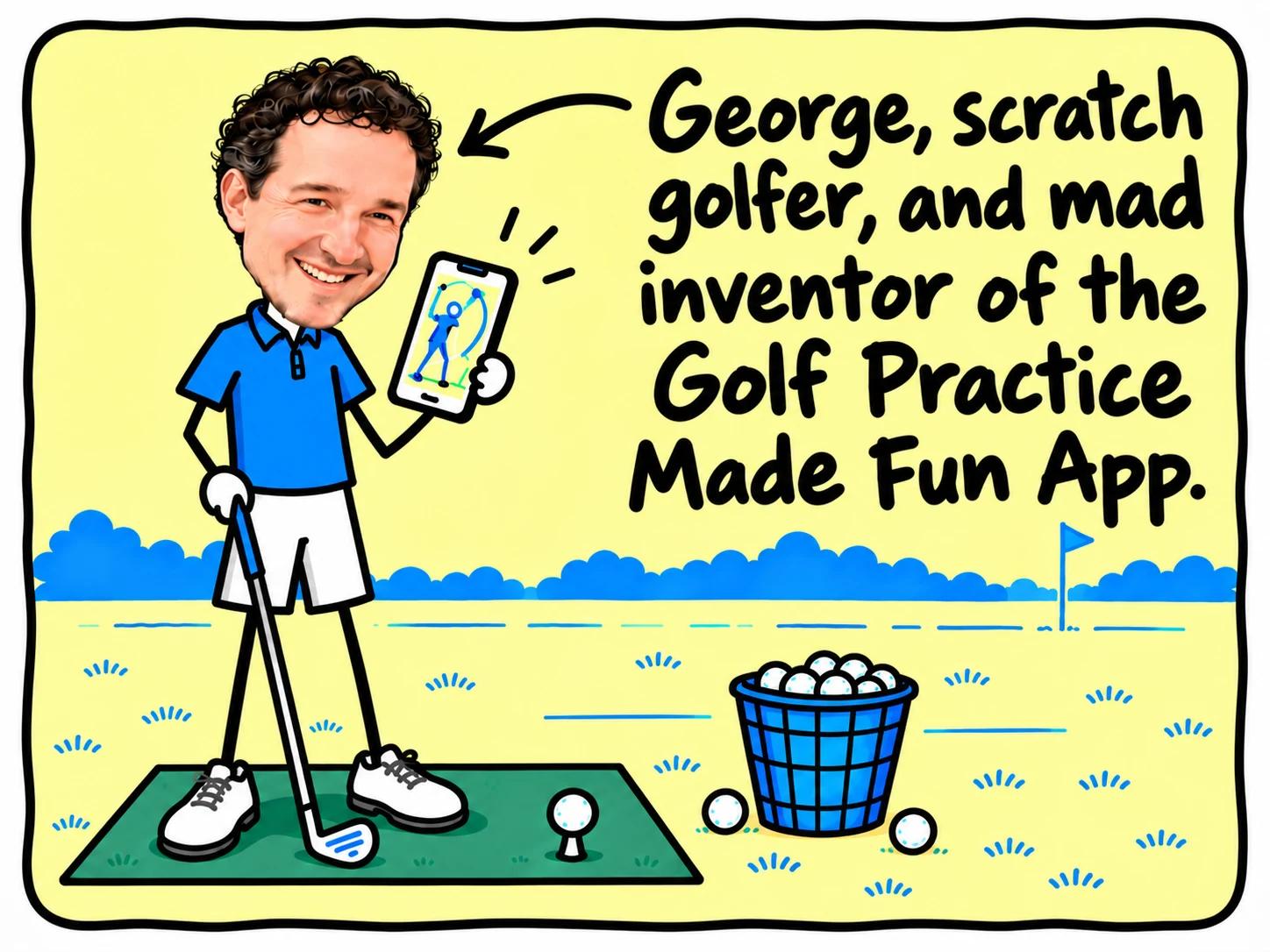
Before moving to the low side, make a clear first read. Then check what the second view tells you about the pace. A putt can look quite different once you see how much it climbs or falls.
After the practice session, note one occasion when the side view changed your decision. That observation is useful alongside your score.
To build a straight-putt reference, try Find the Fall Line. To work on matching your read with speed, use Breaking Putts: Match Your Line and Pace.
MAKE THE NEXT BUCKET COUNT
Pick a card. Practise with purpose.
