
Golf Backswing: 6 Common Mistakes and Drills to Fix Them
Choose one focus. Give it a useful practice.
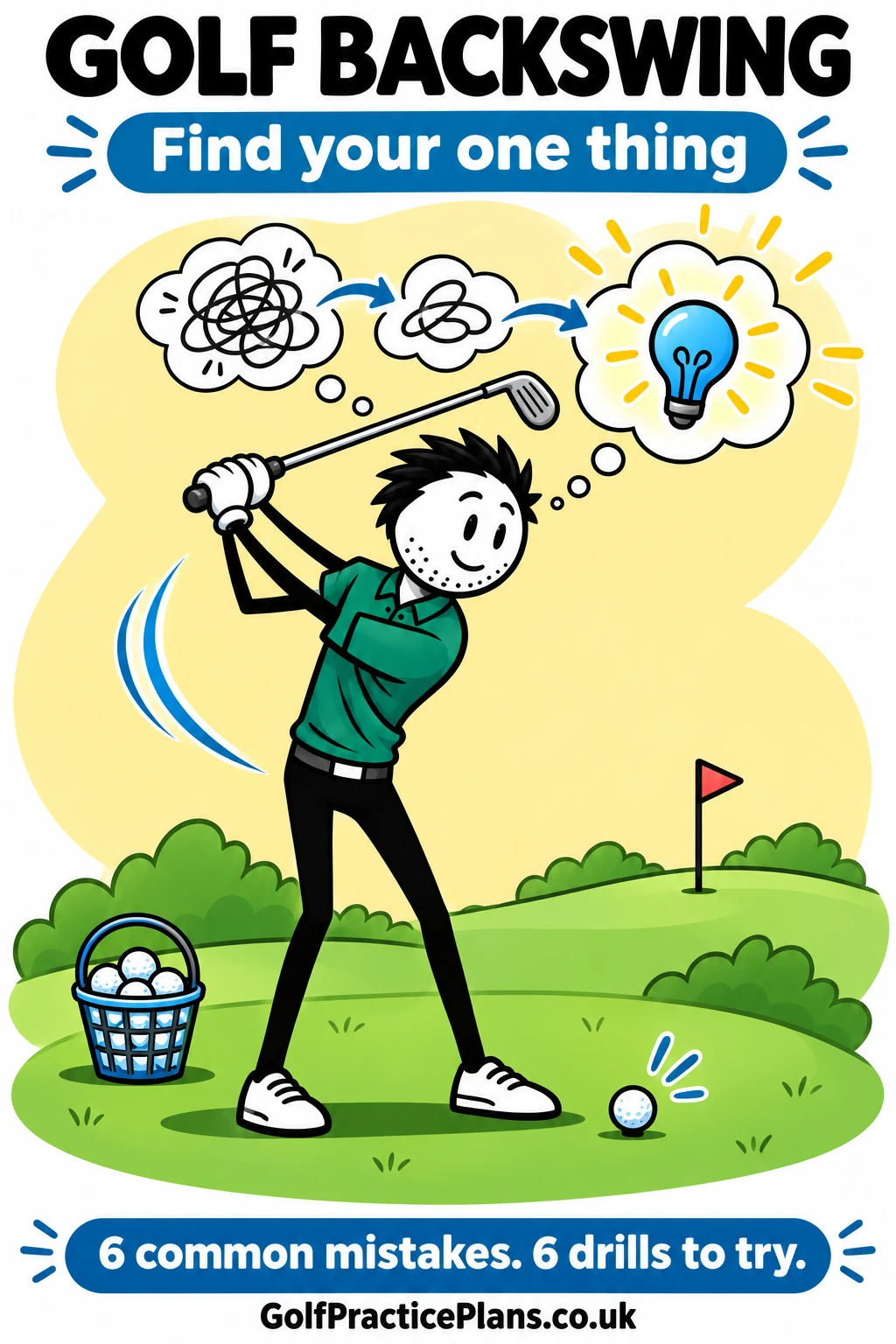
Golf backswing advice can become a checklist longer than your scorecard. These six comparisons help you recognise one thing to work on, then give you a practical drill to try.
Start with the issue that looks familiar. Each section has a Correct/Mistake illustration, a simple cue and a drill from the Golf Practice Made Fun App or a linked demonstration.
You do not need to rebuild your swing in one afternoon. One clear task is plenty for a practice session.
Step 1. Pick the issue that looks familiar
Use a mirror or a short recording to compare a slow rehearsal with the illustrations. The drawings show broad movement differences, not a single pose every golfer must copy.
| If you notice… | Start here |
|---|---|
| Snatching the club away | 1. Start with your chest and arms together |
| Sliding instead of turning | 2. Let the trail hip turn within your stance |
| Collapsing the arms | 3. Keep comfortable space between hands and chest |
| Standing up during the turn | 4. Turn with your forward tilt |
| Letting the arms run on | 5. Find a backswing you can repeat |
| Rushing the change of direction | 6. Let the movement build in sequence |
Step 2. Rehearse your chosen change
Begin slowly without a ball. Follow the linked drill for its full setup and demonstration, then use its practice task when the movement feels comfortable.
The illustrations show right-handed examples. Reverse the sides if you play left-handed; your trail side is the side farther from the target.
COMPARISON 1 OF 6
1. Snatching the club away
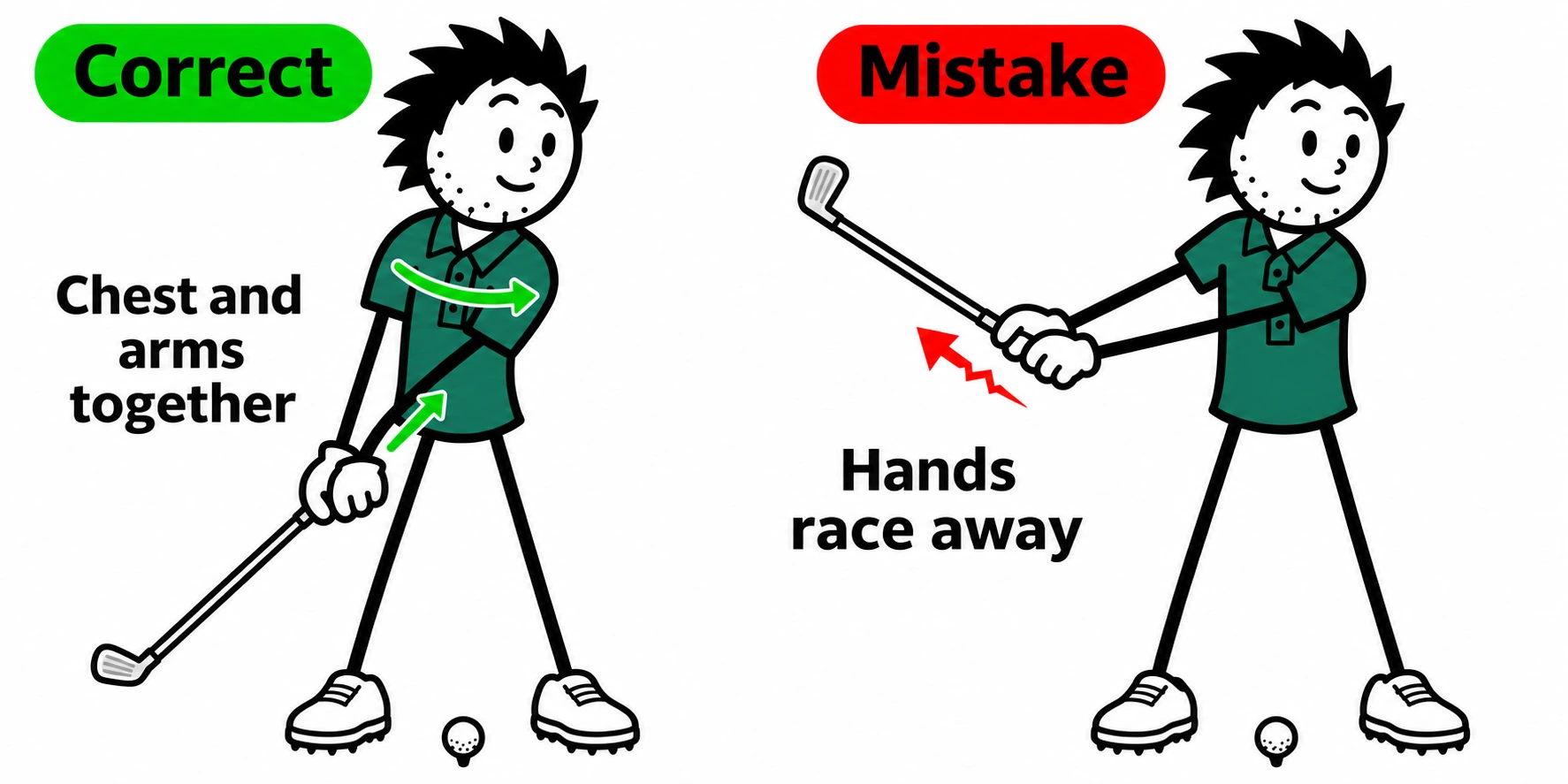
The club can race away when the hands do all the starting and the chest stays still. Begin with a small, unhurried turn that keeps the arms working with the body.
Mistake
Hands snatch the club away while the chest stays behind.
Correct
Chest and arms begin the takeaway together.
Try: Connected Backswing Drill
Lay a towel across your chest with an end under each armpit. Take your normal setup with a lofted club such as a 9-iron. Rehearse a small turn without a ball, keeping the towel lightly in place.
When the rehearsal is comfortable, follow the linked drill’s 18 three-quarter shots. Score clean contacts out of 18. Reset the towel and make a slow rehearsal if an end slips.
COMPARISON 2 OF 6
2. Sliding instead of turning
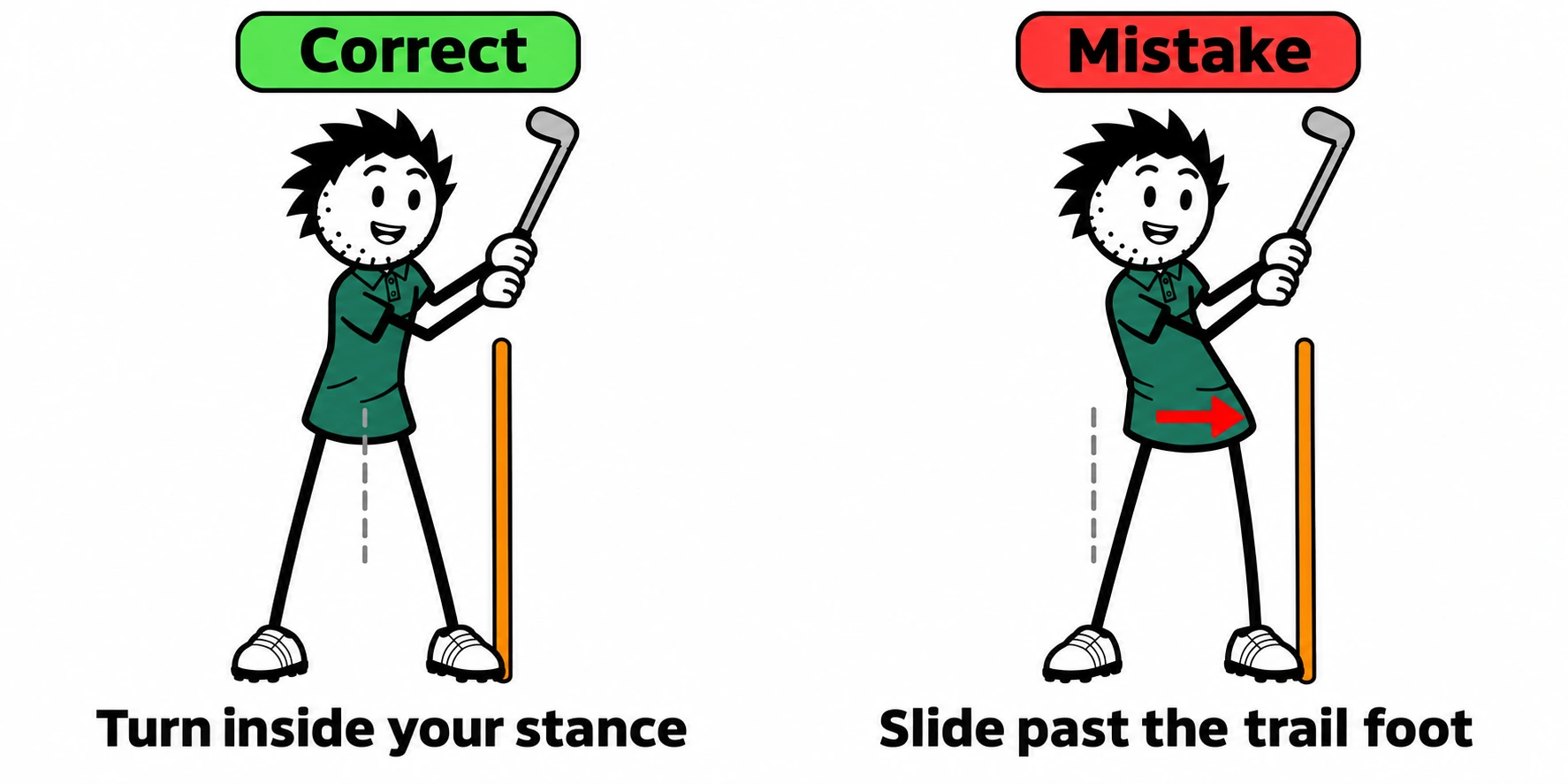
A pressure shift towards the trail foot is part of many useful backswings. The comparison here is a large sideways slide that takes the trail hip outside the foot and makes returning to the ball harder to repeat.
Mistake
Trail hip slides sideways towards the reference.
Correct
Trail hip turns back with a comfortable pressure shift.
Try: Anti Hip Sway Drill
Place a reference just outside your trail hip, safely clear of your body and club. On the practice ground, use an alignment stick with a small gap beside the hip. Make a slow half backswing and notice whether that gap closes.
Allow the hips to turn and the knees to stay soft. The reference gives feedback; it is not something to push against. Follow the linked drill’s nine slow rehearsals and nine further rehearsals or easy shots.
COMPARISON 3 OF 6
3. Collapsing the arms
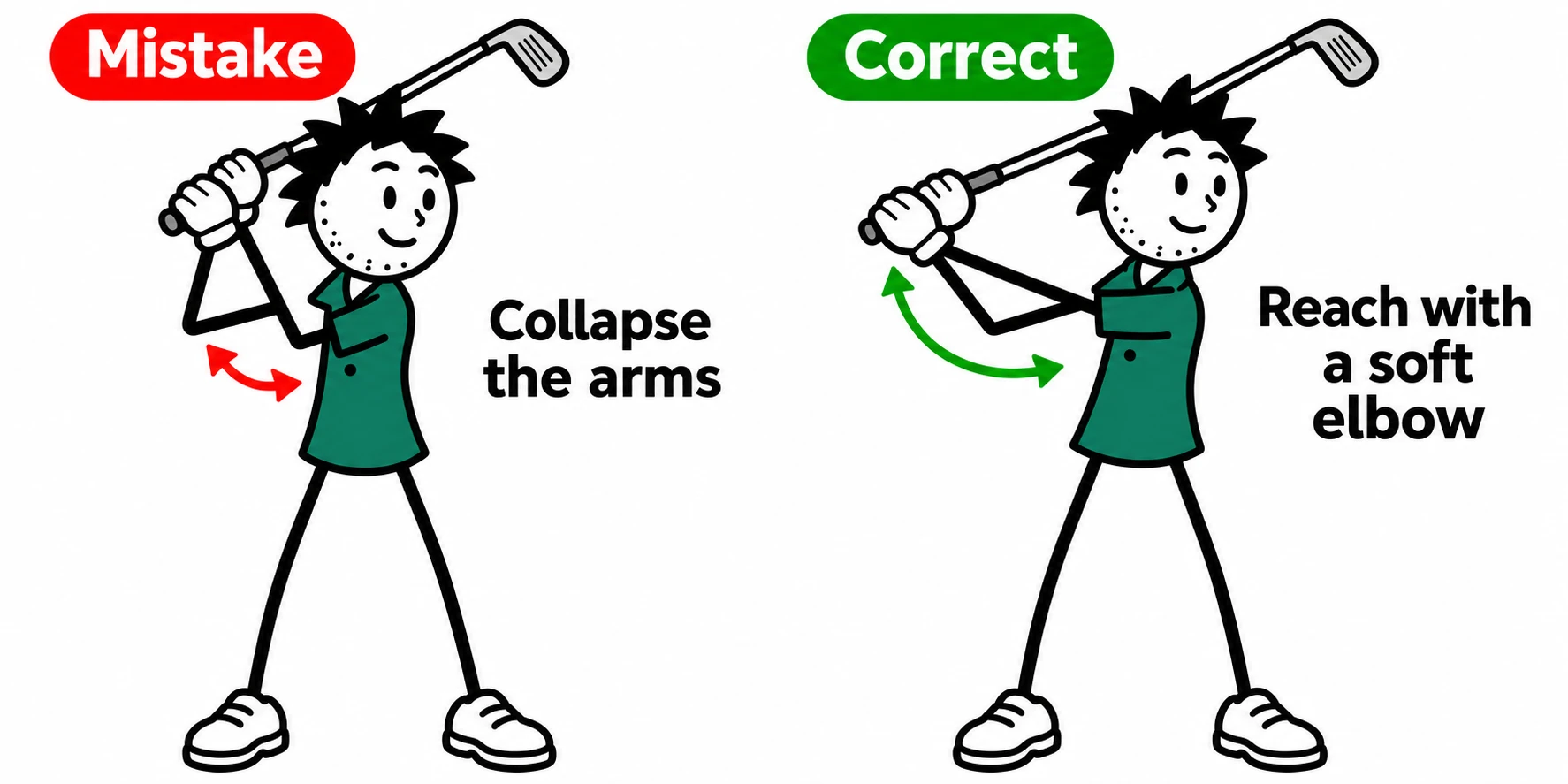
Width means keeping useful space as you turn. It does not mean locking the lead elbow or stretching the arms as far as possible. If both elbows fold tightly and the hands crowd the head, try a smaller turn with more comfortable arm structure.
Mistake
The arms fold tightly and the swing arc becomes cramped.
Correct
Hands have space from the chest and the lead elbow stays soft.
Try: Jason Baile’s Rain Jacket Drill
Practise without a club or ball. Put your trail arm into a loose rain jacket sleeve, leaving the lead arm relaxed inside the jacket’s body and out of its sleeve. Hold the empty lead sleeve’s cuff with your trail hand.
Turn your chest into a comfortable backswing and gently draw the sleeve across your body. Keep the hidden lead arm relaxed. Follow the linked drill’s two sets of nine rehearsals, without pulling hard or forcing extra range.
COMPARISON 4 OF 6
4. Standing up during the turn
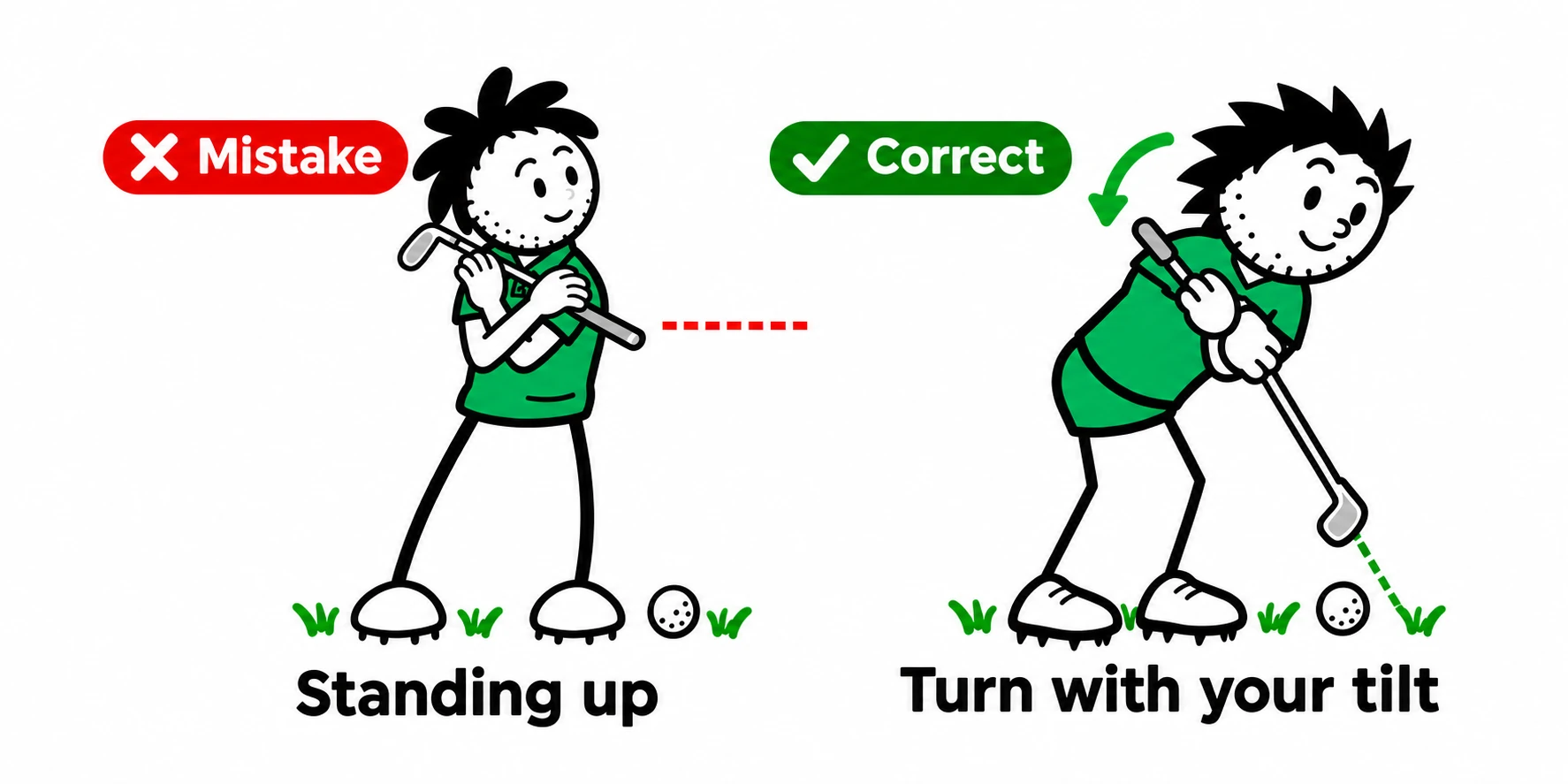
If the shoulders turn along the horizon, the upper body can lose much of the forward inclination you set at address. A club across the chest makes the difference easier to see than a swing thought alone.
Mistake
The club turns along the horizon as the body stands up.
Correct
The club across the chest angles down beyond the ball.
Try: Backswing Posture Drill
Centre a club across your upper chest, with the same amount of shaft on either side of your body. Cross your arms over it. Take your normal golf posture and place a ball on the ground as a reference. Turn back slowly without hitting the ball.
The end beyond your lead shoulder should angle towards the ground beyond the ball. Follow the linked drill’s two sets of nine rehearsals. Use the downward direction as a reference rather than forcing an exact angle.
COMPARISON 5 OF 6
5. Letting the arms run on
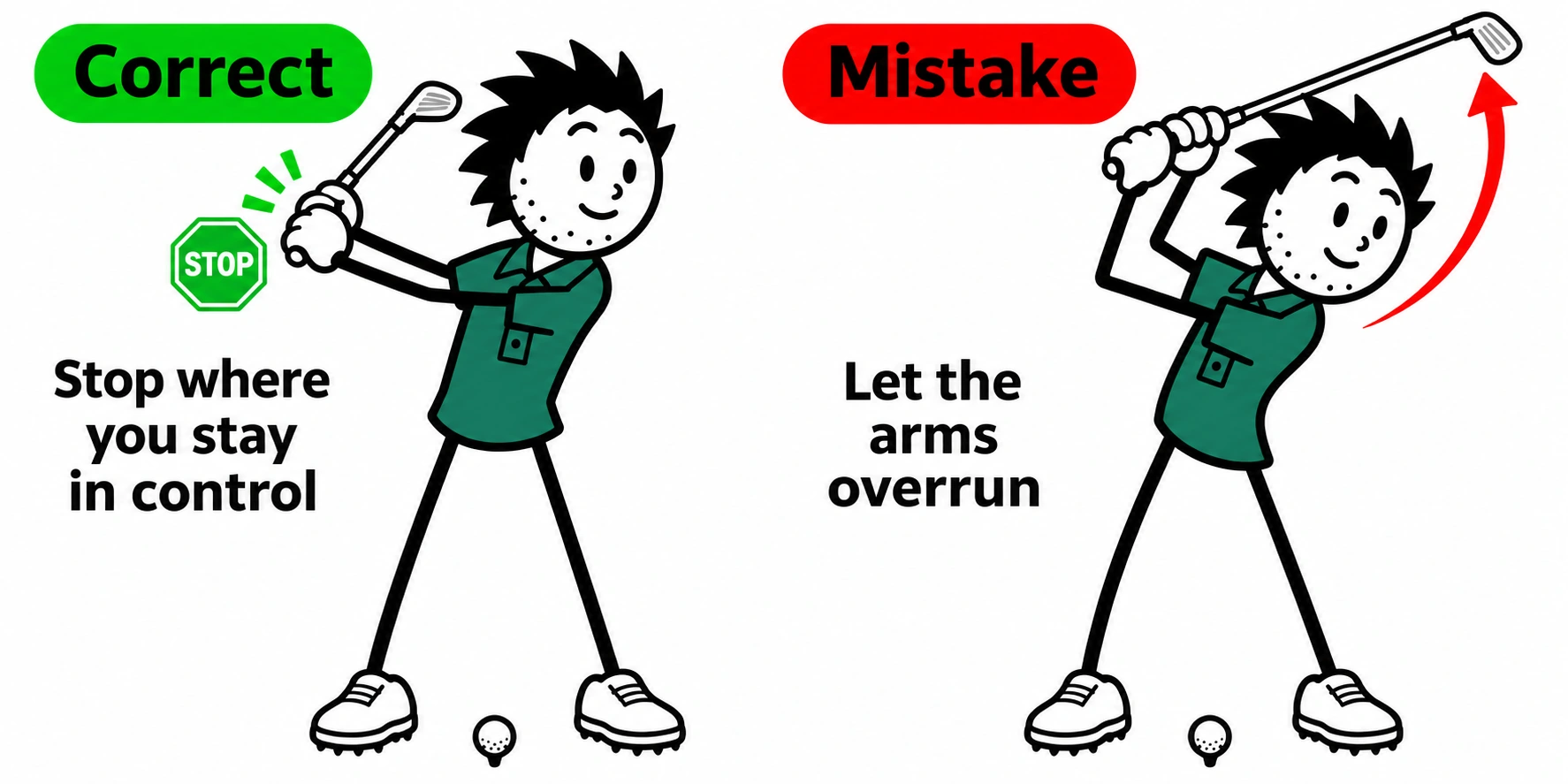
A longer backswing is not automatically a fault. It becomes worth testing when the arms keep travelling after the body’s comfortable turn and contact becomes harder to repeat. Compare your usual swing with a shorter version and let the results inform your choice.
Mistake
The arms keep travelling and the top becomes harder to control.
Correct
The arms stop at a manageable point with the turn.
Try: Shorter Backswing Drill
Choose one club and one target. Start with a few deliberately shorter rehearsals that still allow a full, balanced finish. Make the shorter motion comfortable before hitting balls.
Follow the linked comparison: nine shots with your usual backswing and nine with a shorter version. Keep the club and target the same. Record clean contacts and note which version feels easier to repeat.
COMPARISON 6 OF 6
6. Rushing the change of direction
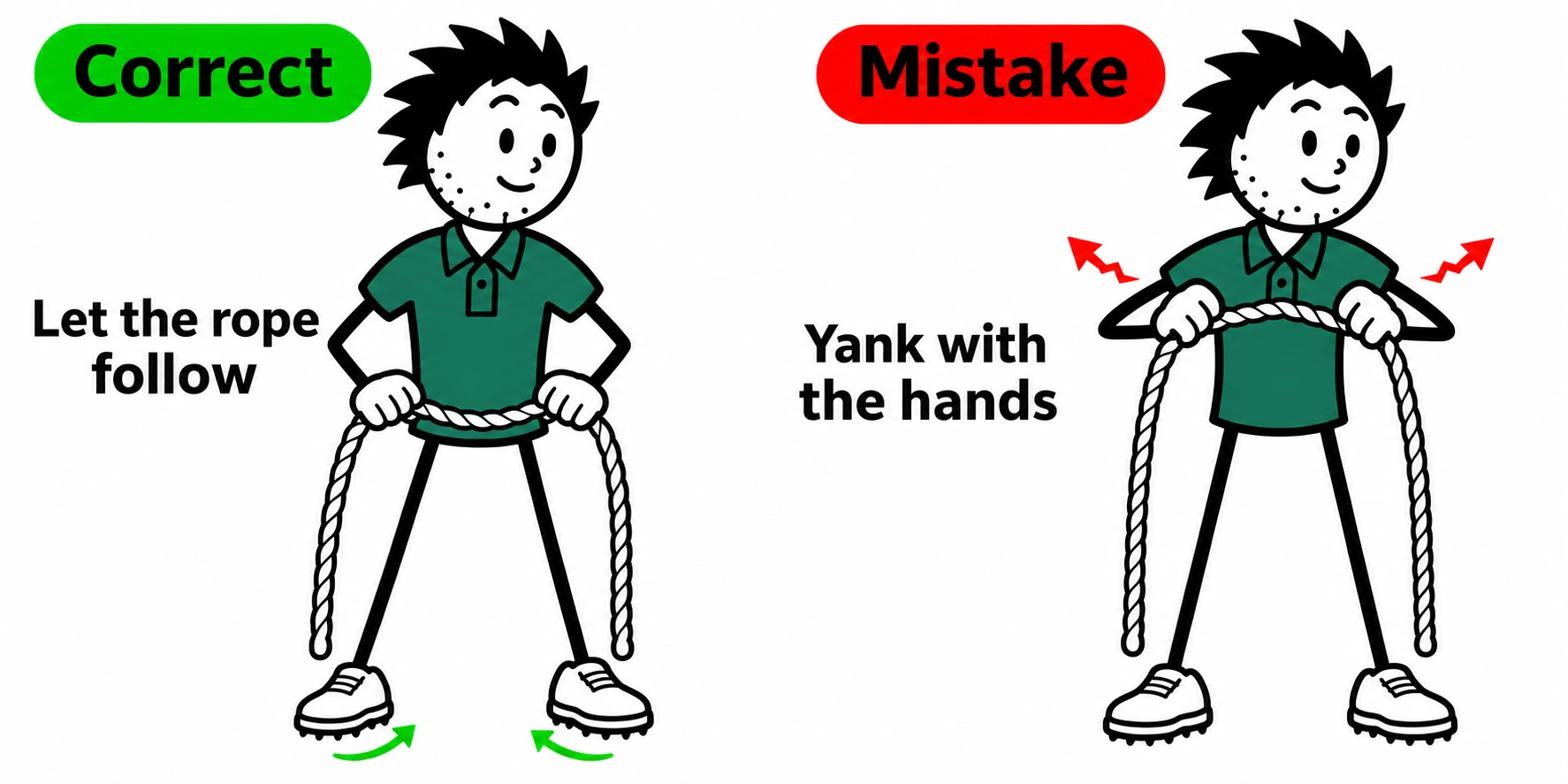
A hurried backswing or a hard tug from the top can make the arms and body feel disconnected. A soft rope gives you a simple way to notice the difference between a gentle body-led movement and a pull with the hands.
Mistake
The hands yank the rope while the body stays still.
Correct
A gentle pressure shift lets the rope follow.
Try: Rope Swing: Find a Smoother Rhythm
Hold a soft swing-training rope lightly against your belly, with space for its loose ends to move. Stand comfortably and rock pressure gently from foot to foot. Let the rope respond to that movement.
Keep the motion small and unhurried, with the rope held around belly-button height. Complete 18 back-and-through cycles, resetting when needed. This is a no-club, no-ball rehearsal from Joe Plecker’s demonstration.
Step 3. Practise, record and review
Give your chosen drill a few slow rehearsals, then follow its practice format. A useful session might be the posture check at home, the towel drill at the range or a comparison of usual and shorter backswings.
| Your chosen drill | What to record |
|---|---|
| Connected Backswing | Clean contacts from 18 three-quarter shots. |
| Anti Hip Sway | Completed routines, following the linked drill’s rehearsal and easy-shot format. |
| Rain Jacket | Two sets of nine comfortable rehearsals. |
| Backswing Posture | Two sets of nine slow turns. |
| Shorter Backswing | Clean contact and observations from nine usual and nine shorter swings. |
| Rope Swing | Eighteen gentle back-and-through cycles. |
In the App, use Score your practice. Repetition drills have 18 boxes to tick. Scored drills let you enter a result directly and review it in Your scored results, alongside your previous attempt and personal best.
After the practice session, keep one short note: what you noticed, which cue helped and what you want to repeat. When comparing scored attempts, use the same club, target and setup.
FAQs.
What is the best backswing drill?
Start with the issue you can recognise. Use the Connected Backswing Drill for chest-and-arm coordination, the Backswing Posture Drill for the shoulder-turn check or the Shorter Backswing Drill to compare swing lengths.
Should I try all six changes together?
Choose one focus for a session. You can return to the guide when you want another task; the six comparisons are a menu rather than a six-part swing checklist.
How long should my backswing be?
There is no single length for every golfer. If your arms run on and contact becomes inconsistent, use the Shorter Backswing Drill to compare your usual swing with a manageable shorter version.
Must I keep my lead arm perfectly straight?
Aim for comfortable width with a soft elbow. Avoid forcing the arm rigid or stretching beyond a comfortable range just to match a picture.
Should my hips stay still during the backswing?
Allow a comfortable hip turn and pressure shift. The Anti Hip Sway Drill helps you notice a large sideways slide without trying to freeze the hips.
Can I practise these drills indoors?
The Rain Jacket Drill and Rope Swing rehearsal use no ball. The Backswing Posture Drill also uses no shots, but needs enough room for the whole club to move. Choose a clear space and follow the setup.
Do left-handed golfers reverse the pictures?
Yes. Swap the lead and trail sides. For a left-handed golfer, the lead side is the right side and the trail side is the left side.
How should I score the practice?
Follow the chosen drill’s format. Use repetition ticks for rehearsal drills and direct score entry on scored cards. Compare like-for-like attempts with the same setup.
What drill do you recommend I do next?
Try the Connected Backswing Drill if the start of your swing feels disconnected. You could also use the Anti Hip Sway Drill to check the body turn, or the Shorter Backswing Drill to explore a more repeatable swing length.
Give your next practice a purpose.
Find illustrated drills, save your favourites and record your practice in the Golf Practice Made Fun App.
Start your free trial ↗14 days free · No card required