

Browse by category
DRILL OVERVIEW · PUTTING CARD 18
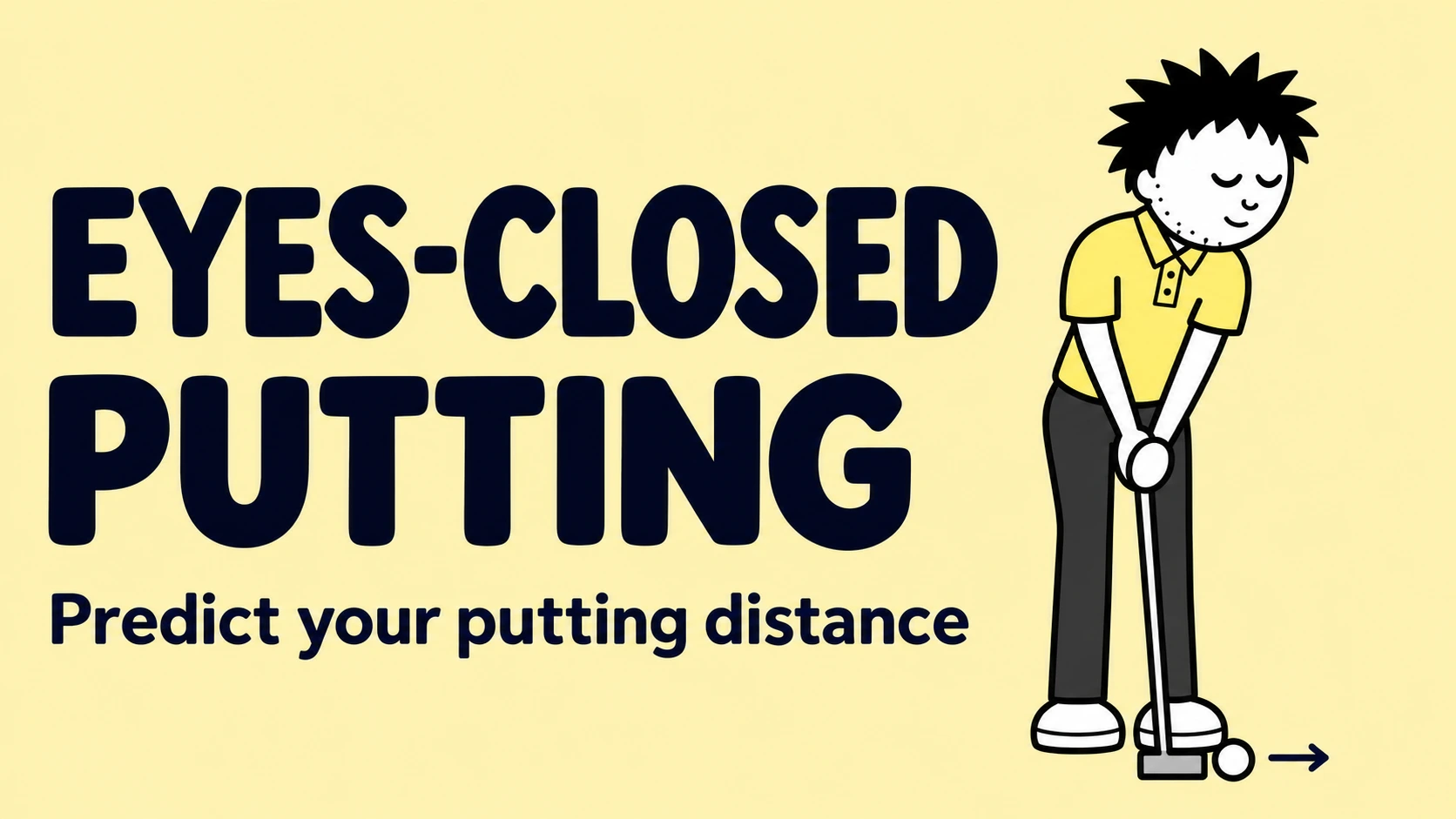
Eyes Closed: Predict Your Putting Distance
Your drill at a glance

This is Putting card eighteen, Eyes Closed: Predict Your Putting Distance, in the Golf Practice Made Fun App.
How well can you feel a putt’s distance before you see the result? Choose a long putt, close your eyes at impact and call “short”, “good” or “long” before looking. Compare your prediction with the actual finish and score one point when they match.
Play 18 putts and record your total out of 18. A correct “short” call earns a point even when the ball finishes short: you are testing your awareness of the pace.
Jump to choose a long putt, close, then call or check and score.
Watch the eyes-closed putting lesson.
Nick Olson Golf Academy demonstrates eyes-closed distance-control practice and checking the ball’s finishing point.
Step 1. Choose a long putt.
| Action | What to do |
|---|---|
| Choose the putt | Pick a long putt to a hole on the practice green. |
| Look at the target | Take a look at the hole and the distance you want the ball to travel. |
| Set up normally | Keep your eyes open for the setup. Take your comfortable stance and place the putter face behind the ball. |
| Prepare your pace | Choose the stroke you think will send the ball the intended distance. |
Get your picture of the distance before starting. The eyes-closed part begins at impact.
Step 2. Close your eyes at impact, then call.
| Action | What to do |
|---|---|
| Make the putt | Begin your putting stroke from the setup you have chosen. |
| Close at impact | Close your eyes as the putter meets the ball. |
| Call your prediction | Before looking, say “short”, “good” or “long”, based on how the stroke felt. |
| Commit to the call | Keep that prediction for your record. Look only after you have made the call. |
Use the feel of the strike and stroke to make your prediction. Keep the sequence simple: putt, close, call, then look.
Step 3. Check the finish and complete your round.
| Action | What to do |
|---|---|
| Check the actual finish | Open your eyes and check where the ball finished in relation to the hole. Judge its distance as short, good or long. |
| Compare the two | Check whether your spoken prediction matches the actual finish. Use the same short/good/long judgement throughout the round. |
| Award the point | Score 1 point for a matching prediction and 0 when the prediction does not match. |
| Record each attempt | Note your prediction, the actual finish and the point earned. |
| Finish all 18 putts | Repeat until you have played 18 putts, then add your matching predictions and record the total out of 18. |
Scoring examples
| Prediction | Actual finish | Points |
|---|---|---|
| Short | Short | 1 |
| Good | Long | 0 |
| Long | Long | 1 |
| Good | Good | 1 |
Your practice record
| Part of the round | Record |
|---|---|
| Putts 1–9 | ___ matching predictions / 9 |
| Putts 10–18 | ___ matching predictions / 9 |
| Total | ___ points / 18 |
| What you noticed | Which finishes were hardest to predict? ___ |
One matching prediction earns one point. Keep the original call in your notes, even when the result surprises you. Higher totals mean more of your predictions matched the actual finishes.
George’s Practice Tip.
Say the prediction clearly before you peek. It is remarkably easy to remember calling “long” once you have watched the ball sail past the hole.
For another pace-awareness exercise, try Trail-Hand Putting. For a separate rhythm session, try Metronome Putting. You can also browse more putting drills.
MAKE THE NEXT BUCKET COUNT
Pick a card. Practise with purpose.
