
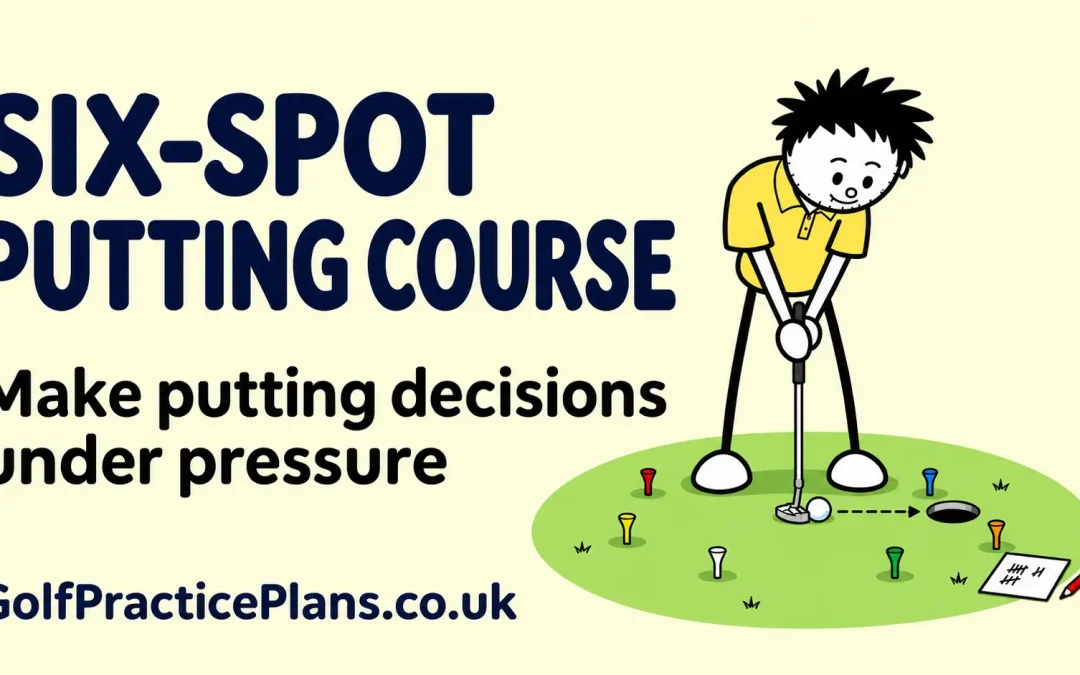
Six-Spot Putting Course: Count Every Stroke
Decisions under pressure
Turn the practice green into a small putting course. Choose six starting spots ranging from short putts to long putts. Use one ball, hole out from each spot and count every stroke along the way.
Your score is the total strokes for all six completed spots. Reuse the same starting positions next session so you can compare totals. Lower is better.
↓ Download free infographicSave to your device or print for practice.Free practice sheet · PDF
Watch the putting-games lesson
Watch the video, then follow the steps below.
Step 1. Choose six spots

| Action | What to do |
|---|---|
| Choose six starting positions | Pick a mix of short and long putts around the practice green. |
| Give them an order | Decide which spot you will play first, then work through all six. |
| Remember the course | Note each starting position and its target hole so you can use the same course next session. |
| Use one ball | Take your putter and one ball to the first spot. |
Choose positions you can identify again. Familiar starting spots make the next total a useful comparison.
Step 2. Hole out each one
| Action | What to do |
|---|---|
| Read the first putt | Check the line, slope and pace before taking your stance. |
| Use your full routine | Choose your line and intended pace, aim the putter and make the stroke. |
| Keep playing the same ball | Play the next putt from where it finishes. Continue until the ball is in the hole. |
| Count every stroke | Include the first putt, follow-up putts and the final tap-in. |
| Move to the next spot | Write down that spot’s stroke count, then take the ball to the next starting position. |
Give the follow-up putt the same attention as the first one. A tap-in still counts, even if it barely feels worth bending down for.
Your focus: Decisions under pressure
Step 3. Total and compare
| Action | What to do |
|---|---|
| Complete all six spots | Make sure you have holed out from every starting position. |
| Add the strokes | Sum the six individual stroke counts. |
| Record the total | Save the number of strokes taken to complete the whole course. |
| Repeat the same course | Use the same six starting spots and target holes next session to compare your totals. |
Your six-spot scorecard
| Starting spot | Strokes to hole out |
|---|---|
| Spot 1 | ___ |
| Spot 2 | ___ |
| Spot 3 | ___ |
| Spot 4 | ___ |
| Spot 5 | ___ |
| Spot 6 | ___ |
| Total strokes | ___ |
Count every stroke across all six spots. Record the total once you have completed the course. A lower total means you used fewer putts on the same six-spot test.
FAQs
What equipment do I need?
Putter + one ball.
How do I set up this drill?
Choose positions you can identify again. Familiar starting spots make the next total a useful comparison.
What should I focus on during practice?
Give the follow-up putt the same attention as the first one. A tap-in still counts, even if it barely feels worth bending down for.
How should I record my practice?
Count every stroke across all six spots. Record the total once you have completed the course. A lower total means you used fewer putts on the same six-spot test.
What should I keep in mind when practising?
After the round, look for the spot that cost the most strokes and note what happened. Was the first putt’s pace off, or did you rush the follow-up? Keep that observation for your next practice session, while keeping the six-spot course the same.
What drill do you recommend I do next?
Try 2 next to give your putting stroke a simple counted rhythm.
You could also use Putter-Head Gate to check whether the putter moves cleanly between two tees. For another focused practice task, try Putting Gate Drill to practise starting putts on your chosen line.
Give your next practice a purpose.
Find illustrated drills, save your favourites and record your practice in the Golf Practice Made Fun App.
Try the App Free ↗14 days free · No card required