

Browse by category
DRILL OVERVIEW · PUTTING CARD 37
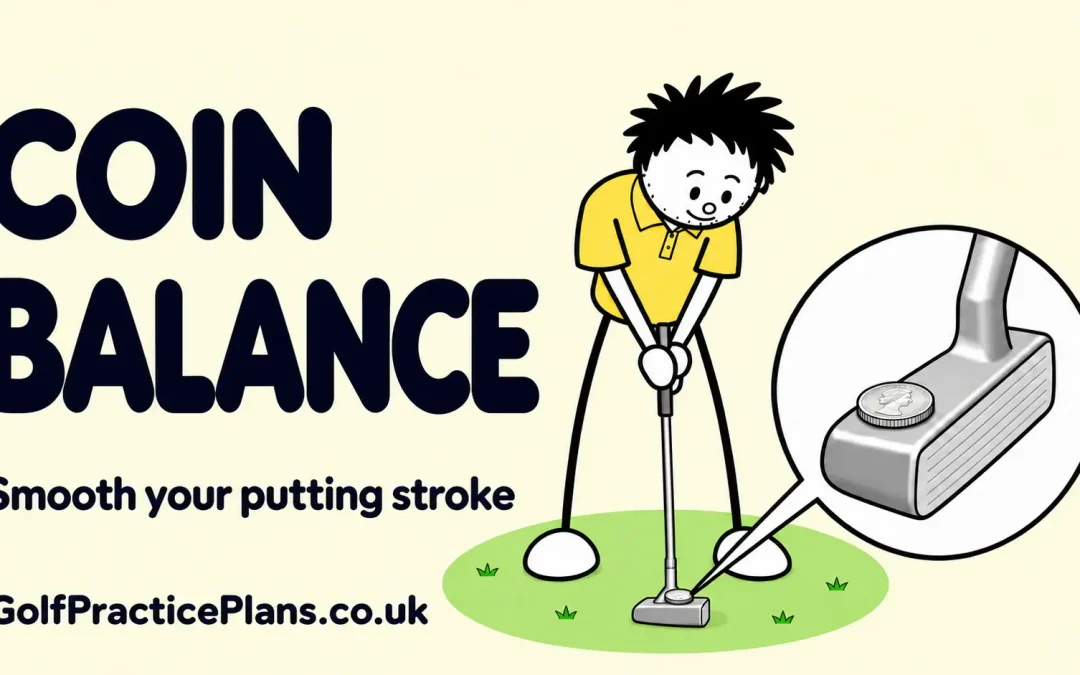
Balance a Coin: Smooth Your Putting Stroke
Your drill at a glance

Balance the coin. Find your pace. Balance a Coin: Smooth Your Putting Stroke is Putting Card 37 in the Golf Practice Made Fun App.
A small coin can make a hurried takeaway easier to notice. Balance it on a flat section on top of the putter head and make nine short rehearsals without a ball. Aim to keep the coin in place with a smooth movement.
Then remove the coin and roll nine short putts with the same pace. Keep two separate records: rehearsals with the coin retained out of nine, and centred putts out of nine.
Jump to balance the coin, rehearse nine times or remove the coin and putt.
Watch the coin-balancing lesson.
Meredith Kirk demonstrates the coin-holder putting drill for Myrtle Beach Golf Trips. Watch the coin on the putter’s top flange during the rehearsal, followed by putting after it is removed.
Step 1. Balance the coin.
Choose a putter with a flat top and rest a small coin on it, clear of the striking face.
| Action | What to do |
|---|---|
| Check the putter | Choose a head with a flat top or flange that can hold a small coin. |
| Place the coin | Balance the coin flat on top of the head, keeping it clear of the face that strikes the ball. |
| Leave it loose | Let the coin rest freely so it gives you feedback during the movement. |
| Set up without a ball | Take your normal putting stance and grip, ready for a short rehearsal. |
Give the coin a stable starting position before you move the putter. This part of the practice session uses rehearsals without a ball.
Step 2. Rehearse nine times.
Make nine short, smooth rehearsals and count how often the coin stays in place.
| Action | What to do |
|---|---|
| Start smoothly | Take the putter back with a small, controlled movement. |
| Rehearse the stroke | Move back and through at a smooth pace, aiming to keep the coin on top of the head. |
| Notice a snatch | Pay attention if a hurried start sends the coin sliding or falling. |
| Reset when needed | If the coin falls, replace it before the next attempt. That rehearsal still counts towards your nine attempts. |
| Record the first group | Count the rehearsals completed with the coin retained and record that number out of nine. |
Keep the movement short. Let the coin show you what happens as you start and change direction.
Step 3. Remove the coin. Putt nine.
Take the coin off the head, then roll nine short putts with the same smooth pace.
| Action | What to do |
|---|---|
| Remove the coin | Take the coin off the putter before introducing a ball. |
| Choose a short putt | Set up on the practice green with a clear target. |
| Keep the pace familiar | Use the smooth rhythm you rehearsed for each of the nine putts. |
| Notice contact and steadiness | Record the number of centred putts out of nine and note how steady the stroke feels. |
| Complete the practice session | Nine rehearsals plus nine putts make 18 attempts. Keep the two records separate. |
Your practice record
| Part of the practice session | Record |
|---|---|
| Rehearsals completed | ___ / 9 |
| Rehearsals with coin retained | ___ / 9 |
| Putts completed | ___ / 9 |
| Centred putts | ___ / 9 |
| Stroke steadiness | What I noticed: ___ |
Keep both records. Note coin-retained rehearsals out of nine and centred putts out of nine. The 18 attempts include nine rehearsals and nine putts.
George’s Practice Tip.
Give the first small movement your attention. If the coin keeps falling, shorten the rehearsal and notice how smoothly you start the putter.
After the practice session, write a short note about whether that smooth pace carried into the nine putts. Keep your two records alongside the observation.
To explore contact feedback on the striking face, try Coin on the Face. To compare how you start the stroke, use Hover or Ground.
MAKE THE NEXT BUCKET COUNT
Pick a card. Practise with purpose.
