

How to Improve Your Golf Follow-Through: 3 Drills for a Freer Finish
Freer follow-through
A freer golf follow-through starts with letting your arms and body keep moving together through the ball.
Begin with the Chicken Wing Fix Drill to explore lead-arm rotation, use the Tiger Woods follow-through checkpoint to notice the space between your hands and body, then try Hit It High and Long for a comfortable, taller finish. Practise eighteen short shots per drill, making one gentle rehearsal before each shot. You can choose eighteen no-ball rehearsals instead for any drill.
↓ Download free infographicSave to your device or print for practice.
Drill 1. Chicken Wing Fix: Let Your Lead Arm Rotate

The palm-up rehearsal makes lead-arm rotation easier to feel without the distraction of striking a ball. A small body turn helps the arm move through with your chest, giving you an alternative to pulling the elbow away and folding abruptly after impact.
| Step | What to do |
|---|---|
| 1 | Take a comfortable golf posture without a club. Let your lead arm hang near an imaginary ball and keep your other hand relaxed by your thigh. The lead arm is the left for a right-handed golfer and the right for a left-handed golfer. |
| 2 | Move the lead arm a short distance towards the target with a small body turn. Allow the forearm to rotate so the palm faces more upwards, then return to the start. Keep the elbow soft and the movement gentle. Once comfortable, you can explore the same movement slowly with a light club in the lead hand. |
| 3 | Play eighteen short, easy shots in two sets of nine, using both hands on the grip. Make one gentle rehearsal before each shot and let the chest keep turning. Begin with a small hip-height swing and soften the rotation cue if the ball starts hooking. Alternatively, complete eighteen no-club palm-up-and-return rehearsals. |
Explore the full Chicken Wing Fix Drill and its teaching photographs →
Drill 2. Tiger Woods Follow-Through: Give Your Hands Room
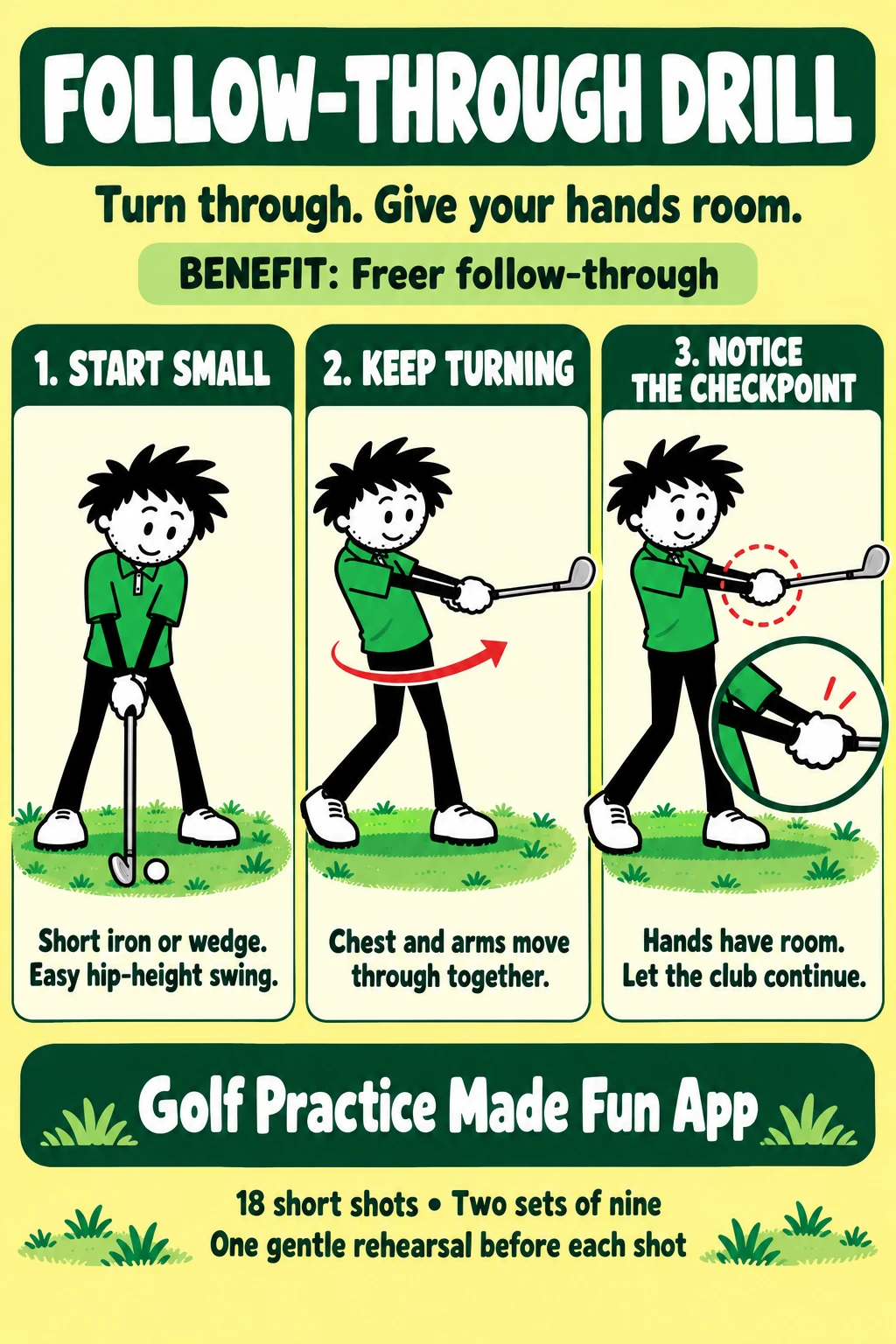
A waist-high checkpoint gives you something clear to observe just after the strike. Looking at the space between your hands and body can help you notice whether the chest keeps turning and the arms have room to travel, without chasing a rigid or exaggerated finish.
| Step | What to do |
|---|---|
| 1 | Choose a short iron or wedge. Make a slow rehearsal from about hip height back to a similar height through, allowing the chest to turn with the arms. |
| 2 | At roughly waist height after impact, notice whether your hands have some room in front of your body. Keep your elbows soft and allow comfortable extension, then let the club continue naturally rather than freezing the position. |
| 3 | Play eighteen short shots in two sets of nine, with one gentle rehearsal before each shot. Use contact and balance to decide whether to keep or soften the feel; avoid reaching for maximum width. For a no-ball session, complete eighteen slow through-swing rehearsals instead. |
Explore the full Holy Grail Follow-Through Drill and its teaching photographs →
Watch the demonstration on YouTube from 1:08.
Your focus: Freer follow-through
Drill 3. Hit It High and Long: Turn Through and Finish Tall

Letting the body become more upright as it turns through can help the swing continue beyond the ball. The tall-finish cue gives you a simple way to explore extension while checking that your strike remains solid and your balance stays steady.
| Step | What to do |
|---|---|
| 1 | Start with one cue: “Turn through and finish tall.” Use a short iron or wedge and an easy hip-height backswing, keeping the arms relaxed. |
| 2 | Rehearse slowly, allowing the chest to turn and become more upright through the shot. Notice the lead leg becoming longer while the knee stays soft. Let the taller finish develop after the strike rather than standing up early; keep the movement small and comfortable. |
| 3 | Play eighteen short shots in two sets of nine, making a gentle rehearsal before each shot. Review the contact and how steadily you finish. Keep or soften the cue instead of adding more upward movement. You do not need to jump or arch your back. Alternatively, complete eighteen slow through-swing rehearsals. |
Explore the full Hit It High and Long Drill and its teaching photographs →
FAQs
What equipment do I need?
Short iron + balls.
How do I set up Chicken Wing Fix?
The palm-up rehearsal makes lead-arm rotation easier to feel without the distraction of striking a ball. A small body turn helps the arm move through with your chest, giving you an alternative to pulling the elbow away and folding abruptly after impact.
How do I practise Tiger Woods Follow-Through?
A waist-high checkpoint gives you something clear to observe just after the strike. Looking at the space between your hands and body can help you notice whether the chest keeps turning and the arms have room to travel, without chasing a rigid or exaggerated finish.
How does Hit It High and Long work?
Letting the body become more upright as it turns through can help the swing continue beyond the ball. The tall-finish cue gives you a simple way to explore extension while checking that your strike remains solid and your balance stays steady.
Do I need to practise every drill in one session?
Choose one drill that matches what you want to work on. Follow its setup and practice task, then use what you notice to decide what to repeat next time.
Should I use the same score for every drill?
Follow the practice record given for each drill. Keep its distance, target and equipment consistent when you compare sessions.
What drill do you recommend I do next?
Try Connected Backswing Drill next to practise turning your chest and arms together.
You could also use Backswing Posture Drill to check your shoulder turn with a club across your chest. For another focused practice task, try How to Improve Golf Swing Rhythm to explore a smoother pace with three rhythm drills.
Give your next practice a purpose.
Find illustrated drills, save your favourites and record your practice in the Golf Practice Made Fun App.
Try the App Free ↗14 days free · No card required